The Fall Of Empire

It’s Valentine’s Day, I know, but this little story has nothing to do with romance. Sorry, hazard of the job for a crime writer.


Someone was coming for him.

He didn’t know who, he didn’t know exactly when, but he felt it. Over his shoulder like a creeping shadow.

That was how it went. You made a name for yourself, climb to the top of the pile, and you became a target. Someone eager to earn a reputation would want to take you down.

Dirty business, crime.

Peter Thorn smiled. The newspapers had done their damnedest and failed. They’d done everything but name him; the libel laws had stopped that. The coppers had tried, but the ones he hadn’t bought off weren’t clever enough.

But some things you couldn’t outrun.

Too many people back from the war, walking round with their demob suits and souvenir weapons from Germany or the Pacific. Some of them hungry for a little fame.

He’d give them a chance. And he’d beat them.

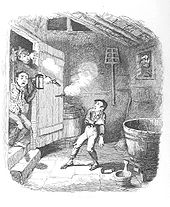
That was why he was sitting in this Sheepscar boozer long after time had been called. Door unlocked, landlord and his wife safely tucked away upside. Bodyguards told to wait in a club; he’d ring when he needed them. You didn’t remain boss by hiding. You faced up to trouble.

the_pointer_-_sheepscar_street_south_-_geograph-org-uk_-_580967

Thorn had a glass of whisky on the bar, a Colt automatic beside it. Another weapon in the pocket of his suit.

He’d done well during the war. Staying out of the forces was too easy. A little money distributed here and there and he might as well have been invisible. Then it was black market petrol, coupons, this and that as he put together a small mob and made himself rich.

Now all those who’d been patriotic enough to do their bit were back and ready to stir things up.

He sipped the whisky and took a draw on the cigarette. He heard the door of the pub groan open and turned, ready.

‘Thank God it wasn’t locked,’ she said as she came in and gazed around. About thirty, he guessed, dark hair, looking scared and holding a handbag close. ‘I’m lost.’

‘Can I help you, love?’

‘A man was giving me a lift and he started…’ She blushed. ‘You know. So I got out and ran.’

‘He won’t try anything in here, believe me.’ Thorn smiled. He’d always liked a pretty face. ‘You’re safe enough.’ He raised the glass in a toast. ‘Help yourself if you want one.’

She stayed close to the door, undecided.

‘What’s your name, love?’

‘Peggy,’ she replied as he picked up the cigarette from the ashtray. ‘Peggy Walker.’

He stopped with the arm halfway to his mouth.

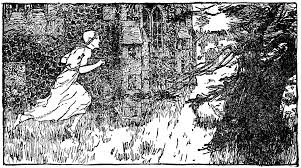
The woman dropped the handbag. She was holding a gun, her arm steady.

‘Tom was my brother.’

‘He had it coming.’

She ignored him.

‘Funny, the skills you pick up in the WAAFs. Never underestimate a woman.’

His hand began to move towards his pocket.

The blast was loud. He slid off the stool and on to the floor as the door creaked shut.

In Praise Of…Candace Robb

Every writer has influences. In some cases it can be style, in others, on the way a writer approaches their work. I have several, but one of the most lingering is the historical crime novelist Candace Robb.

I first came across her work about 20 years ago. I was still living in Seattle then, and came across a couple of her books at my local library. They were set in York, always one of my favourite cities, and in the 1300s, a very interesting time. I borrowed them, devoured them, and after that devoured the rest of her Owen Archer series, followed by her three Margaret Kerr books. In terms of language they were spot-on that I assumed they were written by someone local, someone who understood the place and its people in her bones.

candace

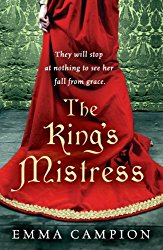
Fast forward quite a few years. My partner came across a book about Alice Perrers called The King’s Mistress and raved about it. I read it, curious because Perrers had been a minor character in one of the Owen Archer novels. It was as good as she said. A little digging online showed that the author, Emma Campion, was…Candace Robb. And she didn’t live in York at all. She lived in Seattle. More than that, she’d grown up in Cincinnati, where I spent a decade before moving out to the West Coast.

51yiq2pneyl-_uy250_

It was kinda weird.

By then I had a few historical crime novels of my own out on the shelves, the first volumes in my Richard Nottingham series. And the way Candace made family relationships such an important part of her novels had affected the way I put together my books. I owed her a debt.

I dropped her an email. She replied. And out of that, we’ve become good friends. We’ve never met, although we’ve been in the same cities at the same time before.  I’ve continued writing, and so has she: first another big historical, A Triple Knot, about Joan of Kent, and last year The Service of the Dead, the first in a new series set in York, featuring Kate Clifford, a young widow (that will see UK publication this year, while the second will be published soon in the US). I’ve read it; it’s every bit as good as her Owen Archer novels, which are my favourites.

service-of-the-dead-kd2b-rev

She’s an academic, a scholar with a very deep knowledge of the Middle Ages and especially of York, a city that seems to run in her blood. Everything detail is impeccably researched, but the scholarship is always in service of the story. It’s finely woven in – another influence she’s had on my work (well, I hope I’ve succeeded). And, most importantly for anyone writing about another time and place, she takes you there. When you read, you’re moving through York (or other places) in the 14th century. You can smell it, you can taste it. That’s a rare, precious quality.

the-apothecary-rose-small1

This June, Candace will be in England. She has an event – maybe more – in York. But happily she’s also going to do an ‘In Conversation With…’ in Leeds, on June 8 at the Leeds Library, a pop-up event by Leeds Big Bookend. I feel especially lucky, because I’m the one who’ll be asking her the questions.

For those who enjoy what I write, come along if you can, and discover one of the best historical crime writers. Or, if you’re a fan of hers – discover her if you don’t already know her work – this will be a treat.

The Death of Tom Maguire

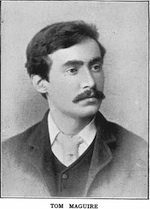
Next month On Copper Street, the fifth book in my Victorian series, will be published. One ongoing minor character has been Tom Maguire, a real person, and one of the unsung heroes of British politics, and one of the greatest unknowns ever to come from Leeds.

He discovered socialism in the 1880s and became a firebrand speaker, rousing the men and helping them win strikes. He was someone who helped in the formation of the Independent Labour Party, only to find himself sidelined by others with more of a taste for power. Tom Maguire died in Leeds in 1895. This is an extract from the new book. The circumstances of Maguire’s are true to reports of the time.

tom-maguire-lead


‘I had word about something while you were gone,’ Superintendent Kendall said.

‘What?’ From his expression, it couldn’t be anything good.

‘Tom Maguire. They found him dead at home. You knew him quite well, didn’t you?’

Knew him and liked him. Maguire had organized the unions. He’d helped them win their strikes, and he’d been there at the birth of the Independent Labour Party two years before. All that and not even thirty yet. But politics never paid the bills; he’d earned his money as the assistant to a photographer up on New Briggate.

‘How?’ The word came out as a hoarse croak. Surely no one would hurt him…

‘Natural causes,’ the superintendent said. ‘The doctor’s there now. I said we’d send someone over.’

‘I’ll go,’ Harper said.

‘A couple of friends called to see him this morning. Nobody had heard from him in a few days. The door was unlocked. They walked in and he was there…’


He knew Maguire had a room on Quarry Hill, no more than two minutes’ walk away from Millgarth, but Harper had never been in the place before; they’d always met in cafés and pubs and union offices. It was up two flights of rickety, dangerous stairs in a house that reeked of overcooked cabbage, sweat, and the stink from the privy next door. How many others lived in the building, Harper wondered? How many were packed into the rooms? How many more had lost their hope and will in a place like this?

The door to the room was open wide. The table was piled with books and magazines and notebooks. Politics, poetry, all manner of things. A few had slid off, scattered across the bare wooden floor. No sink, just a cheap cracked pitcher with a blue band and a bowl. A razor and leather strop, shaving brush and soap. A good, dark wool suit hung on one nail, a clean shirt on another.

That was the sum total of the man’s life.

The doctor was finishing his examination, wiping his hands on a grubby piece of linen. The inspector tried to recollect his name. Smith? That seemed right. An older man. Not uncaring, but hardened by the years. They’d met a few times before, always in situations like this.

‘He’s not one to trouble the police, Inspector.’ Dr Smith closed his bag. ‘Pneumonia. Sad at his age but nothing suspicious.’ He said good day, and the sound of his footsteps on the stair slowly faded away.

Harper could feel the cold all the way to his bones, as if there’d been no heat in here for weeks. The hearth was empty, carefully cleaned, but not a speck of coal in the scuttle. He opened a cupboard. The only thing on the shelf was a twist of paper that held some tea. No food. Nothing at all to eat.

The bed was cheap, pushed into the corner. A thin, stained mattress. Maguire lay under a grubby sheet and a threadbare woollen blanket. On top of that lay a heavy overcoat to give more warmth.

Two bodies in their beds, he thought. So different, he thought, but the ending was just the same. The doctor had covered the man’s face, trying to offer a little decency against the brutality of death. Harper pulled it gently away. The policeman inside needed to see for himself. Maguire’s skin was so pale it barely seemed to be there. His eyes were closed. No lustre in the ruddy hair.

A gust of wind rattled the window. Tom Maguire dead. No heat, no food. And no one to really care. Maguire had been ill; Harper had heard that. But this? How could he have died with nothing and no one around him?

Harper laid the sheet back in place. He’d liked the man. He was honest, he had principles and convictions that didn’t bend with the wind or the chance to line his pockets. He’d believed in the working man. He’d believed in the power to change things.

Very quietly, as if a loud sound might cause the corpse to wake, Harper pulled the door to. He started the walk out to the Victoria public house in Sheepscar. He needed to tell Annabelle.


‘Did you see him?’ she asked. ‘His body?’ He nodded.

When he entered she’d been standing by the window in the rooms above the bar she owned, gazing down at Roundhay Road. At first she didn’t even turn to face him and he knew. The word must have spread like ripples across Leeds: Tom Maguire was dead.

His eyes searched around for their daughter, Mary.

‘I asked Ellen to take her out for a little while,’ Annabelle said.

He put his hands on his wife’s shoulders. ‘I’m sorry,’ he said. He tried to pull her close but she didn’t stir.

‘I knew he was poorly. I should have gone down to see what I could do.’ Her voice was tight and hard. Blaming herself, as if she could have kept him alive. ‘I could have done something.’

What could he tell her? She’d known Maguire all her life. They’d grown up a few streets apart on the Bank, Annabelle a few years older. Life had taken them in different directions, then politics had brought them together again after she began speaking for the Suffragist Society.

Annabelle began to move away, ready to gather up her hat and shawl. ‘I can go over there now. I’ll see what I can do.’

Harper shook his head. ‘Don’t. There’s nothing. Honestly.’ If she saw how Maguire had lived and the way he died, then she’d never forgive herself. He put his arms around her, trying to find some words. But they wouldn’t come, just thoughts of a barren, bitter room.

He thought back over things he’d heard in the last few months. Word was that the new Labour Party was pushing Maguire away, that he was the past, not the future. He’d been seen out drinking a fair few times, so far gone that people had to help him home. That wasn’t the man he’d known, not the one he’d want to remember. It certainly wasn’t the one he’d watched who inspired hundreds of labourers with a speech on Vicar’s Croft and helped win them a cut in working hours. Not the man who led the gas strike like a general and beat the council. And definitely not the shyly humorous man he talked to in the café by the market. That was the Maguire who’d remain in his memory.

on-copper-street

The Tale of Henry Bridger: A Beginning

This is all as true as any gospel the parson will preach. The facts are all there to be checked by those who want.

Or perhaps it’s not. After all, ask anyone and they’ll tell you that I walk through this life on paths made of lies. My wife will confirm that, and roll her eyes as she says it.

So the choice is yours.

My name in Henry Bridger, and I was born in this town of Leeds in eighteen hundred and fifteen. My mother, God rest her for she must be dead now, said it was the joyful news of Wellington’s victory that brought on the birth, although she wasn’t close to term.

I came out so small and weak and they didn’t think I’d survive. But I must have been determined to cling to life and now I’m as hale and hearty as any man. More than many. And luckier than the brothers and sisters who came after me. None of them lasted more than a year. They’re all in the churchyard, although I don’t know where. Like so many others, we didn’t have the money for a headstone.

My father had come from the country to look for work. There was money in the towns and he thought he’d go home a rich man in a few years. But a farm labourer wasn’t about to find money, only a job in one of the new manufactories that spit their smoke and soot from a hundred chimneys. I remember seeing him go through the gates and it was like a man walking into the entrance of Hell.

He only came truly alive on Sunday, taking us to the Baptist Church, where men with wild eyes preached. It seemed to give him his strength for the week. On Monday morning he’d leave our room with his shoulders back and a smile on his face.

It should have been my fate, too. The masters of the places liked their children. We were small, we were quick, they could beat us when they wanted, and they didn’t have to pay us as much. For two years it was what I did, staying at the job until I was dead on my feet each night, only to be brought back by a blow from the overseer’s quirt.

By the time I was eight, I knew I couldn’t do this and keep alive. If I stayed another year I’d be dead.


I’d seen where they gathered, those boys and girls. Some smaller than me, others bigger, almost grown up. It was by the bridge, near the steps that led down to the bridge. No one ever told me, but I knew what they did. They survived however they could.

I disappeared. Left work on my dinner and never went back. My parents would miss me, or the wage I brought home. But like that baby who fought, I was going to keep myself alive.

2017, And My Year Ahead

So here we are, tiptoeing into 2017, casting a cautious eye at its possibilities, a little hopeful, a little wary that it might be more brutal than 2016. But the only thing my prognostications and the tea leaves are telling me is about the books I have coming up this year. Sorry I can’t help on lottery numbers or Grand National winners. I’m just not that good.

I write every day. I do it because it’s what I love and I have things to say. I’ve been lucky, so far at least, that publishers have wanted to put them in print and some people enjoy them. You have no idea how grateful I am for that.

I still have things to say, tales to tell. But there’s a strange alchemy that turns life into fiction, an odd transmutation. Late in February the fifth of my Tom Harper novels, On Copper Street,  comes out in the UK. Except that underneath everything, it’s not a Tom Harper book at all; that’s just the cloak it wears. Early last year, in the space of two weeks, I received news that three different friends had all been diagnosed with cancer. By then, 2016 was already whittling away at some of the icons of my generation. My friends, I’m pleased to say, are still here and seem to be doing well. But this book became my way to cope with it all, my way of understanding. Maybe even of accepting, I don’t know. It’s a way to reach down to the truth of it as it hits me, of that balance between life and death.

That, I know, probably doesn’t explain much. But for now, it’ll have to do. Oh, and if you’re especially eager, the best price for it seems to be here.

on-copper-street

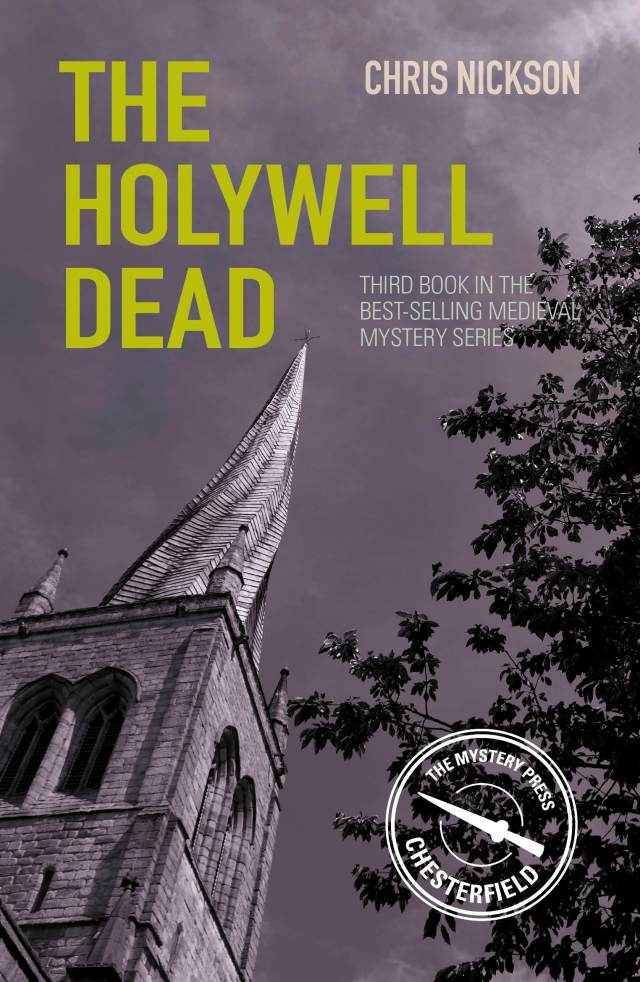
This summer there’s the third, and last, Chesterfield book with John the Carpenter, The Holywell Dead. For a man who came to me in an instant on the A61, driving through Chesterfield, he feels to have been around a while. We still had a little unfinished business, I was aware of that. Not just him, but Walter, Katherine, Martha, even Coroner de Harville. Their stories had further to run. Not that much…maybe just enough. The limits of a small town and a man who’d rather work with wood than find murderers were closing in. And it ends, I hope, in a fairly apocalyptic fashion, bowing out on a high note. I’ve enjoyed my time in the 14th century with him, but we’ve walked as far as the fork in the road and he’s taken one path and I’ve trodden along the other.

9780750979955

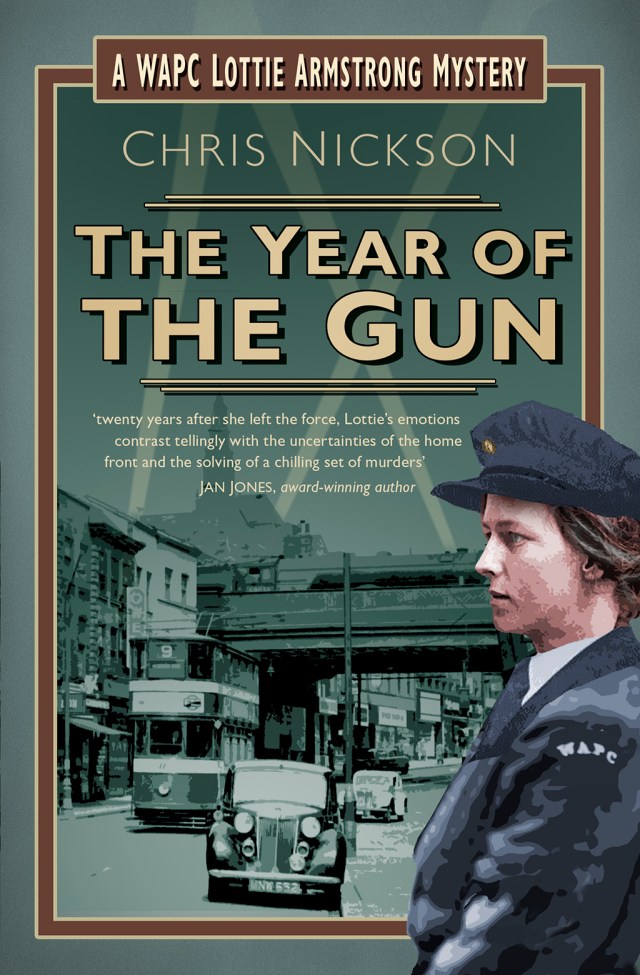
Then there’s my second – and again, last – visit with Lottie Armstrong in The Year of the Gun. I didn’t have a choice about it. She insisted. Her presence haunted me after I’d completed Modern Crimes, so that she had to come back. But the woman I visited again was older, in her forties, and experiencing World War II in Leeds. There was a vibrancy about her, so extraordinary by being ordinary. She had this other adventure to tell me about; all I had to do was listen and note it all down. But she wasn’t going to let me be until she’d finished the tale. As I said, the choice was taken out of my hands.

the-year-of-the-gun-new-fcp

And finally, in late November there will be Free from All Danger, the seventh Richard Nottingham book. It’s still unfolding, not quite all written yet. But I’ve known for a long time that Richard had more to say, and I’m glad he has the chance. By the time it appears, it will be four years since the last volume in the series.

I’m not a fan of endless series with the same character. It’s rare to be able to pull that off, although one or two writers do manage it with some depth. But as characters age, some edges get rounded, while others splinter a little and grow jagged and sharp. Some surfaces harden and other become softer. Those are the hallmarks, far more than the lines on the face or the lack of hair.

Richard has been away, but as he comes back it’s a chance to see how Leeds and the world has changed, and what his place in this might be. The old rubbing up against the new and how they can work together.

In many ways, Richard struck me early on as being like the straight-arrow sheriff in a Western, with his strong sense of good and evil. That changed somewhat over the course of the books, and the grey areas lapped so strongly into the black and the white. But coming out of retirement, how will he find everything now? Is he still sharp enough? More than that, where does he fit? And part of that is me, and my own sense of mortality, heavily tempered by the last 12 months, and the knowledge that new generations are shaping the world, while those of us who are older become more and more like bystanders, slightly out of time.

If the series had continued without a break, this wouldn’t have been the book I’d have written. So I hope that gap, that distance, has served us well.

Tom (and Annabelle, naturally), John, Lottie, Richard – they’re all as alive to me as anyone I talk to in a shop or over coffee. They’re friends, confidantes. And sometimes their books refract bits of the present into the past. Sometimes reflections of history, sometimes my own present, my thoughts and emotions. That transmutation that fiction can give.

And that offers a little background to the work of mine that’s appearing in the next 12 months. Of course, I hope they entertain, which is what they should do, and if they don’t manage that, then I’ve failed as a fiction writer. But there’s a backstory to each one, too, and maybe knowing it will offer a little more richness to the books.

A Christmas Tale

For someone who doesn’t care about Christmas, I seem to end up writing a Christmas story every year. Most of them have been little present for the wonderful Leeds Book Club, and you can find them here if you scroll down the page. This time, though, I thought I’d simply put it up here. And, in an even more unusual twist, for once it’s very contemporary. I hope you like it, and happy holidays of whatever kind you celebrate (or none).


For a moment she didn’t even realise she was doing it. Then Kate caught herself, singing along with Joni Mitchell’s “River” as her car idled at the traffic lights. At least it was a depressing Christmas song. This was always the worst time of year. Both her parents had died in December, years apart, and it always brought back memories, some good, most of them bad.

Ahead of her, the decorations glowed along the Headrow. Four o’clock and it was already full dark. She felt as if she’d barely seen daylight today. In the Magistrates’ Court since nine, waiting, then just five minutes of evidence before she was off the stand. At least she could duck off home early for once.

She glanced out of the passenger window. The big tree in front of the Town Hall was lit up, trying to give some spirit to the city. Kate was about to turn away when something caught her eye. A man looking around cautiously before ducking close to the tree and putting down a pack.

A horn beeped and her eyes slid to the rearview mirror. The lights had changed and traffic was moving. Kate put on her indicator, crept round the corner to Calverley Street, then on to the cobbled forecourt. She could still see the man at the bottom of the steps, gazing up to the top of the tree. Kate turned off the engine and suddenly Joni was silent. She took the radio from her briefcase.

‘This is DI Thornton.’

‘Go ahead, ma’am.’

‘Got something at the Town Hall. A man’s just left something under the big tree outside.’

For a few seconds there was nothing from the other end. She could feel her heart beating fast.

‘Sent out the alert, ma’am.’ The voice was tense now. ‘The super wants to know if you’re you sure you saw it?’

Typical Silver Command question. Don’t believe the bloody officer on the scene.

‘I’m certain. I can make it out. I’m parked close. I can still see the man.’

‘Description, ma’am?’

She stared.

‘White, maybe five feet nine. Wearing a parka. It might be green, hard to tell. Looks a little stocky. Dark bobble cap. Wait, he’s starting to walk away.’

‘We’re going to talk to the CCTV centre. Silver Command says they can track him. He wants you to move away from the area.’

Nobody was saying what could be in that package. These days it was safer to assume the worst.

‘There are people all around. What about them?’

‘Units are on the way. They should be there very soon.’

She could make out the distant wail of the sirens. Five or six of them, maybe more.  Another thirty seconds and they’d probably be here; certainly no more than a minute.

‘I’m going to follow him,’ Kate said. She clicked off the radio, dropped it on the seat and locked the car behind her. Cameras were fine, but nothing beat someone on the ground. Someone there and ready to act. Her heels clicked briskly as she walked. In her pocket the phone was buzzing; she switched it to silent.

He was crossing the road and starting to disappear into the throng on East Parade. Kate hurried, ducking through the traffic and ignoring the blaring horns. Too many people around for him to spot her. He hadn’t even looked back, he wasn’t hurrying.

She kept ten yards away, close enough to keep him in easy sight and rush him if it was needed. A glance over her shoulder. Flashing lights all around the Town Hall, traffic stopped on the Headrow. Good, everything was in hand there.

He left the pavement, going over then along South Parade. For a moment she’d been able to see his face as he turned his head. About fifty, jowly, stubble on his cheeks. Along Park Row, past Becketts Bank, the smokers gathered outside the bar, then on to Bond Street.

Shit.

Kate took out her phone. Five missed calls. She swiped the screen as she walked and pressed the number that had been trying to reach her.

‘What the hell-’

‘Another hundred yards and he’ll be on Commercial Street, sir. How many people do we have close?’

‘Two on Briggate heading your way and another coming up Albion Street. Why-’

Too far away, Kate decided. He needed to be stopped now.

‘I’m moving in on him, sir.’ She ended the call and put the phone back in her pocket.

Deep breath time. Kate could hear the busker on the corner ahead, the old man with the good voice doing his Johnny Cash songs. She walked faster, trying not to run; she didn’t want to panic him. Her heart was pounding so hard she thought it would break her ribs. Kate checked: the handcuffs were in her pocket. Five yards away now. Three. Two.

He went down easily. Before he could even react she had his wrists cuffed behind his back.

‘Police’ she shouted as people stopped to watch. ‘Move away.’

Then she heard the thud of feet as three uniforms came running.
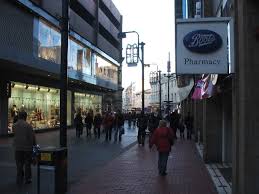
bond-street

No weapon. There was nothing at all, besides his wallet, a couple of pounds in change, and a bloody nose where his face had hit the pavement. He was sitting on the ground, dazed, wrists cuffed behind him.

Kate had laddered her tights, she saw as she squatted to talk to the man. Brand new pair that morning, too.

‘Right, Kenneth.’ She had his wallet open, looking at the driving licence. Kenneth Mitchell. Fifty one. A Belle Isle address. ‘What did you leave under the tree outside the Town Hall?’

‘Eh?’ He squinted at her.

‘You put a package there. I saw you. That’s why we stopped you.’

His face cleared and he smiled.

‘A present,’ he said. ‘For the kiddies.’

‘What?’ She stood again, hands on hips and looked down at him.

‘Me neighbour, like. We were talking and he said wouldn’t it be a good idea if people left presents for the kiddies under that tree? So I bought summat, wrapped it, and came into town. I didn’t mean any harm.’

Christ. She walked few yards away and took out her phone.

‘Detective Inspector…’ Silver Command was purring note, delicious triumph in his voice.

‘He claims he was leaving a present for children, sir.’ Maybe the ground would open up and swallow her so she wouldn’t have to continue this conversation. Kate tapped her foot. Typical luck. No bloody sinkhole.

‘He’s telling the truth. It’s a Fisher Price something or other. You can apologise and let him go. You might take the time to thank him, too, Detective Inspector.’

‘Yes sir.’ Kate swallowed. ‘He had a nosebleed. I’ll have one of the uniforms get a paramedic.’

‘Make sure you do.’ A pause. ‘But good work, eh? These days…’

He didn’t need to finish the sentence. You couldn’t afford to look for the good in people now, only the bad.

‘Thank you, sir.’ Kate ended the call. At least he’d let her off lightly. But it would be all over the station tomorrow.

She turned to look at Mitchell. The cuffs were off now and one of the uniforms was helping him to his feet.

‘I’m sorry, sir. I hope you understand, though, with the ways things are.’ She smiled at him. ‘It was a lovely thought.’

He nodded and she started to walk away.

‘Merry Christmas,’ Mitchell said.

Kate smiled again. ‘Merry Christmas, sir.’


I’ll finish with one of those seasonal reminders that books make wonderful gifts any time of the year, and both The Iron Water and Modern Crimes are still warm-ish off the presses. On Copper Street, the firth Tom Harper novel, comes out in February, and you can pre-order it here.

The Last Job

Damn the man.  If Amos Worthy hadn’t bought his debt, he wouldn’t be here now. But Josh had been so relieved when the man did it he was almost willing to give over his soul. Sometimes it felt as he’d done exactly that.

He’d gone up to the hanging on Chapeltown Moor, drunk more good ale than he should, and made a bet on the horse race afterwards with Moreland the Fence. In his stupor he’d wagered more than he had, certain the nag would win. It was the favourite, wearing a ribbon from Mrs. Farley, and Josh was sure he’d walk away with plenty of silver in his breeches. Then the animal galloped into a hole and broke its leg.

Josh didn’t have the money to cover what he owed, not even close, and soon Moreland became insistent. He took a beating one night from two men that left him in bed for two days before he could move properly. That was the threat. Next time would be worse. Broken bones, maybe a broken neck.

Then Worthy came to visit, solicitous as you like. Even brought one of his little whores to minister to Josh. He could buy the debt from Moreland, he suggested. Josh wouldn’t even need to give him the money. All he’d need to do was perform one or two services. He left the girl overnight. When he came back the next morning Josh was ready to agree to anything.

That was a year ago and still the ledger wasn’t clean. He knew what Worthy was like but he’d agreed anyway. What was the choice? At least he was still alive. Once, twice a month, he had to break into a house, under orders to steal this or that and take it to the man’s house on Swinegate. He tried to refuse once, to say he’d paid enough, and Worthy had slashed his face with that silver-topped cane he carried. It slashed his skin like a knife, enough to leave a pale scar. After that he’d agreed meekly and prayed he’d survive. Worthy was a big man, he was older. He was bound to keel over dead one of these days.

The months of 1731 had passed and he’d done as he was ordered. Now it was December, Christmas just three weeks away, and he was creeping round a merchant’s house in the middle of a frigid night.

Stealing was Josh’s trade. It had been since he was a boy, moving from picking pockets to snatching what he could through open windows, then learning the housebreaker’s art. He was good at it, never arrested. At twenty, though, he knew his luck couldn’t hold forever. He wanted away from the life. Something steady, where he could settle and dream there could be a future.

Back in October, still in his cups on a Sunday morning after a long night of drinking, he’d ended up in a Baptist service, not even sure how he’d stumbled in there. But he’d found something, some purity in its severity. He’d gone back every Sunday since then, wanting to repent but not certain he was able. He could almost smell the hope, but wasn’t sure he could reach it. He was ready to be immersed, to be baptised, to find that new life.

If Worthy would ever let him go.


Emil Frederiksson was one of a pair of Swedish merchants who’d arrived in Leeds two decades earlier and built a strong, profitable trade exporting cloth to the Baltic. He’d built his new house near to top of Kirkgate, no more than a stone’s throw from the jail. It was the type of place Josh always avoided. Too many rooms, too many servants. And if you stole from the very rich, the law came crashing down hard on your head; he’d seen that happen to men he’d known, transported to America or the Indies and lucky if they lasted long enough for passage back after seven years. But Worthy had ordered. He wanted the mirror that Fredriksson had bought from the silversmith who had his workshop behind the Shambles. And he didn’t accept failure.

Josh had tried to argue. He’d begged. He’d even cried. But Worthy didn’t give an inch. It was only at the end that the man made his promise: do this job and the debt would be forgotten.

Finally he had a ray of light in the distance, if he could reach it. He had to believe it was real.

It would be in the man’s bedroom, the worst place for stealing anything. On the ground floor, he had a chance. He knew how to move around an empty room without a sound. Up the stairs – that was a different matter. People stirred in their sleep. They woke. The servants were just up in the attic.

Josh had watched the house for a night, keeping out of sight in the shadows, standing until he felt frozen by the winter cold. He knew where Frederiksson slept, he spotted a window he could pry open in the larder.

Easily done. He felt the Turkey carpet under his feet in the hall, the slow, soft tick of the longclock. Warmth lingered in the house, enough to bring the feeling back to his fingers and legs after hours of standing and waiting for the town to quieten. Past midnight by the clock on the  Parish Church when he made his move.

He stayed close to the edge of the staircase, where the treads would be less likely to squeak. He held his breath with each step, one hand on the polished bannister to steady himself. It was slow, but he knew it would be.

Josh was alert for any sound, any sense of movement around him. He’d broken into hundreds of houses in his life and knew the rule: always make sure you have a clear way out. It wouldn’t be so easy this time.  But this time, more than ever, he need it. To put all this behind him and then wash away his sins in the freezing river.

Another Turkey carpet on the landing and Josh thank his luck; it would absorb the footfalls and let him move silently. Up here, though, he had his choice of doors. He had to imagine where he was in the house, which one led to Frederiksson’s chamber.

The man was a widower, he slept alone. That made things easier, only one person in the room who might wake. Gingerly, he felt his way along until he was at the right door. Josh stopped, held his breath, and listened. There right at the edge of his hearing, he caught the small snuffles and movements of someone asleep.

His palm was slick as he grasped the door knob. He drew it back and wiped it on his breeches, then gripped again and slowly turned it. Not a sound, no squeak or groan. His eyes were used to the gloom. Gently, inch by inch, he eased the door open, his feet not moving.

Then he was inside, easing across the floor. The shutters were closed, but a fire was banked in the hearth giving a faint glow. Josh remained still, letting his senses adjust. He could feel the man asleep, covers pulled up high. And there, on the table, the reflection of the silver mirror.

Easy, he told himself. Slow and careful. A few more minutes and he’d be gone, he’d be free. One pace and pause. Another. Then a third and fourth, each one seeming as if it might take forever, and he was close enough. Josh reached out, flexing his fingers, then taking hold of the mirror, lifting its weight and pulling it close to his body.

Josh retraced his steps, closing the door behind him without even a click. He could feel his heart pounding in his chest, but he resisted the impulse to run. You made mistakes when you hurried, and this final time would be perfect.

The stairs took time. His throat felt dry, as if it would take an ocean of ale to quench his thirst. Then he felt the Turkey carpet of the hall under his shoes and he began to believe he would soon be free.

Into the kitchen, dark and shadowy, one hand reaching for the door of the larder with its open window, and someone opened a lantern.

‘There’s no point in trying to run. I have a man waiting outside.’

The speaker raised his arm and showed his face. Josh knew him. Every criminal in Leeds did. Richard Nottingham, the constable. The mirror slipped out of his hand and shattered on the flagstones.

‘Seven years of bad luck,’ Nottingham said. ‘That sounds right enough. Good job it wasn’t the silver mirror.’

Josh could feel himself starting to shake. Right at his core, then moving to his arms as if he was freezing.

‘How?’

‘You need to learn not to talk about your plans. Someone heard you and decided we ought to know. Maybe you’ll like the Indies. It’ll be warmer there.’

Amos Worthy. The bastard would never let him go. He’d been the one who peached. Josh would never be free now.

170px-oliver_twist_-_cruikshank_-_the_burgulary

In November 2017 there will be a new Richard Nottingham novel, Free From All Danger. But I’ll be talking much more about it as the time approaches. Meanwhile, I’d be glad if you’d take a glance at my most recent books, The Iron Water and Modern Crimes. Christmas is coming, after all, and books make excellent presents.

The Factory Lad’s Testimony

This story appears in my collection, Leeds, The Biography: A History of Leeds in Short Stories, published by Armley Press. But in many ways, it’s not mine at all. It’s taken from John Dawson’s evidence in 1833 to the Factory Commissioners when they came to Leeds, investigating the employment of children in the ‘manufactories.’ John was one of several people interviewed. The facts are exactly as he described them. All I’ve done is paraphrase his words.


He came in, walking slowly, almost in a shuffle, using a stick to keep himself balanced. His knees bent inward, making each step awkward. Still holding the doorknob he peered around the room, straining his eyes the way a mole might. He wore thick spectacles, almost a frail old man, although he couldn’t have been more than twenty.

The three members of the factory commission – Mr, Turnbull, Mr. Wakefield, and Sir Edward Jepson – sat behind their table as a clerk put papers in front of them. There was an air of sleekness about them; they all looked comfortable with authority.

The young man was wearing his best clothes, a dark jacket, cut high at the waist, a stock and shirt, with breeches and thick woollen hose. On the other side of the room a fire burned in the grate.

‘Come in, please, sir, and sit yourself down,’ Sir Edward said. ‘Thank you for coming to speak to us.’

The young man bowed his head slowly and crossed the floor, his heels tapping on the boards. He sat as upright as any defendant, his back straight, eyes straining to take in the face: the commissioners, the pair of clerks and the scribe waiting with his paper and steel nib to take down every word.

‘What’s your name and what do you do?’ Mr. Wakefield asked.

‘Yes sir, my name is John Dawson,’ the young man began, repeating the words when he was asked to speak more loudly, ‘and I make my living as a tailor when I’m well enough to work.’ He glanced at his audience. ‘As you can see, sir, that my eyesight is bad. That’s why I wear these glasses.’

‘Do you believe there’s a reason for your bad eyesight?’ Mr Turnbull wondered.

‘I do, sir,’ Dawson answered with a nod. ‘If you ask me, it’s from the flax mills I worked in as a lad. There’s always a powerful lot of dust in the air and it does affect the eyes of some folk. I daresay as I’d be blind now if I still worked there.’

‘When did you begin in the mills?’

‘I started in the mills when I was six, sir, a doffer at Shaw and Tennant’s. The work wasn’t too hard, we had to take the full bobbins off the machines and put on empty ones. But the hours were long, six in the morning to seven at night, six days a week. I was lucky, my da was the overlooker in the room. He beat me, same way he beat the other doffers, but not too bad, not as hard as some,’ he added, as if it was the most natural thing in the world. ‘It was the standing all the time that was worst. Every day my knees ached.’

v_ragged_factory_boys

‘Did you receive any education?’ Sir Edward asked.

‘Not as you’d call it, sir.’ Dawson held his head up to face his audience. ‘I always wanted to learn to read and write. And I went to Sunday school whenever I could, unless my ma wanted me at him with the younger bairns or I had no decent clothes or shoes. My da taught me to read, and I was middling good with the Testament.’

‘But that was all?’

‘It was, sir.’

‘Please continue,’ Mr. Wakefield told him, with a glance at the others.

‘My da left Tennant’s when I was ten, and I went with him to Garside’s Mill.’

‘Do you know why he left?’

‘I do not, sir, no. I was just a boy, so they never told me. At Garside’s they put me to work bobbin-hugging, and that was terrible hard work, sir. I had to carry around a basket full of bobbins, some of them still wet. The basket was on my bag, and big it was, held in place by a strap around my forehead.’ He moved his hands to illustrate, each of the commissioners nodding. ‘I often had to carry full baskets up the stairs to the reelers. My knees were so bad that I had to stop after two or three years. You could see them, all bent, but we had no money for a doctor.’

‘No one looked after you there at all?’

‘No sir. They worked us hard there. After a while my da and I left there. We went to Clayton’s, and I was made a doffer again.’

‘Did that help you at all? Mr Turnbull said.

‘The work was easier but the hours were bad. Sometimes five in the morning to half-past nine at night. They gave us forty minutes for us dinner but nothing for breakfast or drinking.’ The lad’s voice was quite even, not angry. Just remembering his life of a few years before. ‘Wasn’t always six days we worked. Sometimes there was only enough for five or four. Weeks like that didn’t bring home enough money.’ He removed his spectacles and polished them on a piece of linen he took from the pocket of his waistcoat. When he spoke he was quieter. ‘It was dangerous work there, too. I knew one lad whose clothes caught in an upright shaft and he closed, and there were other bad accidents I can recall, too. My da died after I’d been there a few years, and when my ma was taken ill we had to go into the workhouse. By then my knees were bent so bad I couldn’t walk more than thirty yards without a rest.’

‘Might we see your knees, Mr-’ Sir Edward glanced down at the page ‘-Mr. Dawson. If you’d be so good.’

Holding on to the chair with one hand, Dawson stood and unbuckled the knees of his breeches, rolling them up. His face was red, not from effort but the embarrassment of being watched so closely.

It was just as he’d said. His knees were misshapen things, bent forward and inwards into something grotesque, beyond human.

‘Thank you,’ Sir Edward told him quickly, looking away and conferring with the other commissioners while Dawson closed his breeches buttons and sat once more.

‘You said you went to the workhouse,’ Mr. Turnbull continued.

‘That’s right, sir.’ Dawson gave a quick nod of his head.

‘What was your experience there?’

‘It was good, sir. At the workhouse they taught me my trade, sir, made a tailor out of me. It’s better than I might have had otherwise. And I did see someone about my knees. They sent me to Mr. Chorley at the infirmary.’

‘Was he able to help you at all?’

‘Very much, sir.’ There was heartfelt gratitude in Dawson’s voice. ‘He gave me strengthening plasters and bandages and they did me some good. You can see it’s still difficult for me to walk, sir, and I need a stick to help me. But it’s better than it was, and I’m very grateful for that. It used to be I couldn’t manage thirty yards without a rest. Now I can walk a hundred yards and more before I need to stop.’ He gave a proud smile.

Sir Edward glanced at the other commissioners. Many more waiting outside to be interviewed before the day was done. Surgeons, overseers, workers, people from all walks of life. When Turnbull and Wakefield shook their heads, he turned back to Dawson.

‘Sir, thank you for coming here today. You’ve been most gracious with your time and we wish you well as a tailor.’

They waited silently as John Dawson left the room, leaning heavily on his stick.


Old Jem Tales – Child Roland

Back in the days when a man could wander free on the roads there lived a man called Old Jem. He’d always seemed ancient, with his beard slowly turning from brown to snowy, shaggy white and his hair hanging long over his shoulders.

His clothes were older than he was, and even in summer he wore a long coat that trailed almost to the ground. Its buttons were long gone, and in winter he held it together with a belt made from rope.

He’d been coming through Leeds even before Richard Nottingham was a boy, finding a place on Briggate to set down his pack, put out his hat and tell his stories for a penny or two. People would crowd around to listen, carried off by his voice and the magic of his words.

Jem would often stay with Richard and Mary Nottingham at the house on Marsh Lane, grateful for a bowl of stew and a place by the hearth to roll out his blanket for the night. He’d entertain Rose and Emily with his tales of kings and princesses and times when magic was still strong in the land.

This is one of the stories he used to tell.

You know, there were a time – aye, long before you or me or anyone as is alive now – where there were magic all over England. Grand as that might sound, it weren’t always good, even if it somehow stirred some mighty deeds.

I’m minded to think of a lad called Roland. He was an earl’s song, the youngest of four children, with two other brothers and a sister called Ellen. One day they was out playing in the churchyard and the oldest brother kicked the ball over the church roof. Now Ellen, she was a lass full of energy and playful and she ran off to fetch it. The boys waited but she didn’t return, and when they went looking, there weren’t hide nor hair of her.

roland

The oldest brother, he went to the wise man in the village who said that Ellen must have been taken by the King of Elfland because she hadn’t gone widdershins round the church – that is, t’opposite way to’t sun. He told the young man what to do to bring her back, and off her went.

And he didn’t come back, neither, and nor did the second son when he tried.

That left Roland. His man didn’t want to let him so, but she knew he needed to do this. So she gave him his father’s sword that never struck in vain and cast a spell to give the blade victory.

Then Roland went to the wise man.

‘I’ll tell thee what I told thy brothers,’ he said. ‘There are twa things, one you do and one you don’t. After you reach Elfland, whoever speaks to you, you must take your sword and cut off their heads. And the thing you must never do is eat or drink anything in Elfland. Now.’

Roland walked and walked and finally he reached a strange meadow where horses grazed. Elfland horses, he could tell it by the way their eyes glowed red as fire.

‘Where will I find the King of Elfland’s Dark Tower?’ Roland asked.

‘I don’t know,’ one of the horses answered. ‘But go down the road until you find the cow-herder.’ He might be able to tell you.’

Roland lifted his sword and took off the horse’s head in a single blow , then carried on along the road.

He found the cow-herder and said,

‘Where will I find the King of Elfland’s Dark Tower?’

‘I don’t know,’ the cow herder responded. ‘But go down this road until you see the hen wife. She might be able to say.’

Roland struck off the cow-herder’s head and walked on until the saw the hen-wife with her fowl.

‘Where do I find the King of Elfland’s Dark Tower?’ He asked.

‘Look for a round, green hill that’s terraced from top to bottom,’ the woman answered. ‘But tha’s got to walk widdershins round the hill and say three times: Open door, open door, and let me come in.’

Well Roland looked at her, and for a moment he didn’t want to chop off her head as he’d been so helpful. But he knew what was needful, so with a single swift blow he did the deed and walked on until he came to hill. He walked three tines around it, the opposite way to the sun, and said the words she’d given him. And happened, but a great door opened in the hillside and Roland went in.

Inside it were like twilight as the gloom seemed to seep through the earth. The were corridors and rooms, arches made of gleaming feldspar. The fittings gleamed like gold and Roland followed the ways until he came to a great hall, where Ellen sat on a settle with a black velvet cushion, pulling a silver comb through her long fair hair.

‘Roland,’ she said. ‘I’m full happy to see you. But you’ve made your journey in vain. Both our brothers tried but they fell to the King’s enchantments and you’ll do the same.’

He told her what he’d done, and how he was footsore and weary and hungry, and asked her for summat to eat and sup.

Ellen was under her own spell. She was forbidden to warn him of the dangers. All she could do was bring him bread and wine and look sadly as he raised it to his lips. But before he could taste a morsel, he remembered the wise man’s advice and threw it to the floor.

And then he heard a shuddering of the tower and the door to the hall was thrown wide as the King of Elfland entered. Roland rushed at him with the sword that never struck in vain, and the pair fought for an hour or more. Then, with a blow, Roland forced the King to his knees, and demanded he released his sister and his brothers in exchange for mercy. With a bowed head, the king agreed. He took a small vial from a chest and poured drops of a liquid red as blood on the eyes of the enchanted brothers who’d been placed to sleep in a room. They awoke, claiming their souls had left their bodies but had now returned. Then the king whispered some words over Ellen, and suddenly the bright, happy girl returned.

Troland granted the kind his mercy. With Ellen and his brothers he left the dark tower and returned to their home, never to go back to Elfland – and never to run widdershins round the church, neither.

Old Jem Tales – The Parson And The Salmon

Back in the days when a man could wander free on the roads there lived a man called Old Jem. He’d always seemed ancient, with his beard slowly turning from brown to snowy, shaggy white and his hair hanging long over his shoulders.

His clothes were older than he was, and even in summer he wore a long coat that trailed almost to the ground. Its buttons were long gone, and in winter he held it together with a belt made from rope.

He’d been coming through Leeds even before Richard Nottingham was a boy, finding a place on Briggate to set down his pack, put out his hat and tell his stories for a penny or two. People would crowd around to listen, carried off by his voice and the magic of his words.

Jem would often stay with Richard and Mary Nottingham at the house on Marsh Lane, grateful for a bowl of stew and a place by the hearth to roll out his blanket for the night. He’d entertain Rose and Emily with his tales of kings and princesses and times when magic was still strong in the land.

This is one of the stories he used to tell.


It’s a bitter cold night and the first snow of the year. So if that’ll just plunge that poker in the ale to warm it, I’ll tell you a tale to make you smile. Aye, that’s better, and good health to you and your’n.

A long time ago – the way I heard it, it wasn’t long after the French came over here and that’s many hundreds of years back – there were a priest up in Norham.  That’s on the River Tweed, right up agin Scotland, and I heard all about it where I were up that way. Now he kept a school in his church, and there were one young lad who were allus getting into trouble.

One morning the lad knew he were on to a hiding from the parson, so he got up early, went to the church and took the key from inside the lock. Back outside he turned it so no-one could get it, because that’s where ‘t parson kept the rod he used for beating. Then the lad tossed the key into the river, thinking no one would ever find it.

But this parson, he were a right holy fellow, and when he took his road and went down to the water to catch summat for his supper, God directed him to a certain spot and told him to cast his line. He did as the Good Lord wanted, and afore he knew it, he had a bite on his line.

He pulled it out and he’d caught hissen a plump, juicy salmon. But when he cut if open to get it ready to cook, what did he find inside but the church key. So he was able to get into the church.

I’ll not bother telling you what happened to the young lad. I daresay you can guess it all already.

450px-priests_door