2017, And My Year Ahead

So here we are, tiptoeing into 2017, casting a cautious eye at its possibilities, a little hopeful, a little wary that it might be more brutal than 2016. But the only thing my prognostications and the tea leaves are telling me is about the books I have coming up this year. Sorry I can’t help on lottery numbers or Grand National winners. I’m just not that good.

I write every day. I do it because it’s what I love and I have things to say. I’ve been lucky, so far at least, that publishers have wanted to put them in print and some people enjoy them. You have no idea how grateful I am for that.

I still have things to say, tales to tell. But there’s a strange alchemy that turns life into fiction, an odd transmutation. Late in February the fifth of my Tom Harper novels, On Copper Street,  comes out in the UK. Except that underneath everything, it’s not a Tom Harper book at all; that’s just the cloak it wears. Early last year, in the space of two weeks, I received news that three different friends had all been diagnosed with cancer. By then, 2016 was already whittling away at some of the icons of my generation. My friends, I’m pleased to say, are still here and seem to be doing well. But this book became my way to cope with it all, my way of understanding. Maybe even of accepting, I don’t know. It’s a way to reach down to the truth of it as it hits me, of that balance between life and death.

That, I know, probably doesn’t explain much. But for now, it’ll have to do. Oh, and if you’re especially eager, the best price for it seems to be here.

on-copper-street

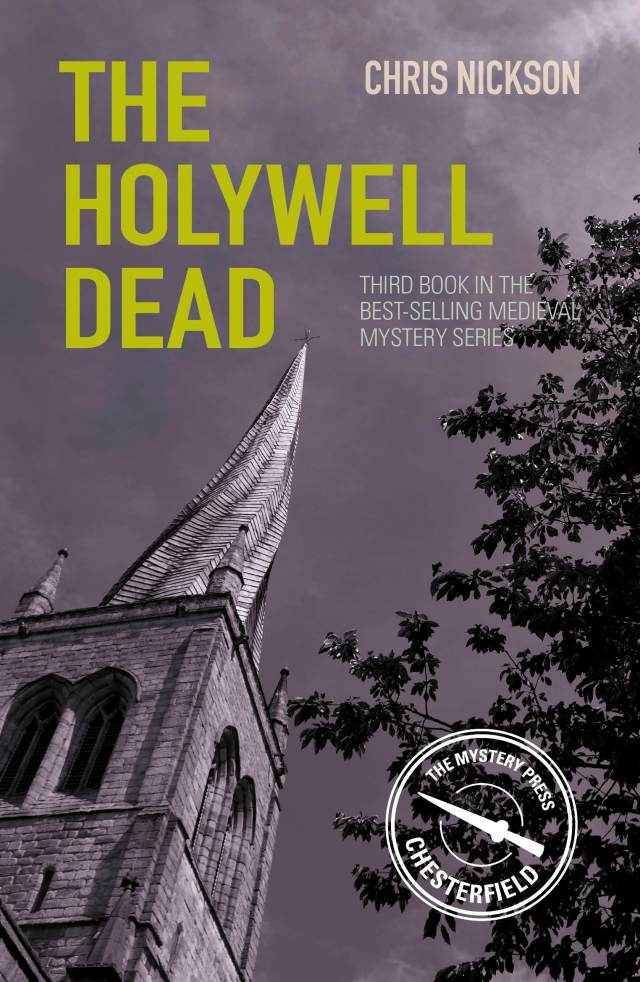
This summer there’s the third, and last, Chesterfield book with John the Carpenter, The Holywell Dead. For a man who came to me in an instant on the A61, driving through Chesterfield, he feels to have been around a while. We still had a little unfinished business, I was aware of that. Not just him, but Walter, Katherine, Martha, even Coroner de Harville. Their stories had further to run. Not that much…maybe just enough. The limits of a small town and a man who’d rather work with wood than find murderers were closing in. And it ends, I hope, in a fairly apocalyptic fashion, bowing out on a high note. I’ve enjoyed my time in the 14th century with him, but we’ve walked as far as the fork in the road and he’s taken one path and I’ve trodden along the other.

9780750979955

Then there’s my second – and again, last – visit with Lottie Armstrong in The Year of the Gun. I didn’t have a choice about it. She insisted. Her presence haunted me after I’d completed Modern Crimes, so that she had to come back. But the woman I visited again was older, in her forties, and experiencing World War II in Leeds. There was a vibrancy about her, so extraordinary by being ordinary. She had this other adventure to tell me about; all I had to do was listen and note it all down. But she wasn’t going to let me be until she’d finished the tale. As I said, the choice was taken out of my hands.

the-year-of-the-gun-new-fcp

And finally, in late November there will be Free from All Danger, the seventh Richard Nottingham book. It’s still unfolding, not quite all written yet. But I’ve known for a long time that Richard had more to say, and I’m glad he has the chance. By the time it appears, it will be four years since the last volume in the series.

I’m not a fan of endless series with the same character. It’s rare to be able to pull that off, although one or two writers do manage it with some depth. But as characters age, some edges get rounded, while others splinter a little and grow jagged and sharp. Some surfaces harden and other become softer. Those are the hallmarks, far more than the lines on the face or the lack of hair.

Richard has been away, but as he comes back it’s a chance to see how Leeds and the world has changed, and what his place in this might be. The old rubbing up against the new and how they can work together.

In many ways, Richard struck me early on as being like the straight-arrow sheriff in a Western, with his strong sense of good and evil. That changed somewhat over the course of the books, and the grey areas lapped so strongly into the black and the white. But coming out of retirement, how will he find everything now? Is he still sharp enough? More than that, where does he fit? And part of that is me, and my own sense of mortality, heavily tempered by the last 12 months, and the knowledge that new generations are shaping the world, while those of us who are older become more and more like bystanders, slightly out of time.

If the series had continued without a break, this wouldn’t have been the book I’d have written. So I hope that gap, that distance, has served us well.

Tom (and Annabelle, naturally), John, Lottie, Richard – they’re all as alive to me as anyone I talk to in a shop or over coffee. They’re friends, confidantes. And sometimes their books refract bits of the present into the past. Sometimes reflections of history, sometimes my own present, my thoughts and emotions. That transmutation that fiction can give.

And that offers a little background to the work of mine that’s appearing in the next 12 months. Of course, I hope they entertain, which is what they should do, and if they don’t manage that, then I’ve failed as a fiction writer. But there’s a backstory to each one, too, and maybe knowing it will offer a little more richness to the books.

A Christmas Tale

For someone who doesn’t care about Christmas, I seem to end up writing a Christmas story every year. Most of them have been little present for the wonderful Leeds Book Club, and you can find them here if you scroll down the page. This time, though, I thought I’d simply put it up here. And, in an even more unusual twist, for once it’s very contemporary. I hope you like it, and happy holidays of whatever kind you celebrate (or none).


For a moment she didn’t even realise she was doing it. Then Kate caught herself, singing along with Joni Mitchell’s “River” as her car idled at the traffic lights. At least it was a depressing Christmas song. This was always the worst time of year. Both her parents had died in December, years apart, and it always brought back memories, some good, most of them bad.

Ahead of her, the decorations glowed along the Headrow. Four o’clock and it was already full dark. She felt as if she’d barely seen daylight today. In the Magistrates’ Court since nine, waiting, then just five minutes of evidence before she was off the stand. At least she could duck off home early for once.

She glanced out of the passenger window. The big tree in front of the Town Hall was lit up, trying to give some spirit to the city. Kate was about to turn away when something caught her eye. A man looking around cautiously before ducking close to the tree and putting down a pack.

A horn beeped and her eyes slid to the rearview mirror. The lights had changed and traffic was moving. Kate put on her indicator, crept round the corner to Calverley Street, then on to the cobbled forecourt. She could still see the man at the bottom of the steps, gazing up to the top of the tree. Kate turned off the engine and suddenly Joni was silent. She took the radio from her briefcase.

‘This is DI Thornton.’

‘Go ahead, ma’am.’

‘Got something at the Town Hall. A man’s just left something under the big tree outside.’

For a few seconds there was nothing from the other end. She could feel her heart beating fast.

‘Sent out the alert, ma’am.’ The voice was tense now. ‘The super wants to know if you’re you sure you saw it?’

Typical Silver Command question. Don’t believe the bloody officer on the scene.

‘I’m certain. I can make it out. I’m parked close. I can still see the man.’

‘Description, ma’am?’

She stared.

‘White, maybe five feet nine. Wearing a parka. It might be green, hard to tell. Looks a little stocky. Dark bobble cap. Wait, he’s starting to walk away.’

‘We’re going to talk to the CCTV centre. Silver Command says they can track him. He wants you to move away from the area.’

Nobody was saying what could be in that package. These days it was safer to assume the worst.

‘There are people all around. What about them?’

‘Units are on the way. They should be there very soon.’

She could make out the distant wail of the sirens. Five or six of them, maybe more.  Another thirty seconds and they’d probably be here; certainly no more than a minute.

‘I’m going to follow him,’ Kate said. She clicked off the radio, dropped it on the seat and locked the car behind her. Cameras were fine, but nothing beat someone on the ground. Someone there and ready to act. Her heels clicked briskly as she walked. In her pocket the phone was buzzing; she switched it to silent.

He was crossing the road and starting to disappear into the throng on East Parade. Kate hurried, ducking through the traffic and ignoring the blaring horns. Too many people around for him to spot her. He hadn’t even looked back, he wasn’t hurrying.

She kept ten yards away, close enough to keep him in easy sight and rush him if it was needed. A glance over her shoulder. Flashing lights all around the Town Hall, traffic stopped on the Headrow. Good, everything was in hand there.

He left the pavement, going over then along South Parade. For a moment she’d been able to see his face as he turned his head. About fifty, jowly, stubble on his cheeks. Along Park Row, past Becketts Bank, the smokers gathered outside the bar, then on to Bond Street.

Shit.

Kate took out her phone. Five missed calls. She swiped the screen as she walked and pressed the number that had been trying to reach her.

‘What the hell-’

‘Another hundred yards and he’ll be on Commercial Street, sir. How many people do we have close?’

‘Two on Briggate heading your way and another coming up Albion Street. Why-’

Too far away, Kate decided. He needed to be stopped now.

‘I’m moving in on him, sir.’ She ended the call and put the phone back in her pocket.

Deep breath time. Kate could hear the busker on the corner ahead, the old man with the good voice doing his Johnny Cash songs. She walked faster, trying not to run; she didn’t want to panic him. Her heart was pounding so hard she thought it would break her ribs. Kate checked: the handcuffs were in her pocket. Five yards away now. Three. Two.

He went down easily. Before he could even react she had his wrists cuffed behind his back.

‘Police’ she shouted as people stopped to watch. ‘Move away.’

Then she heard the thud of feet as three uniforms came running.

bond-street

No weapon. There was nothing at all, besides his wallet, a couple of pounds in change, and a bloody nose where his face had hit the pavement. He was sitting on the ground, dazed, wrists cuffed behind him.

Kate had laddered her tights, she saw as she squatted to talk to the man. Brand new pair that morning, too.

‘Right, Kenneth.’ She had his wallet open, looking at the driving licence. Kenneth Mitchell. Fifty one. A Belle Isle address. ‘What did you leave under the tree outside the Town Hall?’

‘Eh?’ He squinted at her.

‘You put a package there. I saw you. That’s why we stopped you.’

His face cleared and he smiled.

‘A present,’ he said. ‘For the kiddies.’

‘What?’ She stood again, hands on hips and looked down at him.

‘Me neighbour, like. We were talking and he said wouldn’t it be a good idea if people left presents for the kiddies under that tree? So I bought summat, wrapped it, and came into town. I didn’t mean any harm.’

Christ. She walked few yards away and took out her phone.

‘Detective Inspector…’ Silver Command was purring note, delicious triumph in his voice.

‘He claims he was leaving a present for children, sir.’ Maybe the ground would open up and swallow her so she wouldn’t have to continue this conversation. Kate tapped her foot. Typical luck. No bloody sinkhole.

‘He’s telling the truth. It’s a Fisher Price something or other. You can apologise and let him go. You might take the time to thank him, too, Detective Inspector.’

‘Yes sir.’ Kate swallowed. ‘He had a nosebleed. I’ll have one of the uniforms get a paramedic.’

‘Make sure you do.’ A pause. ‘But good work, eh? These days…’

He didn’t need to finish the sentence. You couldn’t afford to look for the good in people now, only the bad.

‘Thank you, sir.’ Kate ended the call. At least he’d let her off lightly. But it would be all over the station tomorrow.

She turned to look at Mitchell. The cuffs were off now and one of the uniforms was helping him to his feet.

‘I’m sorry, sir. I hope you understand, though, with the ways things are.’ She smiled at him. ‘It was a lovely thought.’

He nodded and she started to walk away.

‘Merry Christmas,’ Mitchell said.

Kate smiled again. ‘Merry Christmas, sir.’


I’ll finish with one of those seasonal reminders that books make wonderful gifts any time of the year, and both The Iron Water and Modern Crimes are still warm-ish off the presses. On Copper Street, the firth Tom Harper novel, comes out in February, and you can pre-order it here.

The Last Job

Damn the man.  If Amos Worthy hadn’t bought his debt, he wouldn’t be here now. But Josh had been so relieved when the man did it he was almost willing to give over his soul. Sometimes it felt as he’d done exactly that.

He’d gone up to the hanging on Chapeltown Moor, drunk more good ale than he should, and made a bet on the horse race afterwards with Moreland the Fence. In his stupor he’d wagered more than he had, certain the nag would win. It was the favourite, wearing a ribbon from Mrs. Farley, and Josh was sure he’d walk away with plenty of silver in his breeches. Then the animal galloped into a hole and broke its leg.

Josh didn’t have the money to cover what he owed, not even close, and soon Moreland became insistent. He took a beating one night from two men that left him in bed for two days before he could move properly. That was the threat. Next time would be worse. Broken bones, maybe a broken neck.

Then Worthy came to visit, solicitous as you like. Even brought one of his little whores to minister to Josh. He could buy the debt from Moreland, he suggested. Josh wouldn’t even need to give him the money. All he’d need to do was perform one or two services. He left the girl overnight. When he came back the next morning Josh was ready to agree to anything.

That was a year ago and still the ledger wasn’t clean. He knew what Worthy was like but he’d agreed anyway. What was the choice? At least he was still alive. Once, twice a month, he had to break into a house, under orders to steal this or that and take it to the man’s house on Swinegate. He tried to refuse once, to say he’d paid enough, and Worthy had slashed his face with that silver-topped cane he carried. It slashed his skin like a knife, enough to leave a pale scar. After that he’d agreed meekly and prayed he’d survive. Worthy was a big man, he was older. He was bound to keel over dead one of these days.

The months of 1731 had passed and he’d done as he was ordered. Now it was December, Christmas just three weeks away, and he was creeping round a merchant’s house in the middle of a frigid night.

Stealing was Josh’s trade. It had been since he was a boy, moving from picking pockets to snatching what he could through open windows, then learning the housebreaker’s art. He was good at it, never arrested. At twenty, though, he knew his luck couldn’t hold forever. He wanted away from the life. Something steady, where he could settle and dream there could be a future.

Back in October, still in his cups on a Sunday morning after a long night of drinking, he’d ended up in a Baptist service, not even sure how he’d stumbled in there. But he’d found something, some purity in its severity. He’d gone back every Sunday since then, wanting to repent but not certain he was able. He could almost smell the hope, but wasn’t sure he could reach it. He was ready to be immersed, to be baptised, to find that new life.

If Worthy would ever let him go.


Emil Frederiksson was one of a pair of Swedish merchants who’d arrived in Leeds two decades earlier and built a strong, profitable trade exporting cloth to the Baltic. He’d built his new house near to top of Kirkgate, no more than a stone’s throw from the jail. It was the type of place Josh always avoided. Too many rooms, too many servants. And if you stole from the very rich, the law came crashing down hard on your head; he’d seen that happen to men he’d known, transported to America or the Indies and lucky if they lasted long enough for passage back after seven years. But Worthy had ordered. He wanted the mirror that Fredriksson had bought from the silversmith who had his workshop behind the Shambles. And he didn’t accept failure.

Josh had tried to argue. He’d begged. He’d even cried. But Worthy didn’t give an inch. It was only at the end that the man made his promise: do this job and the debt would be forgotten.

Finally he had a ray of light in the distance, if he could reach it. He had to believe it was real.

It would be in the man’s bedroom, the worst place for stealing anything. On the ground floor, he had a chance. He knew how to move around an empty room without a sound. Up the stairs – that was a different matter. People stirred in their sleep. They woke. The servants were just up in the attic.

Josh had watched the house for a night, keeping out of sight in the shadows, standing until he felt frozen by the winter cold. He knew where Frederiksson slept, he spotted a window he could pry open in the larder.

Easily done. He felt the Turkey carpet under his feet in the hall, the slow, soft tick of the longclock. Warmth lingered in the house, enough to bring the feeling back to his fingers and legs after hours of standing and waiting for the town to quieten. Past midnight by the clock on the  Parish Church when he made his move.

He stayed close to the edge of the staircase, where the treads would be less likely to squeak. He held his breath with each step, one hand on the polished bannister to steady himself. It was slow, but he knew it would be.

Josh was alert for any sound, any sense of movement around him. He’d broken into hundreds of houses in his life and knew the rule: always make sure you have a clear way out. It wouldn’t be so easy this time.  But this time, more than ever, he need it. To put all this behind him and then wash away his sins in the freezing river.

Another Turkey carpet on the landing and Josh thank his luck; it would absorb the footfalls and let him move silently. Up here, though, he had his choice of doors. He had to imagine where he was in the house, which one led to Frederiksson’s chamber.

The man was a widower, he slept alone. That made things easier, only one person in the room who might wake. Gingerly, he felt his way along until he was at the right door. Josh stopped, held his breath, and listened. There right at the edge of his hearing, he caught the small snuffles and movements of someone asleep.

His palm was slick as he grasped the door knob. He drew it back and wiped it on his breeches, then gripped again and slowly turned it. Not a sound, no squeak or groan. His eyes were used to the gloom. Gently, inch by inch, he eased the door open, his feet not moving.

Then he was inside, easing across the floor. The shutters were closed, but a fire was banked in the hearth giving a faint glow. Josh remained still, letting his senses adjust. He could feel the man asleep, covers pulled up high. And there, on the table, the reflection of the silver mirror.

Easy, he told himself. Slow and careful. A few more minutes and he’d be gone, he’d be free. One pace and pause. Another. Then a third and fourth, each one seeming as if it might take forever, and he was close enough. Josh reached out, flexing his fingers, then taking hold of the mirror, lifting its weight and pulling it close to his body.

Josh retraced his steps, closing the door behind him without even a click. He could feel his heart pounding in his chest, but he resisted the impulse to run. You made mistakes when you hurried, and this final time would be perfect.

The stairs took time. His throat felt dry, as if it would take an ocean of ale to quench his thirst. Then he felt the Turkey carpet of the hall under his shoes and he began to believe he would soon be free.

Into the kitchen, dark and shadowy, one hand reaching for the door of the larder with its open window, and someone opened a lantern.

‘There’s no point in trying to run. I have a man waiting outside.’

The speaker raised his arm and showed his face. Josh knew him. Every criminal in Leeds did. Richard Nottingham, the constable. The mirror slipped out of his hand and shattered on the flagstones.

‘Seven years of bad luck,’ Nottingham said. ‘That sounds right enough. Good job it wasn’t the silver mirror.’

Josh could feel himself starting to shake. Right at his core, then moving to his arms as if he was freezing.

‘How?’

‘You need to learn not to talk about your plans. Someone heard you and decided we ought to know. Maybe you’ll like the Indies. It’ll be warmer there.’

Amos Worthy. The bastard would never let him go. He’d been the one who peached. Josh would never be free now.

170px-oliver_twist_-_cruikshank_-_the_burgulary

In November 2017 there will be a new Richard Nottingham novel, Free From All Danger. But I’ll be talking much more about it as the time approaches. Meanwhile, I’d be glad if you’d take a glance at my most recent books, The Iron Water and Modern Crimes. Christmas is coming, after all, and books make excellent presents.

The Factory Lad’s Testimony

This story appears in my collection, Leeds, The Biography: A History of Leeds in Short Stories, published by Armley Press. But in many ways, it’s not mine at all. It’s taken from John Dawson’s evidence in 1833 to the Factory Commissioners when they came to Leeds, investigating the employment of children in the ‘manufactories.’ John was one of several people interviewed. The facts are exactly as he described them. All I’ve done is paraphrase his words.


He came in, walking slowly, almost in a shuffle, using a stick to keep himself balanced. His knees bent inward, making each step awkward. Still holding the doorknob he peered around the room, straining his eyes the way a mole might. He wore thick spectacles, almost a frail old man, although he couldn’t have been more than twenty.

The three members of the factory commission – Mr, Turnbull, Mr. Wakefield, and Sir Edward Jepson – sat behind their table as a clerk put papers in front of them. There was an air of sleekness about them; they all looked comfortable with authority.

The young man was wearing his best clothes, a dark jacket, cut high at the waist, a stock and shirt, with breeches and thick woollen hose. On the other side of the room a fire burned in the grate.

‘Come in, please, sir, and sit yourself down,’ Sir Edward said. ‘Thank you for coming to speak to us.’

The young man bowed his head slowly and crossed the floor, his heels tapping on the boards. He sat as upright as any defendant, his back straight, eyes straining to take in the face: the commissioners, the pair of clerks and the scribe waiting with his paper and steel nib to take down every word.

‘What’s your name and what do you do?’ Mr. Wakefield asked.

‘Yes sir, my name is John Dawson,’ the young man began, repeating the words when he was asked to speak more loudly, ‘and I make my living as a tailor when I’m well enough to work.’ He glanced at his audience. ‘As you can see, sir, that my eyesight is bad. That’s why I wear these glasses.’

‘Do you believe there’s a reason for your bad eyesight?’ Mr Turnbull wondered.

‘I do, sir,’ Dawson answered with a nod. ‘If you ask me, it’s from the flax mills I worked in as a lad. There’s always a powerful lot of dust in the air and it does affect the eyes of some folk. I daresay as I’d be blind now if I still worked there.’

‘When did you begin in the mills?’

‘I started in the mills when I was six, sir, a doffer at Shaw and Tennant’s. The work wasn’t too hard, we had to take the full bobbins off the machines and put on empty ones. But the hours were long, six in the morning to seven at night, six days a week. I was lucky, my da was the overlooker in the room. He beat me, same way he beat the other doffers, but not too bad, not as hard as some,’ he added, as if it was the most natural thing in the world. ‘It was the standing all the time that was worst. Every day my knees ached.’

v_ragged_factory_boys

‘Did you receive any education?’ Sir Edward asked.

‘Not as you’d call it, sir.’ Dawson held his head up to face his audience. ‘I always wanted to learn to read and write. And I went to Sunday school whenever I could, unless my ma wanted me at him with the younger bairns or I had no decent clothes or shoes. My da taught me to read, and I was middling good with the Testament.’

‘But that was all?’

‘It was, sir.’

‘Please continue,’ Mr. Wakefield told him, with a glance at the others.

‘My da left Tennant’s when I was ten, and I went with him to Garside’s Mill.’

‘Do you know why he left?’

‘I do not, sir, no. I was just a boy, so they never told me. At Garside’s they put me to work bobbin-hugging, and that was terrible hard work, sir. I had to carry around a basket full of bobbins, some of them still wet. The basket was on my bag, and big it was, held in place by a strap around my forehead.’ He moved his hands to illustrate, each of the commissioners nodding. ‘I often had to carry full baskets up the stairs to the reelers. My knees were so bad that I had to stop after two or three years. You could see them, all bent, but we had no money for a doctor.’

‘No one looked after you there at all?’

‘No sir. They worked us hard there. After a while my da and I left there. We went to Clayton’s, and I was made a doffer again.’

‘Did that help you at all? Mr Turnbull said.

‘The work was easier but the hours were bad. Sometimes five in the morning to half-past nine at night. They gave us forty minutes for us dinner but nothing for breakfast or drinking.’ The lad’s voice was quite even, not angry. Just remembering his life of a few years before. ‘Wasn’t always six days we worked. Sometimes there was only enough for five or four. Weeks like that didn’t bring home enough money.’ He removed his spectacles and polished them on a piece of linen he took from the pocket of his waistcoat. When he spoke he was quieter. ‘It was dangerous work there, too. I knew one lad whose clothes caught in an upright shaft and he closed, and there were other bad accidents I can recall, too. My da died after I’d been there a few years, and when my ma was taken ill we had to go into the workhouse. By then my knees were bent so bad I couldn’t walk more than thirty yards without a rest.’

‘Might we see your knees, Mr-’ Sir Edward glanced down at the page ‘-Mr. Dawson. If you’d be so good.’

Holding on to the chair with one hand, Dawson stood and unbuckled the knees of his breeches, rolling them up. His face was red, not from effort but the embarrassment of being watched so closely.

It was just as he’d said. His knees were misshapen things, bent forward and inwards into something grotesque, beyond human.

‘Thank you,’ Sir Edward told him quickly, looking away and conferring with the other commissioners while Dawson closed his breeches buttons and sat once more.

‘You said you went to the workhouse,’ Mr. Turnbull continued.

‘That’s right, sir.’ Dawson gave a quick nod of his head.

‘What was your experience there?’

‘It was good, sir. At the workhouse they taught me my trade, sir, made a tailor out of me. It’s better than I might have had otherwise. And I did see someone about my knees. They sent me to Mr. Chorley at the infirmary.’

‘Was he able to help you at all?’

‘Very much, sir.’ There was heartfelt gratitude in Dawson’s voice. ‘He gave me strengthening plasters and bandages and they did me some good. You can see it’s still difficult for me to walk, sir, and I need a stick to help me. But it’s better than it was, and I’m very grateful for that. It used to be I couldn’t manage thirty yards without a rest. Now I can walk a hundred yards and more before I need to stop.’ He gave a proud smile.

Sir Edward glanced at the other commissioners. Many more waiting outside to be interviewed before the day was done. Surgeons, overseers, workers, people from all walks of life. When Turnbull and Wakefield shook their heads, he turned back to Dawson.

‘Sir, thank you for coming here today. You’ve been most gracious with your time and we wish you well as a tailor.’

They waited silently as John Dawson left the room, leaning heavily on his stick.


Old Jem Tales – Child Roland

Back in the days when a man could wander free on the roads there lived a man called Old Jem. He’d always seemed ancient, with his beard slowly turning from brown to snowy, shaggy white and his hair hanging long over his shoulders.

His clothes were older than he was, and even in summer he wore a long coat that trailed almost to the ground. Its buttons were long gone, and in winter he held it together with a belt made from rope.

He’d been coming through Leeds even before Richard Nottingham was a boy, finding a place on Briggate to set down his pack, put out his hat and tell his stories for a penny or two. People would crowd around to listen, carried off by his voice and the magic of his words.

Jem would often stay with Richard and Mary Nottingham at the house on Marsh Lane, grateful for a bowl of stew and a place by the hearth to roll out his blanket for the night. He’d entertain Rose and Emily with his tales of kings and princesses and times when magic was still strong in the land.

This is one of the stories he used to tell.

You know, there were a time – aye, long before you or me or anyone as is alive now – where there were magic all over England. Grand as that might sound, it weren’t always good, even if it somehow stirred some mighty deeds.

I’m minded to think of a lad called Roland. He was an earl’s song, the youngest of four children, with two other brothers and a sister called Ellen. One day they was out playing in the churchyard and the oldest brother kicked the ball over the church roof. Now Ellen, she was a lass full of energy and playful and she ran off to fetch it. The boys waited but she didn’t return, and when they went looking, there weren’t hide nor hair of her.

roland

The oldest brother, he went to the wise man in the village who said that Ellen must have been taken by the King of Elfland because she hadn’t gone widdershins round the church – that is, t’opposite way to’t sun. He told the young man what to do to bring her back, and off her went.

And he didn’t come back, neither, and nor did the second son when he tried.

That left Roland. His man didn’t want to let him so, but she knew he needed to do this. So she gave him his father’s sword that never struck in vain and cast a spell to give the blade victory.

Then Roland went to the wise man.

‘I’ll tell thee what I told thy brothers,’ he said. ‘There are twa things, one you do and one you don’t. After you reach Elfland, whoever speaks to you, you must take your sword and cut off their heads. And the thing you must never do is eat or drink anything in Elfland. Now.’

Roland walked and walked and finally he reached a strange meadow where horses grazed. Elfland horses, he could tell it by the way their eyes glowed red as fire.

‘Where will I find the King of Elfland’s Dark Tower?’ Roland asked.

‘I don’t know,’ one of the horses answered. ‘But go down the road until you find the cow-herder.’ He might be able to tell you.’

Roland lifted his sword and took off the horse’s head in a single blow , then carried on along the road.

He found the cow-herder and said,

‘Where will I find the King of Elfland’s Dark Tower?’

‘I don’t know,’ the cow herder responded. ‘But go down this road until you see the hen wife. She might be able to say.’

Roland struck off the cow-herder’s head and walked on until the saw the hen-wife with her fowl.

‘Where do I find the King of Elfland’s Dark Tower?’ He asked.

‘Look for a round, green hill that’s terraced from top to bottom,’ the woman answered. ‘But tha’s got to walk widdershins round the hill and say three times: Open door, open door, and let me come in.’

Well Roland looked at her, and for a moment he didn’t want to chop off her head as he’d been so helpful. But he knew what was needful, so with a single swift blow he did the deed and walked on until he came to hill. He walked three tines around it, the opposite way to the sun, and said the words she’d given him. And happened, but a great door opened in the hillside and Roland went in.

Inside it were like twilight as the gloom seemed to seep through the earth. The were corridors and rooms, arches made of gleaming feldspar. The fittings gleamed like gold and Roland followed the ways until he came to a great hall, where Ellen sat on a settle with a black velvet cushion, pulling a silver comb through her long fair hair.

‘Roland,’ she said. ‘I’m full happy to see you. But you’ve made your journey in vain. Both our brothers tried but they fell to the King’s enchantments and you’ll do the same.’

He told her what he’d done, and how he was footsore and weary and hungry, and asked her for summat to eat and sup.

Ellen was under her own spell. She was forbidden to warn him of the dangers. All she could do was bring him bread and wine and look sadly as he raised it to his lips. But before he could taste a morsel, he remembered the wise man’s advice and threw it to the floor.

And then he heard a shuddering of the tower and the door to the hall was thrown wide as the King of Elfland entered. Roland rushed at him with the sword that never struck in vain, and the pair fought for an hour or more. Then, with a blow, Roland forced the King to his knees, and demanded he released his sister and his brothers in exchange for mercy. With a bowed head, the king agreed. He took a small vial from a chest and poured drops of a liquid red as blood on the eyes of the enchanted brothers who’d been placed to sleep in a room. They awoke, claiming their souls had left their bodies but had now returned. Then the king whispered some words over Ellen, and suddenly the bright, happy girl returned.

Troland granted the kind his mercy. With Ellen and his brothers he left the dark tower and returned to their home, never to go back to Elfland – and never to run widdershins round the church, neither.

Old Jem Tales – The Parson And The Salmon

Back in the days when a man could wander free on the roads there lived a man called Old Jem. He’d always seemed ancient, with his beard slowly turning from brown to snowy, shaggy white and his hair hanging long over his shoulders.

His clothes were older than he was, and even in summer he wore a long coat that trailed almost to the ground. Its buttons were long gone, and in winter he held it together with a belt made from rope.

He’d been coming through Leeds even before Richard Nottingham was a boy, finding a place on Briggate to set down his pack, put out his hat and tell his stories for a penny or two. People would crowd around to listen, carried off by his voice and the magic of his words.

Jem would often stay with Richard and Mary Nottingham at the house on Marsh Lane, grateful for a bowl of stew and a place by the hearth to roll out his blanket for the night. He’d entertain Rose and Emily with his tales of kings and princesses and times when magic was still strong in the land.

This is one of the stories he used to tell.


It’s a bitter cold night and the first snow of the year. So if that’ll just plunge that poker in the ale to warm it, I’ll tell you a tale to make you smile. Aye, that’s better, and good health to you and your’n.

A long time ago – the way I heard it, it wasn’t long after the French came over here and that’s many hundreds of years back – there were a priest up in Norham.  That’s on the River Tweed, right up agin Scotland, and I heard all about it where I were up that way. Now he kept a school in his church, and there were one young lad who were allus getting into trouble.

One morning the lad knew he were on to a hiding from the parson, so he got up early, went to the church and took the key from inside the lock. Back outside he turned it so no-one could get it, because that’s where ‘t parson kept the rod he used for beating. Then the lad tossed the key into the river, thinking no one would ever find it.

But this parson, he were a right holy fellow, and when he took his road and went down to the water to catch summat for his supper, God directed him to a certain spot and told him to cast his line. He did as the Good Lord wanted, and afore he knew it, he had a bite on his line.

He pulled it out and he’d caught hissen a plump, juicy salmon. But when he cut if open to get it ready to cook, what did he find inside but the church key. So he was able to get into the church.

I’ll not bother telling you what happened to the young lad. I daresay you can guess it all already.

450px-priests_door

Old Jem’s Tales – The Hand of Glory

Back in the days when a man could wander free on the roads there lived a man called Old Jem. He’d always seemed ancient, with his beard slowly turning from brown to snowy, shaggy white and his hair hanging long over his shoulders.

His clothes were older than he was, and even in summer he wore a long coat that trailed almost to the ground. Its buttons were long gone, and in winter he held it together with a belt made from rope.

He’d been coming through Leeds even before Richard Nottingham was a boy, finding a place on Briggate to set down his pack, put out his hat and tell his stories for a penny or two. People would crowd around to listen, carried off by his voice and the magic of his words.

Jem would often stay with Richard and Mary Nottingham at the house on Marsh Lane, grateful for a bowl of stew and a place by the hearth to roll out his blanket for the night. He’d entertain Rose and Emily with his tales of kings and princesses and times when magic was still strong in the land.

This is one of the stories he used to tell.


I don’t know how long ago this happened, but it was afore your time. I heard the tale when I were a young ‘un, and the old lad who told it me swore as it were true.

There were an inn up on the moor past Pickering, on the road to Whitby, and one night a traveller arrived in woman’s clothes, all by hersen and asking to stay until morning. But she needed to leave early, and begged for a little food to be left out to eat before she went on her way.

Now the old couple as kept the inn agreed, but it seemed powerful strange to them, so they told the serving lass to spend the night down by the fire with the woman. The serving lass lay on the settle, but before she closed her eyes she saw that the woman was wearing a man’s shoes and hose under the dress, and suddenly she thought as she’d better pay attention.

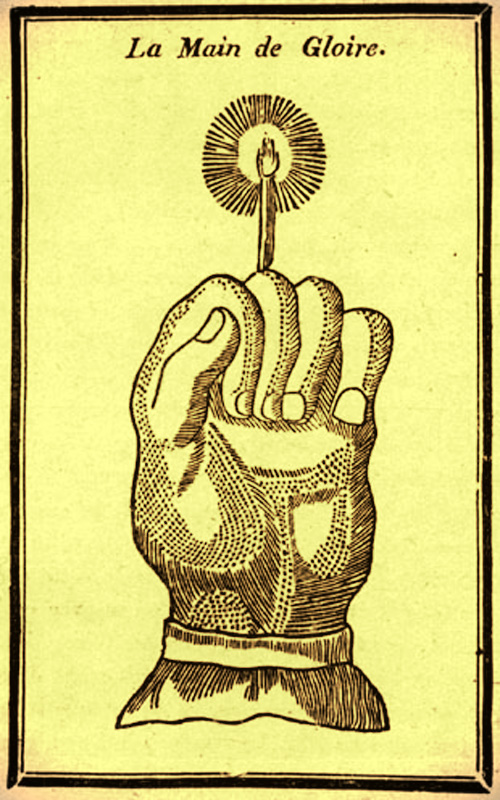
She pretended to sleep and watched. The traveller drew out a candle from the pocket of the dress, and then a dead man’s hand. He place the candle in the hand and lit it with a taper from the fire, passing it in front of the lass’ face and saying,

‘Let them as is asleep be asleep, and them as is awake be awake.’

Then he put the hand and the candle on the table, unbolted the door and walked down to the road, where he started to whistle for his thieving companions.

c163158fda54dbd4dbba04f85925e962

The serving lass, well, she jumped up, ran out of the door behind the man dressed as a woman and pushed him down before she ran back inside and bolted the door again. Upstairs, she tried to wake the innkeeper and his missus. But they slept on, under the spell, and nowt she could do would rouse them.

The lass took a bowl of milk they’d been saving for morning and threw it over the candle so the flame went out. After that she could wake the innkeeper, and when she told him, he charged his blunderbuss and went to the window, asking what the men outside what they wanted.

They said that if the innkeeper would just throw them the dead man’s hand, they’d leave. Instead he raised his weapon and fired. That was the last they heard of them. But next morning, when they went out, they could see blood on the road, going for nigh on a quarter mile…


Old Jem’s stories were told and re-told by others over the years. They must have travelled around England during the centuries, because some were collected and eventually printed in The Penguin Book of English Folktales, although by then Old Jem was long forgotten.

The Year of the Gun

For the last several weeks I’ve been going on about my most recent book, Modern Crimes. In part that’s because I want people to buy it, of course, but also because I love Lottie Armstrong, the main character. She’s extraordinary by being so ordinary, and she’s full of life. She fizzes – at least to me.

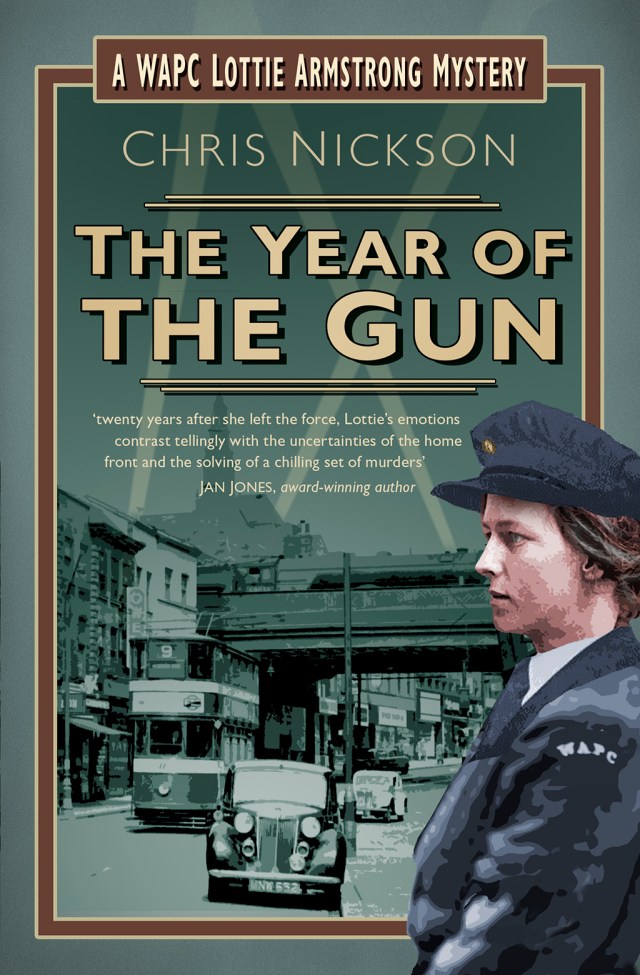
I liked her so much that I wasn’t ready to let her go. But the circumstances at the close of the book made that difficult (and yes, you’ll have to read it to find out). So I decided to bring her back 20 years later, not as a police constable, but in her mid-40s, as a member of the Women’s Auxiliary Police Corps in 1944, right in the middle of World War II, in a book titled The Year of the Gun, which will be published Autumn 2017 (and scroll down to the bottom for the spectacular cover).

The first few pages of that book are at the end of Modern Crimes. However, to tempt you to discover Lottie in 1924 and look forward to 1944, here’s another small episode from The Year of the Gun.


Right on the dot of ten Helen rang through from the switchboard.

‘There’s an American here to see your boss. A Captain Ellison.’

‘Send him up, will you?’ Lottie said.

‘He’s on his way.’ She lowered her voice to a whisper. ‘He’s very good looking. I could eat him for my tea.’

‘Get away with you,’ Lottie laughed. Never mind; she’d find out for herself in a moment.

Good looking, she wondered as he entered the room, cap under his arm and a diffident grin on his face. Maybe. At least he didn’t have that terrible cropped hair like the other Americans. His had a little style to it, dark, parted at the side, and his smile showed strong white teeth.

‘Hi. I’m Cliff Ellison, US Army CID. Looking for Detective Chief Superintendent McMillan?’ It came out as a question. Helen was right; there was something endearing about him, she decided. Lines around his eyes and mouth that showed he’d lived, but no real brashness to his manner.

‘I’m WAPC Armstrong. I’ll show you through.’

A knock on the door and she entered. ‘It’s Captain Ellison, sir.’ Her mouth twitched into a smile. ‘Here just as you requested.’

‘Could you find three cups of tea, please, then join us?’

‘Yes, sir.’

By the time she returned the men were talking earnestly. Any frostiness in the air had already vanished.

‘It’s not a trickle, Chief Superintendent, it’s a flood,’ Ellison said as he stubbed out a cigarette. ‘We’re never going to officially admit that, but it’s the truth. And before you say anything, it’s the same in your services. I’ve talked to those guys in the Special Investigation Branch and they say it’s pretty much impossible to stop. You arrest one thief and two more take his place.’

‘The only thing that concerns me right now is these hand guns,’ McMillan said. ‘One in particular and what it’s done.’ He pushed a file across the desk. ‘Take a look for yourself.’

He drank his tea and glanced at Lottie as Ellison skimmed the sheets.

‘Two common factors,’ the captain said when he’d finished. ‘Both in the service, both shot.’

‘Three. Both the bodies were at Kirkstall Abbey. It’s a ruin,’ he explained, ‘an old monastery. One was killed there, the other dumped in the grounds.’

‘Is that important, do you think?’ Ellison asked sharply.

‘I have no idea,’ McMillan told him.

‘Look, I was a cop before I joined the army. Back in Seattle. A lieutenant, detective.’ He gave a sad smile. ‘I’ve seen murders before.’

‘Anything like this?’

‘No, sir.’

He was trying, Lottie thought. And there was something about him; he seemed like a inherently decent man.

‘I have someone running round killing girls. Two of them in two days. The murderer could be anyone – British, American. I’ve got nothing to go on. Nothing at all.’ McMillan cocked his head. ‘You say were a copper. What would you do?’

‘Well…’ Ellison stroked his chin. ‘I’d be using my informers. And I guess I’d try and get someone on the American side to follow things from there.’

‘I have people talking to the snouts. Grasses, informers,’ he explained when the other man look confused.

‘I can try to help from our end,’ Ellison said.

‘I’ll take anything I can get at this stage.’

‘What would make sense is a co-ordinated operation, Chief Superintendent.’

‘John. I never liked being called by my rank.’

‘John.’ Ellison nodded and smiled. ‘I’m Cliff.’

Cliff, Lottie thought. Clifford. Why did Americans have such strange names? Bing. Clark. It sounded like they’d made them up on the spot.

‘If you can help me catch my killer, I’ll be grateful.’

‘No promises, but I’ll do what I can.’ He gestured at the file. ‘Is there any chance I can get a copy of that?’

‘I’ll have one sent to you.’

‘I saw something about a house in there. Where is it?’

‘My evidence people have gone over it.’ McMillan hesitated a moment. ‘I thought it had something to do with the murders, but it seems I was wrong.’

‘Hunch?’ He nodded. ‘We all have them. I’d still like to take a look at the place. It says in there that an American was looking at the place and there was one of our Jeeps.’

‘OK. Lottie can drive you. It’s easier than giving directions.’

She was taken by surprise. He’d never offered her services to anyone before; Ellison was honoured and he didn’t even know it.

‘Of course, sir,’ she said.


‘Lottie?’ he asked as she weaved through traffic on the Headrow, past the Town Hall steps where she’d heard Mr Churchill speak a couple of years before. ‘Is that short for something?’

‘Charlotte, sir.’

‘And WAPC?’ He read the letters off her shoulder flash. ‘What’s that?’

‘Women’s Auxiliary Police Corps.’ She glanced in the mirror and smiled. ‘Not a proper copper.’

‘So you’re his driver?’

‘And dogsbody. Conscience, too, if he needs one. We’ve actually known each other for years. It’s a bit of a long story.’ One she wasn’t about to spill to a complete stranger. ‘You said you’re from Seattle. Where’s that?’

‘Kind of the top left hand corner of the country.’ Ellison gazed out at the clouds and the green of Woodhouse Moor. ‘The climate’s pretty much like England, really.’

‘Is it really all cowboys out there?’

He began to laugh so hard Lottie thought she’d need to park and thump him on the back. Finally he stopped, pulling out a handkerchief and wiping his eyes.

‘Sorry, but you Brits…’ He took a breath. ‘Really, that’s all history. Seattle’s a big city.’ He looked out of the car window. ‘More modern than this. Newer.’

‘We have history,’ she said defensively. ‘A lot of it.’

By the time she parked at the end of Shire Oak Road she’d learned that he was forty-three, had a degree in history and he’d spent eighteen years in the police. Divorced with a pair of children. Americans were always so open about themselves; she’d noticed that before.

‘Have you been inside the house?’

‘With the superintendent. We did the first search.’

He looked at her more carefully. ‘You’re more than just an auxiliary, aren’t you?’

‘Not really.’ She smiled. ‘I was a real policewoman once. That’s all.’

Ellison gave her a curious look.

‘OK. So show me round.’

There really was nothing to see. Everything had been taken for examination, fingerprint dust over most of the surfaces. She pointed out where things had been as he listened attentively, then left him to poke around the place. Maybe he’d spot something they’d missed.

‘The old guy next door?’ Ellison asked when he’d finished.

‘You’ll need to talk to the Chief Super about him.’ She repeated the man’s claim.

‘Definitely an American star on the Jeep?’

‘That’s what he said.’

‘Hmm.’ He looked at his watch. ‘It’s nearly lunchtime. Is there somewhere we can eat?’

‘I think we can find a place,’ Lottie told him with a grin. ‘Come with me.’

Charlie Brett’s had been on North Lane for years, so long that the grease must have soaked into the walls. Fish and chips, about the only food that wasn’t rationed these days. And they did them well here. She and Geoff would cycle to Headingley to eat. Lean against the wall outside, enjoy the meal with a bottle of Tizer while they watched people go past.

‘You know,’ he said as she led him along the path to the old cottage that housed Brett’s, ‘I’ve been here six months and I’ve never eaten this stuff. We had a place back home selling fish and chips for a while but it closed down. Ivar’s’

‘Then it’s time you found out what the real thing is like.’


‘That’s not too bad.’ He sounded surprised. At least he’d been chivalrous enough to pay.

‘Well, if you want to understand the English, you’d better enjoy it,’ she said. ‘This is more or less our national dish. With lots of salt and vinegar.’

‘I can’t see it going over big in our mess, but it’s tasty,’ Ellison said. ‘What’s your take on these killings?’

‘Me?’ Lottie was astonished he wanted her opinion.

‘Yes, you.’ He grinned, showing those white teeth again. ‘Come on, you’re more than a driver, you’ve said that. You must have an opinion.’

She allowed herself a smile for a second, then her face turned serious.

‘Honestly, I don’t know.’ Lottie sighed. ‘And I’ve no idea if the Shire Oak Road house is even involved in anything. The boss thinks it is but there’s no real evidence.’

‘Hunches are important to cops.’

‘But they’re not infallible.’

‘No,’ he agreed. ‘But if he feels it that strongly…’

‘We’ll see.’ This conversation would just take them in a circle. Time to change the subject. ‘What’s Seattle like?’

‘Pretty,’ he told her after a moment. ‘There’s water on one side and mountains on the other.’ He scrambled in his pocket, brought out a wallet and dug through for photographs. ‘That’s my house.’

She’d never known anyone who carried a picture of his house. It seemed such a strange thing. People, event pets. But never a house. Still, he was far from home, divorced. Maybe it gave him a kind of anchor. It looked to be a pleasant enough place, a wooden bungalow, a large car sitting next to it in the drive.

‘I don’t live in Seattle itself,’ he explained. ‘I’m across Elliott Bay in West Seattle. Long drive round, but it’s nice and peaceful.’

But Lottie was looking at the two other photos that had come out.

‘Are those your children?’

He laid them out on the table and his voice softened. ‘Yeah. Jimmy’s in eighth grade. I’m just hoping all this is over before he’s old enough to be drafted.’

‘It will be,’ she said with certainty. ‘What’s your daughter’s name?’

‘Karen. After my mom. She’s in sixth grade. I get letters from them but it’s not the same. How about you, you have kids?’

‘No. My husband was wounded in the last war. We couldn’t.’

‘I’m sorry.’ He narrowed his eyes a little. ‘What does he do?’

‘He died five years ago. Heart attack.’ It didn’t feel so painful to say these days. Not when so many others had lost family to much worse.

‘That’s terrible.’

‘It happens.’ She pushed the empty plate away and drank the rest of her tea. ‘Come on, I’d better get back or he’ll have me before a firing squad.’
the-year-of-the-gun-new-fcp


The Return of Richard Nottingham

It’s been three and a half years since the last Richard Nottingham book, Fair and Tender Ladies, was published; it feels like much longer. But the six books in the series have a real, deep place in my heart. Not just because they were the first novels of mine to see print. Richard and the others became good friends. When one of them died I felt it inside. To me, they were all very real people. But when my publisher gently suggested that six was enough I waved them farewell – more or less; there were still a couple of short stories.

This year, though, things have changed a little. For reasons no-one understands, sales of those books have been growing, even though most are now only available on ebook. I honestly have no idea why, let alone why now – but I’m happy.

People still email asking if there will be any more in the series; I’ve received more of those in the last months than ever before.

And so I knew Richard and I had some unfinished business.

So, a few weeks ago I approached my publisher with an idea: a new Richard Nottingham book. If ever the time was right, it was now. I’m ready for a short – and I do mean short – break from Tom and Annabelle Harper. Returning to my first family for a spell would be perfect.

I’d asked the question but I had absolutely no idea what the answer might be.

It turned out to be yes. I was over the moon, especially as the news arrived on the day Modern Crimes was launch. Perfect timing.

And so I’m very, very happy to formally announce that Free From All Danger, the seventh Richard Nottingham novel, will be published in the UK in November 2017, then in the US and in ebook about four months later.

Who will be in it? Emily, Richard’s daughter, of course. Rob Lister, her man. Tom Finer, Tom Williamson, and others who will be familiar. As well as some new devils…

I’m grateful for the faith my publisher has in Richard, and even more to those who keep buying the books. To tease you a little, here’s the opening of the novel. I hope it whets your appetite for the rest. Only 13 months to wait!


Leeds, Autumn, 1736


Sometimes he believed he spent too much time in the past, he thought as he crossed Timble Bridge. It was where he spent most of his days now; its lanes and its byways were imprinted on his heart. Once he’d believed there was too much ahead to consider what had gone. But he was young then, eager and reckless and rushing into the future. Now the years had caught up with him. He moved a little more slowly, he preferred to walk with a stick; he was scarred inside and out. His hair was wispy and grey and his face looked creased and folded, with as many lines as a map when he saw it in the glass,

At the Parish Church he turned, following the path to the graves. Rose Waters, his older daughter, married and dead of fever before she could give birth. Mary Nottingham, his wife, murdered because of his own arrogance. Every day he missed her. Both of them. Awkwardly he stooped and picked a leaf from the grass by her headstone. September already. Soon there would be a river of dead leaves as the year tumbled to a close.

Most of the people he cared about were here. John Sedgwick, who’d been his deputy and his friend. Even Amos Worthy. The man had been a panderer, a killer, but they’d shared a curious relationship. Cancer had left him a husk before it too him.

And now there were just two left. Himself and his younger daughter. Richard and Emily Nottingham. She had her man, Rob Lister, now the deputy constable of Leeds, and the road wound out into the distance for them both.

There were more people in his life, of course there were. But so many of those who’d meant most rested here. He stood for a minute. With a sigh he straightened the stock around his neck and walked up Kirkgate. At the jail he glanced through the window. Empty inside, but that was no surprise. Simon Kirkstall, the constable, had died a fortnight before. Simply fallen down one night in the White Swan, a mug of ale in his hand, as his heart stopped beating. Now Rob and the others were working all the hours God sent to cover everything.

Improper Coppers – The Roots of Lottie Armstrong

Modern Crimes is out, and the first feedback from readers has been incredibly gratifying – people seem to love Lottie. But how did those first policewomen in Leeds come about? Well, let me tell you a (true) story…

When the First World War broke out in 1914 it took a heavy toll on the police in Leeds. As soon as hostilities began, 51 constables who were in the Army Reserve were called up to their regiments and any more answered the call. The force was already understaffed, so Special Constables were recruited for the duration, men who were unable to join the forces, usually for health reasons. At its peak there were over 2,000 of them, some working in plain clothes, others undertaking crowd control, point duty, even on the beat in the suburbs.

With the start of the war there was also a spike in the number of women and girls who were involved in criminal offences. That needed a response that went beyond the Specials. So, by December 1914, Voluntary Women’s Patrols had been started, initiated by the National Council of Women.

They were limited to a few areas? And where were the hotspots? Perhaps surprisingly, Headingley, near the rugby/cricket ground, Chapeltown Road, and Woodhouse Moor. Soon that also included the market area and Briggate.

What could the patrols do?

As the Chief Constable’s report in 1916 read: “The object of the Patrols is to define and assist in promoting a higher moral code among girls, and so to guide and encourage them that they will have every hope of becoming self-respecting citizens.”

What exactly did that mean? Essentially to try and keep them on the straight and narrow in society’s terms, which were very prim and proper. Remember, there was a dearth of men around as so many had joined up (or later conscripted) – one in four of the total male population. Where many girls might normally have been courting, there was no one to step out with now. Very often girls were working in factories instead of as domestic servants. They had more money and more freedom, always a potent combination. A few probably ran wild, as did a few children with no father at home.

The women of the Voluntary Patrols had no powers of arrest or detention. They might give someone a talking-to or even a clout, but they could go no further. For the system to work the job required tact, empathy, and the ability to persuade. Did it work? Apparently so: by 1916 only six per cent of juveniles brought before the court were girls.

As to any problems with women and crime, the report didn’t address that…

Towards the end of the war the National Union of Women Workers tried to have women from the Voluntary Patrol in Leeds enrolled as regular police constables. But the city wasn’t too keen on the idea. Instead, in September 1918, two months before fighting ended in France, the Watch Committee decided on a compromise. It would spend £100 a year (plus uniform) for one policewoman, who would have restricted duties (doing little more than the Voluntary Patrols). They placed an advertisement in the Yorkshire Evening Post. 44 women applied for the post, including Mrs. Florence E. Parrish, who was already Chief Patrol Officer and Secretary of the National Union of Women Workers Committee in Leeds.

She was 45 years old, married, certified as a teacher, with a diploma from Leeds University in social organisation and public service, as well as being an experienced social worker. In other words, uniquely qualified for what must often have proved a frustrating post.

By 1921 she’d resigned.

But there, in the First World War, are the roots of the female police officers and PCSOs (and of my fictional 1920s policewoman, Lottie Armstrong) we see on the streets of Leeds today. Next time you’re on Woodhouse Moor and wandering around the market, have a think about morals and the influence of the Volunteer Patrol.

scan0001