Roaring Thirties, Part 1

A few years ago, I wrote a novella, something a little different for me. Light-hearted crime. In Leeds, of course, but not something anyone was likely to publish. It’s been sitting around my various hard drives ever since,  mostly forgotten.

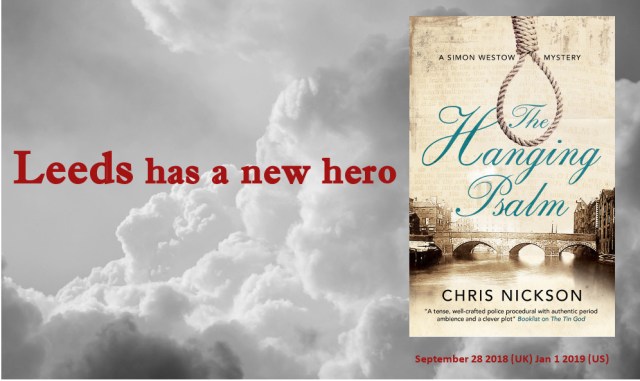
However, I thought that, to fill the weeks between now and Christmas, I’d serialise it for you. But you have to promise to remember that both The Hanging Psalm and The Tin God made great gifts for people.

And so, ladies and gentleman, I give you the first episode. Johnny Williams, take a bow…

CHAPTER ONE

He parked the Austin Seven Swallow outside the Eagle on North Street. There’d been hardly any traffic on the drive up from London, just a few lorries, the cars bucketing along as fast as they could, the drivers’ faces fierce with concentration.

He buttoned his suit jacket and put on the hat, checking the brim in the wing mirror to see it was just so. A late May evening, some warmth still left in the air, and that feeling of dusk, with daylight starting to seep away and casting long shadows. 1934. The world might be poor, but there was still some beauty in it.

Only a few customers sat in the pub. An old husband and wife, holding hands and chattering away easily, halves of stout on the table in front of them, a dotting of ancient fellows, leftovers from Victorian times, gathered to play dominoes, a young couple out to do their courting, and a group of four middle-aged men, eyes like flints, standing in earnest discussion.

The landlord was cleaning the polished wood shelves, his back turned.

He saw her at the end of the bar, a glass of gin and tonic in front of her, a cigarette between her fingers. She was wearing a nubby tweed skirt and an ochre sweater, the sleeves rolled up on her red cardigan. There was a wedding ring on her finger, but she was on her own.

She’d glanced up when he walked in, then turned away again.

‘Can I buy you another?’ he asked as he stood beside her. She looked at him, eyes carefully appraising. Her hair was neatly set in waves, her lipstick bold red. In her early thirties and definitely pretty.

‘My mother always said I shouldn’t take drinks from strange men.’

‘We’re safe then. I’m not strange.’

She tightened her mouth as she arched her brows.

‘Who told you that? Your wife?’

He grinned. One of his front teeth was slightly chipped. Someone had told him once that it made him look irresistible. Dashing. Wolfish. A little like Ronald Colman.

‘Someone much more reliable.’ He cocked his head. ‘I have to ask, are those eyes of yours eyes blue or grey?’

She was staring at him now, and smiling.

‘Take a guess. If you’re right, you can take me home.’

‘Violet?’

She waited a moment, then started to gather her handbag off the bar.

‘Eyes and name,’ she told him, then asked, ‘Where should we go? Your house or mine?’

‘Oh, yours, I think,’ he answered without hesitation. ‘My wife’s a terrible housekeeper.’

Her elbow dug sharply into his ribs.

‘You’d best be careful, Johnny Williams, or you’ll be sleeping on the settee tonight. What kept you? I thought you’d be home this afternoon.’


CHAPTER TWO


He reported to the police station in his best double-breasted suit, navy blue with a pale pinstripe, his black brogues shining, the hat brim tipped just enough to put his eyes in shadow.

After a fortnight working with the Met in London it felt good to be home again. The capital had its charms, but Johnny Williams knew Leeds. He understood how the city worked without even having to consider it.

He wasn’t even sure why they’d wanted him down there. All he’d done was read the case file, go and talk to four people, then sit back and wait, time enough to tie up a couple of loose ends. Eight days later, they’d started making arrests and he was on his way back up the Great North Road.

Williams slapped the desk. There were files waiting for him. One thing about being a copper, he’d never be short of a job. Count your blessings, he thought, as he took a folder from the pile.

But he hadn’t even finished the first page before Superintendent Randall called his name. Detective Sergeant Williams straightened his tie, buttoned his jacket and walked through to the office.

‘Everything fine down South?’ Randall asked as he sat.

‘Went well, sir.’ He shrugged. They’d made the arrests easily.

‘Head not turned by the glamour?’

‘Well, the King invited me over, but I told him I needed to be back here by teatime…’ Williams grinned.

Randall picked up a piece of paper and pushed it across the desk. ‘Something to get your teeth into.’

He read it through quickly. While he was been gone there’d been two bank jobs, one in Horsforth, the other in Morley. Three men, one of them armed with a sawn-off shotgun. Quick, efficient, no violence, just threats and menace. In both cases, the getaway vehicles had been stolen and recovered about a mile away. There were descriptions, for whatever they were worth; none of the witnesses could agree on much. Violet had told him all about it last night. Lying on the bed after his welcome home, smoking cigarettes with the windows open, she’d brought him up to date on the happenings in Leeds. Working as a reporter on the Yorkshire Evening Post, she heard them all.

‘No clues?’ he asked, his arm around her bare shoulders. The slip and brassiere were long gone, tossed somewhere on the floor, and sweat was drying on her skin.

‘If they have, they’re not saying. The rumour is that they’ve nabbed over a thousand pounds.’

That was impressive. Carry on with that and they’d have a good little earner. He moved his hand a little. He needed to feel more welcome.


*******

‘Nasty,’ Williams said.

‘They’ve taken over twelve hundred so far. But keep that to yourself.’ Randall pulled a packet of Black Cats from his pocket and lit one.

‘What’s CID turned up?’

‘Not enough. None of the narks seem to know anything.’

‘I was hoping for a few days’ leave,’ Johnny said.

‘You wouldn’t know what to do with yourself.’

But he would. He’d seen the sun shining through the curtains that morning, smelt spring warmth in the air and thought about Sandsend. He and Violet, a some time away, a decent hotel, Whitby just a stroll along the beach at low tide. Some walking, some fishing, plenty of fresh air.

‘Well…’ he began, but Randall shook his head.

‘I want you on this. If they get away with it, other people are going to get the same idea. Times are bad, Johnny, you know that. We don’t need folk thinking they can be Dillinger or Bonnie and Clyde. Not round here.’

Williams picked up the report as he stood. Before he could even take a pace the door flew open and the desk sergeant, old red-faced Murphy, announced,

‘There’s been another one, sir. The Midland Bank on City Square.’

Randall raised an eyebrow.

‘Looks like you know where to start, Johnny.’


He found a parking place on Boar Lane and walked to the building on the corner, solid stone staring out towards the statue of the Black Prince in the middle of the square. Wisps of smoke and the stink of the trains drifted out from the railway station across the street.

Williams nodded at the uniformed constables guarding the door of the bank and sauntered inside. Another bobby was questioning a distraught woman, while a pair of detectives looked around the building.

It was much like any other bank – high ceilings, a grandiose interior of marble and tile, varnished wood and glistening brass. And like the rest, easy enough to rob with plenty of determination and a little planning. The only problem would be getting away in the city traffic.

One of the CID men spotted him and walked slowly across with a rolling gait. He was tall, close to six-and-a-half feet, well into middle age, spectacles crowding a pinched face, most of his hair gone, just leaving a tonsure that was turning grey.

‘Might have known you’d find your way down here.’

‘Good morning, sir.’

Inspector Gibson had started his career with Leeds City Police well before the war. He’d served in the trenches and returned to the job, trudging up from rank to rank. ‘Going to have it solved by dinnertime?’

Johnny Williams gave a small sigh and turned his hat around in his hand.

‘I don’t know sir,’ he answered, voice serious. ‘Depends what time you want to eat.’

Gibson’s face reddened. He snorted and stalked away.


The girl sitting at the desk and cradling a cup of tea in her lap was smiling at him. It was a pert, inviting smile, full lips with bright red lipstick, under dark eyebrows and Carol Lombard blonde hair.

‘Will you?’ she asked.

‘Will I what?’

‘Catch them by dinnertime.’

‘Probably not.’ He grinned and shrugged. ‘Still, stranger things have happened. Do you work here?’

‘I do. I’m Mr. Osborne’s secretary.’ When he looked at her quizzically, she explained, ‘He’s the manager.’

‘Did you see the robbery, Miss…?’

‘Simpson,’ she answered. ‘Jane Simpson.’ He heard the light emphasis she put on her Christian name. ‘And yes. I was in the office. Over there.’ She pointed towards the corner and he saw two small offices of wood and glass. ‘It was like watching one of those films.’

She didn’t seem too upset or shocked, he thought. More like entertained.

‘Why don’t you tell me what happened?’ he suggested. ‘Weren’t you scared?’

‘Oh, no. They couldn’t really see me.’ She lowered her head a little, embarrassed. ‘I’m sorry, I don’t know your name.’

‘Detective Sergeant Williams.’ He took out a packet of Gold Flake cigarettes and offered her one. ‘How many of them were there?’

‘Three.’ She closed her eyes to focus. ‘They were wearing jackets and trousers, and all of them had caps. They didn’t look like the kind of customers we usually have here.’

He smiled. They looked like ordinary working men, she meant, the kind who didn’t have bank accounts.

‘Did one of them have a gun?’

‘Yes. It was like a shotgun, but not as long.’ She cocked her head towards him. ‘Is that right?’

‘He’d sawed down the barrels,’ William explained. ‘Where was Mr. Osborne while all this was going on?’

He could see she didn’t want to answer, but after a few more words she admitted he’d been in the toilet when it happened.

The men had burst in just after the bank opened at half-past nine. There were only two customers in the place, and three staff behind the counter. The robbery was over in less than thirty seconds.

She gave him descriptions, but they could have fitted half the young men in Leeds. None of them more than twenty-five, dark hair, two tall, the one with the gun short and fatter.

‘How much did they take?’ he asked.

‘Oh.’ She paused, calculating. ‘It can’t have been more than three hundred pounds. Probably not even that. The cashiers only had their morning floats. None of the businesses had brought in their deposits yet. There’s more money here just before we close at three. Or on a Friday – we handle the wages for a number of factories.’

Today was Monday. Interesting, he thought. Whoever was behind the robbery wasn’t thinking ahead.

‘Had you seen any of them in here before?’

She shook her head. ‘I don’t see everyone who comes in. But dressed like that, they’d have stood out, if you know what I mean.’

He understood exactly. ‘How did they sound?’

‘Sound?’ she asked.

‘They must have shouted when they came in. Did they seem local?’

‘Oh.’ She pursed her lips for a moment. ‘I suppose so. I never really thought about it, so they must have.’

He thanked her and stood up to walk away.

‘Tell me something, Sergeant,’ Miss Simpson said, and he heard the rustle of silk stockings as she crossed her legs. ‘That other policeman didn’t seem to like you.’

‘I’m not sure he really likes anyone.’

‘But especially you?’ She was grinning now.

He gave her his best smile, showing the chipped tooth. ‘He thinks I’m cocky.’

‘And are you?’

‘You’d probably get the best answer from my wife.’ He hoped that was a small flutter of disappointment on her face. ‘Thank you, Miss Simpson. Jane.’


Outside, he looked at the streets. Boar Lane was as clogged with traffic as ever. People were coming and going in droves from the station.

‘Which way did the robbers’ car go?’ he asked one of the constables. ‘Someone must have seen.’

The copper pointed down the road.

‘Along there, sir. Past the Scarborough Taps and around the corner.’

‘Do we have a number plate?’

‘Yes, sir. Evidently it was a Crosley Aero. We have people out looking.’

‘Good. Thank you.’

He strolled along the street, following the route of the car. A short drive, turn over the bridge and they’d be lost in Hunslet or Holbeck. It wasn’t going to help much.

Three of them had held up the bank. But there were four in the gang; they must have had a driver waiting in the car, ready for a quick getaway. Local accents and very little planning. Well, he had somewhere to start now.


The garage on Meanwood Road looked like an old wooden shed, only a small, hand-painted sign over the door and a line of vehicles parked on the dirt outside to show what it might be.

Williams parked the Austin and waited until a heavily-built man wandered out, wiping grease off his hands with an old rag. He was in his early twenties, fair hair cut short. He walked with the kind of confidence that came from winning too many fights, his mouth curled in a sneer.

‘Johnny bloody Williams. They told me you’d gone to London.’

‘You know me, Colin,’ he replied airily. ‘I’m like the bad penny, I always come rolling home.’

Colin Jordan was the best light-heavyweight boxer in the West Riding. He’d never lost a bout, and won most of them by knockouts. The purses from the fights were useful, but he made his living with the garage. He was also the best driver in Leeds. He’d already been behind the wheel for half the gangs in town. Everyone knew it, but there’d never been any proof; people were too afraid to grass him up. And he loved being just beyond the reach of the police.

Williams got out of the car. He was an inch taller than Jordan, but the boxer was a good two stone heavier, all of it muscle.

‘So what brings you round?’ Jordan stuck the dirty rag in his pocket and lit a cigarette.

‘It could be a social call.’

The boxer snorted.

‘And the moon’s made of green cheese.’

‘I’m just wondering why this gang robbing banks isn’t using the best driver in town.’ He stared at Jordan. ‘Any ideas?’

‘Maybe they are,’ the man answered with a smirk.

Johnny shook his head sadly. ‘Not this morning, unless you’ve discovered a way to get yourself that mucky in a quarter of an hour. Looks like you have competition.’

‘Is that what you think?’

‘Three robberies, plenty of cash and no one hurt. They’re making a splash. It’ll be the front page in the Evening Post. A few more and they’ll be folk heroes, Colin.’

‘And you coppers will look like idiots.’

‘Maybe. I just thought I’d come looking for you first. After all, you had the reputation.’ Williams nodded at the garage. ‘Never mind, the business will keep you ticking over.’ He opened the car door. ‘I’d best be on my way.’


He’d been back in the office for ten minutes, sitting and thinking, when the telephone rang.

‘Detective Sergeant Williams.’

A woman’s voice said, ‘Hello, handsome.’

He smiled. ‘Who is this?’

‘It’s your wife. How many women ring up and call you handsome?’

‘I’m not sure. I’ve got a list somewhere…’

‘How’s the investigation into the bank robbery?’

‘That’s impressive,’ he told her. ‘How did you know?’

‘Bill came back into the office and announced “that bloody Williams bloke is on it” while he looked straight at me.’

‘What did you say to him?’

‘That you’re a chap, not a bloke. Have you found anything yet?’

‘Possibly.’ He knew she was eager for any scrap she could hold over her colleagues. As a woman, the paper would only give her fluff to cover, golden weddings and church fetes. Stupid, when she could write rings around the men and had a better nose for a story. ‘Tell Bill he ought to include the fact that the gang has the best driver in Leeds.’

‘Do they?’ Violet asked in surprise. ‘I thought that was Colin Jordan.’

‘So does Colin. I dropped by for a word with him.’

‘And it’s not?’

‘No,’ Johnny told her. ‘But he’s not going to be happy at someone else getting his glory.’

‘Not bad,’ she said approvingly. ‘I’ll pass it on. What else?’

‘Nothing, really. Do you fancy a drink after work?’

‘Are you paying?’

‘Unless you’re feeling generous.’

‘You’re paying,’ Violet told him. ‘The Metropole at six. I want a cocktail. A Brandy Alexander.’

‘Your wish is my command.’

‘Just make sure you remember that,’ she said archly.


CHAPTER THREE


The trip to Morley took him past Elland Road football ground. He’d never had much interest in the game, though; the closest he’d ever come was arresting one of the reserves for burglary two years before. The only reason the papers had made a fuss was because the young man had been tipped for great things in the team. Now he was in prison on a three-year stretch and the United were doing badly.

Morley had once been a big mill town. Since the depression began five years before, it wasn’t much of anything. The mills had closed, and there was nothing to replace them. Men gathered along Queen Street, unsure what to do with each day, waiting for a future that seem further away than ever.

He parked the Austin beside the Town Hall and walked along the block to the bank.


The manager eyed him nervously. They were alone in the office. A secretary had served tea and biscuits, then left as silently as she’d arrived.

‘It must have scared the staff,’ William suggested.

‘Of course.’ Mr. Micklethwaite bobbed his head in agreement. Thin-faced, the suit seemed to hang off his body. His hair was Brylcreemed, with a sharp, neat parting off to the side, carefully combed to hide the bald spot.

‘Were you out there?’

‘Oh, yes.’ His eyes widened. ‘I’d been sorting out a problem in Miss Monkton’s cash drawer when they came in.’

‘What time was it?’

‘About quarter to ten, we hadn’t been open long. I already told the police.’

Williams smiled. ‘Please, indulge me. When they talked, did you hear any names?’

‘No, I’m quite sure of that,’ Micklethwaite replied after a little thought.

‘They were dressed like working men?’

‘Yes.’ Another quick nod. ‘That’s what made me look in the first place. You know how it is, most of them don’t use banks.’

‘What about their accents?’ Johnny asked.

‘Accents?’

‘Did they sound local?

‘I…’ the manager began. ‘I don’t know. I never thought about it. They didn’t say much. Just “Give us the money” as they brought out the bag, and “We don’t want to hurt anyone.”’ He frowned. ‘It was hard to believe that when they were pointing the gun at us.’ He hesitated a moment. ‘I suppose if their voices didn’t sound odd, then they must have been local, mustn’t they? But I hadn’t seen any of them before, I’m sure of it. I didn’t know their faces.’

‘Two tall men in caps, and the one with the shotgun small and rounder?’

‘Yes, yes, that’s it.’


It was the same story in Horsforth. A small, local branch at the top of the hill. None of the people there had noticed anything remarkable about the men. There had been two customers inside, forced to stand against the wall. Old Mrs. Crane had been taken to the hospital afterwards, suffering from shock, but she was home again now, her daughter staying with her. Before he drove back into Leeds, Williams walked over to see her.

It was a well-appointed old house, set well back from Town Street, the garden carefully tended, borders in colourful bloom. Mrs. Crane hardly looked in shock as she sat in the easy chair, a compact woman with a walking stick at her side. If anything, it was her daughter, summoned down from Harrogate and ordered around by her mother, who seemed dazed.

Mrs. Crane eyed him carefully.

‘I suppose you’re one of those young men who thinks he’s good looking,’ she said.

He gave her a smile. ‘I don’t know. I never think about it.’

She snorted. ‘Were you in the war?’

He’d seen the photograph on the mantelpiece. A youth in an ill-fitting uniform.

‘I was.’ Williams wasn’t going to say more. He’d joined up at sixteen, at the start of the last year of the war, going into the Leeds Pals. He’d trained as a sniper and been good at his job. Seen men die and killed more than a few himself. With the Armistice, he’d been happy enough to put down the rifle, take off the khaki and wash away the mud of the trenches.

She stared at him again before nodding her approval.

‘What do you remember about the bank robbery?’ Johnny asked.

‘They looked scared,’ she said.

‘Who was in charge?’

‘The one doing the shouting.’ She sounded certain. ‘He was pointing, showing the others where to go.’

‘What about the one with the gun?’ Williams asked.

‘He didn’t even have a clue how to hold it properly.’ She made a sound that could have been a snort. ‘My husband used to shoot when he was alive. Taught me how to use a shotgun. The man in the bank held it like he was terrified it would go off.’

‘Too young to have fought, then?’

‘The lot of them barely looked out of nappies. If I see any of them again I’ll take my stick to them.’

‘Is there anything else you remember about them?’

‘The third one – not the leader or the one with the gun – had a scar across the back of his left hand. He was dark, like the one in charge. They might have been brothers. They had the same look around the mouth.’

‘Very observant.’

‘I’m old, I’m not blind, young man. And don’t go thinking you can soft-soap me.’

He grinned at her. ‘Never.’

‘Are you going to catch them?’

‘Yes. I have to say, you don’t look like you had a shock.’

‘Just a faint.’ She waved it away. ‘My daughter insisted I go to the hospital. Silly girl.”


He arrived at the Metropole a little before six, finding a table in the bar and ordering the drinks. When Violet finally arrived, weighed down by her heavy handbag, the Brandy Alexander was waiting for her, drops of condensation on the outside of the glass.

She was wearing a pale blue, knee-length silk dress that flattered her. He watched men’s eyes track her across the floor.

‘God, that was a day and a half. I’m sick of golden weddings. Do you think we’ll be married for fifty years?’

‘Depends if you kill me first.’

‘True.’ She gave a serious nod. ‘There’s always that.’ She look a long drink and sighed with pleasure.

‘I don’t know how you can drink that.’

‘Because I’m suave and sophisticated, why else?’ Violet paused. ‘Have you discovered anything yet?’

‘Maybe.’

‘Something we can publish? Bill’s going to use what you said. He was terribly grateful and grovelling. I loved it.’

‘Not yet. I’ll see how it all pans out. Do you want to eat somewhere?’


They ended up settling on fish and chips from Cantor’s. He parked at home and strolled over, chatting with Sid as the man worked the fryer. Violet had the plates warming in the oven, the salt and vinegar sitting on the table.

‘When I was down in London they took me out for jellied eels,’ Johnny told her.

She made a face. ‘That sounds disgusting.’

‘It explains a lot about Londoners, though. If I knew that was coming for supper, I’d be miserable, too.’

‘So what are you going to do about the bank job?’

‘Oh, that’ll sort itself out, give it a few days. Do you want me to make tea?’


‘I should go and talk to a few people,’ Williams said after they’d heard the news on the wireless.

Violet cocked her head. ‘Anywhere interesting?’

‘Just round and about. A pub or two.’

‘I’ll come along. There are some nasty types out there. You need someone to look after you.’

‘If you like.’

‘It’s better than sitting at home and listening to Ambrose and his band on the radio.’ She thought for a moment. ‘We could always go on to a club later. We haven’t been dancing in ages. I’ll go and change.’


The Market Tavern was crowded with people in the warm evening, the loud mutter of talk filling the air. Williams took a sip of the Scotch and grimaced.

‘I hope your gin’s better than this,’ he told Violet. ‘It tastes like they distilled it in the cellar.’

She took a cautious taste.

‘I think it’s more tonic than anything. Maybe they don’t like coppers or their wives.’

‘It’s a thieves’ den here. Only the best for you.’ He winked, then glanced around the room. ‘Do you see the man over in the corner? Fair hair and moustache? That’s George Marsden. We put him away five years ago for robbing a bank.’

Marsden was well-dressed in an expensive suit and colourful tie, two-tone brogues on his feet. There was space around him, a sign of respect. Only the girl at the table sat close, dressed in bright red silk, looking bored, her bright red lips pouting.

‘Good God, who is she?’ Violet asked.

‘Girlfriend, a tart. I don’t know.’

‘A tart?’ Her eyes widened. ‘Can we go over and talk to them?’

‘I was hoping you’d say that. Just watch your bag, they’re a light-fingered bunch in here.’

Marsden looked up as they approached, half a glance at first, then stopping as he recognised the face. He put the pint glass down on the table and lit a cigarette.

‘Detective Sergeant Williams.’

‘I heard you were out, George. Back to your old tricks already?’

Marsden chuckled. ‘These bank jobs?’ He tapped the evening paper in front of him. ‘Is this right? Early morning in the city centre on a day when there are no wages? They should be arrested for bloody stupidity.’ He looked at Violet and muttered, ‘Sorry, missus.’

‘Don’t worry, I’m not going to have an attack of the vapours,’ she told him with a smile as she sat next to the girl.

‘Any idea who they are?’ Williams asked.

‘Bunch of amateurs,’ Marsden replied with a sneer. ‘Anyone can see that. Did they take a look at the place first, size it up?’

‘No one noticed them.’

‘See?’ Marsden said emphatically. ‘That’s my point. Not a clue what they’re doing. They’re going to panic and someone will get hurt.’

‘Not like you.’ Marsden had knocked out a man who didn’t want to hand over his money.

‘That was different. It was business. And I didn’t hurt him.’

‘He was in hospital overnight.’

‘And I was gone for five years. You’re the one who put me away.’

‘Just business, George.’ He lifted his glass in a small toast. ‘If you hear anything about this lot, let me know, will you?’

‘Course,’ Marsden agreed readily. ‘They’ll give us all a bad name.’

‘And keep your nose clean for a while. Next time it’ll be six years or more.’

‘You know what prison taught me? To be very careful.’ He gave a slow smile and tapped the side of his nose.


Away from the smoke and stink of stale beer, the night smelt sweet. Violet linked her arm through his as they strolled through County Arcade.

‘Did you learn anything?’

‘They’re either beginners or not from around here. One thing about George, he doesn’t like competition. If he knew, he’d tell me. What about you? Good chat?’

‘Not bad,’ she said thoughtfully.

‘Is she a tart?’

‘She works in a shop in Armley. Her name’s Honour.’

‘Really?’ He grinned. ‘Honour?’

‘That’s what she told me. She couldn’t afford those clothes on her wages, though. That dress was real silk and her shoes weren’t cheap.’

‘We never recovered the proceeds of George’s last robbery. With that suit of his, too, I think we can see where it’s going.’

‘She called herself his moll.’

He shook his head.

‘Too many American gangster films. I don’t know what the world’s coming to.’


They went on to two other places, both of them quiet, no one to pass on any information, and ended up at the Pink Ribbon Club on Lower Briggate. It was a sluggish night, hardly any customers and no energy to the small band that ran through their numbers, eager for the next break. At eleven Johnny looked at her.

‘Home?’ he asked.

‘God, yes,’ she said with relief. ‘Even Ambrose would have been better than this lot.’


He was up before her, shaved and dressed, dapper in a suit with a faint Prince of Wales check, long before she untangled herself from the sheets. By the time she’d struggled into a slip and started applying her makeup he’d left for the day, reporting to the station.

Superintendent Randall perched on the edge of his desk.

‘Well?’ he asked.

‘They’re probably amateurs. Or from somewhere in the West Riding.’

‘Then what was all that guff in the paper about having the best driver in Leeds?’

Williams smiled. ‘Just shaking the tree and seeing what falls down.’

‘You’d better not take too long about it. Everyone’s getting nervous as it is.’

‘They were trying to get themselves noticed yesterday.’

‘Seems like they succeeded.’

‘But they didn’t think it through. There wasn’t going to be much cash there so early on a Monday. Did we find the car?’

‘Abandoned by a factory on the road to Middleton. No one saw them. According to Inspector Gibson, they’re very dangerous criminals.’

Johnny considered that for a few moments.

‘I think they’re probably petrified.’


Johnny Williams enjoyed police work. Most of it was simple enough, not even any real detection. But the tougher cases were his meat and drink. He’d joined the force when he was twenty-three, then come up quickly through the ranks, a year on the beat, then a couple more as a detective constable before they’d made him a sergeant. He was in no rush to go higher; rank brought too much responsibility for his liking.

Randall gave him plenty of freedom. Johnny had his own way of working and it brought results. He was good at putting criminals behind bars.


Williams spent part of the morning wondering where the robbers would strike next. He stared at the big map of Leeds on the wall. There was no pattern in what they’d done. But they were becoming more ambitious. There’d be a next time, he was certain of that.

Finally, he gave up. He didn’t know enough to predict. Most likely there’d be a few days before anything else. Time to learn a little more.

In the Austin he started the engine and let it idle, smoking a cigarette and watching people pass on the street. Finally, he put the car into gear, heading out beyond Harehills.

The Gipton estate was brand new, not even half-built yet. Some roads seemed to lead nowhere, others had builders’ vans parked, the men busy laying bricks and putting the roofs on houses. In time it would be huge, but for now most of it was mud with tufts of grass. There were no signs on the streets and he had to ask workmen for directions, waiting as they examined a map.

The brick was rosy red, fresh sod covering the small front garden. Williams stood and gazed at the place. Much better than Gabriel Pitt’s old house, an old ruin by the city centre that was now a pile of rubble.

He knocked on the door and waited, hearing a woman waddle along the hall and then Millie Pitt was standing there, a scarf covering her hair and a pinafore around her short, dumpy body. She sighed.

‘You’ve not come to arrest him, have you, Mr. Williams? I’ve not even got him started on the decorating yet and I’d like the bedroom distempered first.’

‘Why? Has he been up to something?’

‘Oh,’ she said in surprise. ‘I thought he must have been for you to come calling.’

‘I just want a word with him, actually.’

‘Right.’ For a moment she seemed nonplussed, then smiled. ‘Come in. I’ll put the kettle on. He’s upstairs with the paintbrush. Just watch yourself in that good suit.’

No one could call Gabe Pitt handsome. His looks had been his downfall as a robber. With his bulbous nose and bulging eyes, witnesses had always been able to describe him. A day after any job and he’d be in jail.

Now, though, he was in the bedroom, standing on the stepladder, the bottom half of his face covered with a handkerchief as he worked, paint splattered in his thinning hair.

‘You look like one of those cowboys in the westerns,’ Williams told him. ‘All you need is a Stetson.’

‘Whatever it is, I didn’t do it,’ Pitt said. ‘Been too busy moving.’

He climbed down, setting the tools aside, and lowered the kerchief. Barely five and a half feet tall, and almost as round as his wife, he wasn’t quick on his feet. The only time Williams had been forced to chase him, the man had been panting hard after a hundred yards.

‘They’ve given you a nice place.’

‘Not bad,’ Pitt agreed with a nod. ‘I’ll tell you though, Mr. Williams, before they’d let us move in, we had to put all our stuff through the bug van. I said to the man, he’d have to be the one to tell my missus all our stuff had bugs. I’d pick him up off the floor afterwards.’ He looked around the room with satisfaction. One wall was painted, and part of the ceiling.

‘Have you heard about these bank robberies in town?’

‘From the newspapers. Why?’ He started to laugh. ‘You don’t think it was me, do you?’

‘We’d already have you in the cells if it was, Gabe. I just wondered if you’d any ideas who was behind it.’

Pitt shook his head. ‘I’m out of touch up here. There’s not even a decent boozer close by. Can you credit that? They’re building all these houses and not one good pub.’

‘It’s a crime,’ Johnny agreed. ‘So you don’t know who’s responsible?’

‘Amateurs, like as not. Sawn-off shotgun, is that right?’

‘Yes.’

‘Probably some lads with no jobs looking for easy money. They don’t see it as a craft.’

‘They’re taking honest crime away from the likes of you,’ Williams said.

‘They are,’ Pitt agreed seriously. He pulled the kerchief up over his face again. ‘What do you think? One of these and a hat next time?’

‘You do that, Gabe. Then come back here and wait for me. I’ll be over in an hour.’


Driving back into the city centre, he was pleased. A few conversations and some wounded pride. Everyone seemed to agree the robbers weren’t professionals. That would make them harder to find. But the real artists wouldn’t be happy at anyone coming on their turf. A day or two and the leads would start.

The police station was bustling as he walked in, uniforms muttering and frowning, the CID room empty except for Superintendent Randall pacing between the desks.

‘You go wandering off without a word…’ he began.

‘Just putting fleas in a few ears. Why, what’s all the fuss?’

‘Broughton’s.’

The name was familiar, but Williams has to think for a moment before he could place it.

‘The gunsmith on Woodhouse Lane?’

Randall nodded. ‘They’ve been robbed. Get over there and find out what’s happening. The last thing we want is a bunch of weapons floating around.’


‘What did they take?’ Johnny asked the manager again. The man, still living in the fashion of the 19th century with a wing collar and a frock coat, had evaded the answer the first time, taking a handkerchief from his breast pocket and dabbing sweat from his forehead.

‘Four shotguns and ammunition,’ he admitted reluctantly.

‘Tell me what happened.’

‘They just burst in through the door.’

‘Don’t you keep it locked?’ Williams asked in surprise.

‘Of course,’ the man replied, affronted. ‘But a customer had just gone out, and they were inside before it closed.’

‘How many?’

‘Three of them.’

He could feel a sudden chill climbing up his spine.

‘Tell me,’ Johnny asked with interest, ‘how were they dressed?’
 

104 And Counting

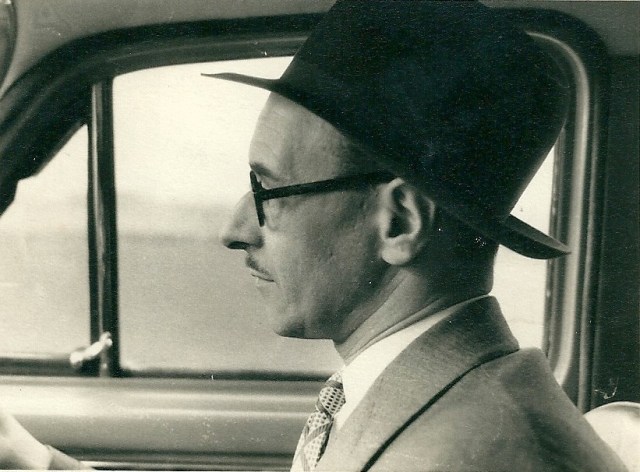
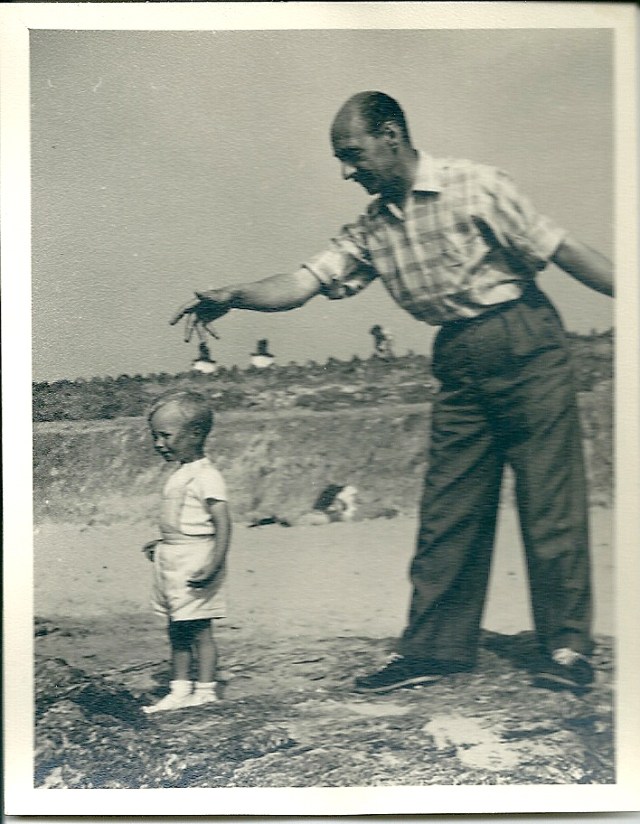
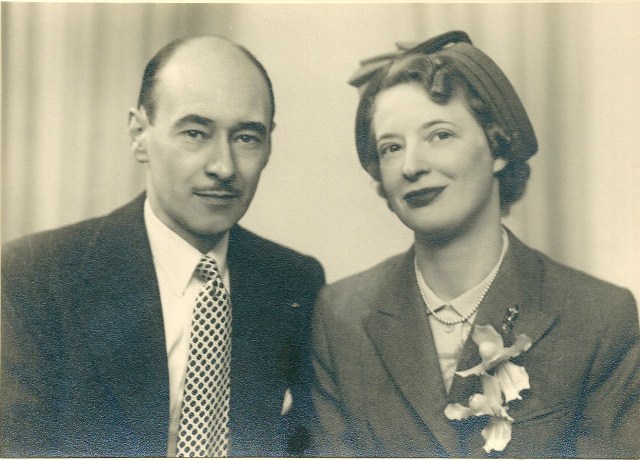
Last week – November 2, to be exact – my father would have been 104. He died in 2001, but as the years pass, I understand how much I owe him and how much, for better or worse, I’m like him.

He was born and raised in Leeds, lived here most of his life. Back in the 1930s he was a musician with his own jazz band, playing dances around town. After World War II, the family story goes, the BBC offered him a job with one of their bands. He turned it down, scared he wasn’t good enough.

scan0002

He wrote. He had a short story published in the late ‘40s, based in part of an incident from the war, and he liked spending time with writers and reporters – in the early 1950s he’d occasionally drink with Keith Waterhouse and Barbara Taylor Bradford, then both young reporters in Leeds.

Sunday mornings were his time to write. A fire would be lit in the front room, and after we’d taken the dog to Roundhay Park so it could run for a while, he’d settle down and work in longhand on his novel in that front room, the air warm and inviting by the time he settled there.

I don’t remember what he wrote back then, but I saw some of his later work which drew from his childhood, from family, people he’d known growing up in Cross Green, a grandfather who was the landlord of the Victoria public house at the bottom of Roundhay Road. A woman who started out as a pub servant and later own the place as well as a few bakeries. Anyone who’s read my Tom Harper Victorian series will probably recognise some elements in there. While Annabelle Harper is very much her own self, part of her will always be an homage to my father.

No-one wanted to publish his books. After his business as a manufacturer’s rep for knitwear went broke in the late 1960s, he began selling laundrettes for Frigidaire. After that ended, he took another job to keep food on the table, and a correspondence course in writing for television.

scan0021

The first couple of plays he pitched didn’t go anywhere. But he did have two aired in the early 1970s: Audrey Had A Little Lamb and A Wish For Wally’s Mother. Back then there was a market for one-off TV dramas (and if anyone has video of either play, I’d love to see it).

He could have done more. He should have done more. I have a faint recollection that he was offered a job on Coronation Street, but he turned it down?

Why?

I have no idea, but in retrospect it fits the pattern of him turning down the BBC music job. But I’m not the right person to analyse my father.

He always encouraged my writing. He was proud of it, happy once I began making my living as a writer – which was music journalism and quickie unauthorised celebrity biographies. Both my parents were proud of what I did, but as my two focuses had always been music (as a very ordinary musician) and writing, I tended to see my father in myself.

scan0003

Maybe I still do. There are things that happen when my first thought is ‘I wish my parents could see this,’ but I suppose I mostly mean my father. Not because I didn’t love my mother; I certainly did. But perhaps because there was an unspoken affinity between us, a similarity.

Bits of him come into my books. Dan Markham’s office on Albion Place in Dark Briggate Blues is the building where my father had his office. The after-hours drinking clubs, the shebeens, were places he’d go occasionally. It was written quite a few years after his death. But perhaps that’s the beauty of writing. Words can be like candles, lit to keep the spirit of someone there. Sometimes those are people who died with memorials, lost in time. Sometimes they can be someone close.

And once in a long while I wonder if I’d be doing this if I hadn’t had his example and his encouragement. I’ll never know the answer to that. It probably doesn’t even matter.

scan0001

I am and I did. That’s all that counts.

My City of Immigrants

In the light of all the intolerance and hatred in the world at the moment, it feels important to me to say this.


When I was in my early teens, at the tail end of the 1960s, I used to take the bus into town every Saturday morning for a look around the record and book shops in Leeds. Even clothes, because in those distant days I had an interest in fashion.

It was a trip down Chapeltown Road, through what was a vital, flourishing Afro-Caribbean community, where people from SE Asia were also making their home. Out of the window I’d be intrigued by signs for the Polish Club, the Serbian Club, Ukrainian Club. We’d pass a Sikh Gurdwara that had once been a Congregation Baptist Church, and further down, a synagogue. Going through Sheepscar, I could see all the Irish pubs – the Roscoe, the Victoria, the Pointer, the Regent, and more, all before I reached the city centre and hopped off outside the ABC cinema.

That was one bus ride, in one part of town. It told a story of immigration that wasn’t all recent. It never occurred to me that these people were any less Leeds than me. They were here, they were making their lives, working, raising their children, the same as everyone else.

The first reference to a Jew in Leeds that I’ve seen is from middle of the 18th century. The same for a black, an army drummer boy. By the 1830s there was a small Jewish community here, and by 1840 there was a Jewish cemetery and services were held in a loft on Bridge Street, with a total of 56 Jews identified in the 1841 census.

Certainly by the 1830s there was an Irish community in Leeds, centred on the Bank, the poorest area of town. As was common in England at the time, they were sometimes regarded as less than human, relegated to the very worst part of town. The famines of the 1840s brought more Irish immigrants, many of whom worked at the mills in the area.

                               St Patrick’s Church                                           Victorian court on the Bank

The big Jewish influx came towards the end of the 19th century, fleeing the pogroms in Russia and Eastern Europe. Understandably, the several thousand who arrived in Leeds settled where there was the safety of other Jews and the common language of Yiddish – in the Leylands, just north of the centre.

                                                 The Leylands around 1900

The early 1900s saw a very tiny group of Chinese in Leeds as well as a few Poles settling here. A few Italians had lived here since the 1880s.

Of course, it didn’t all go smoothly; there were tensions between Irish and English, between English and Jews, which culminated in a riot in 1917, when youths charged into the Leylands, believing none of the Jewish community had volunteered to fight in World War 1, which was very much wrong.

An Indian soldier served with the Leeds Pals during that war, and quite possibly the first Indian Sikh settled here in 1930, with the first Muslim in 1943, with more arriving from the Indian subcontinent in the early 1950s.

By then, of course, the Windrush had docked, and West Indian immigrants had begun to arrive, with some making their homes here, followed by others.

West Indian 1980

West Indian Carnival, Chapeltown Road, 1980

But all of those followed those Poles, Ukrainians and Serbs who come during World War II to fight, then married and settled here.

Since then, people have arrived from many other countries – quite possibly most of the nations on Earth.

The point is that immigration is nothing new in Leeds. It’s been happening for centuries. Go back several generations and most of us have our family origins somewhere else. An ancestor of mine arrived here from East Yorkshire in the 1820s. In those days, that made him an outsider, but he was one of thousands drawn here by industry and the promise of money.

All through my books, I’ve had immigrants. There’s Henry, Joe Buck’s black servant in the 1730s, a recurring character in the Richard Nottingham series. Romany travellers in Cold Cruel Winter. The Irish are all through the Tom Harper books, and a focus on the Jews in the Leylands in Two Bronze Pennies. West Indian musicians – working as street cleaners – pop up in Dark Briggate Blues. Perhaps they’re there to make a point, but really, it’s simply a reflection of life as it was.

The fact is that people want a better life for themselves and their children. They want to feel safe. It doesn’t matter where you’re born, it’s a common human impulse. And once they settle here, these people are as much Leeds as the rest of us. They’ve added and contributed to my hometown and made it a better place.

I’m proud that my city is a city of immigrants.

Thank You

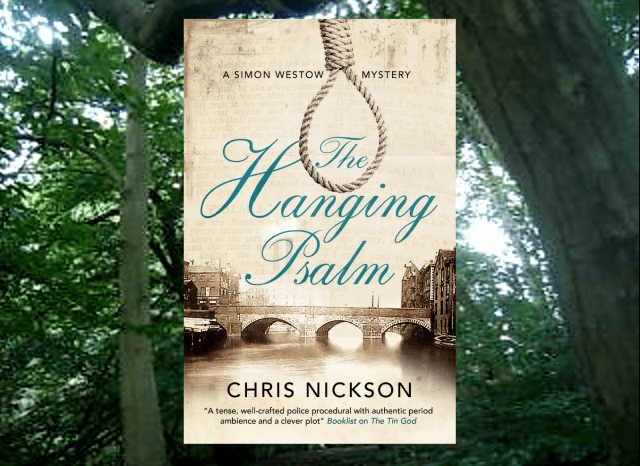
It’s almost four weeks since The Hanging Psalm was published, three since the launch event. The conventional wisdom is that there’s a two-week window after publication in which to make a splash about a book, something that can be especially important with a new series.

noose4

I’m perhaps luckier than most; with a gap between UK and US publications, I have two of those windows. That said, one isn’t any easier than the other. So many books appear these days, from traditional publishers and independents, that it’s hard to be heard above the noise.

Reviews help. They help beyond compare, especially in these days when we’re all online. But still, the most important is word of mouth. I don’t expect everyone to like my books. Historical crime is niche enough. Leeds historical crime is an even smaller niche. and I certainly don’t expect everyone to like all my books (although I can live in hope).

But, if you do like one, please tell your friends. Ask your local library to stock a copy – most library services will order the book if they don’t already have it. Like every other author, I love people taking my books out of the library. They’re such a vital community resource and they need to be used as much as possible. Read all you want and it costs you nothing. What could be better than that?

There’s also a bonus for writers. Not only do we receive the royalty when the service buys a copy, we receive a small amount whenever someone borrows one of our books, whether a physical or ebook copy. Win-win, truly.

Yes, I want to sell books. I want people to read what I write. That’s why it’s out there. But I depend on people like you. Without you, it all falls apart very quickly.

So I thank you for all you’ve done, and hope I can keep you entertained and make you think for quite a few years yet.

One final thing. If you’re in the UK and haven’t read The Tin God yet (I’m immensely proud of that book, and of Annabelle Harper in it), the hardback is currently £10.07 on Amazon (sorry, US readers). Not my favourite retailer, but if you’re looking to give the feminist in your life a Christmas gift, well…this would definitely fit the ball. Maybe you can see the printing sell out – that would be a great present for me.

But whatever happens, thank you all.

tingodsmall1

The Ghosts Of Memory

Yes, I have a book just out (The Hanging Psalm, set in Leeds in 1820 if you haven’t been paying attention) and the launch is Thursday, October 4, 6.30 pm at Waterstones in Leeds. I truly hope you’ll come.

But that’s not what I want to write about this time.

I’ve been re-reading a fascinating book (Haunted Weather by David Toop), one section of which deals with soundmarkers that can conjure up memories. This set me thinking about similar markers that bring the past crashing into the present for me.

The most obvious is smell. For me, that has to be a coal fire. Very occasionally, I come across them – early in Spring there was one as we walked by the canal in Hebden Bridge, certainly smokeless now. It tumbled me back through time.

We lived in a 1930s semi. A fireplace in the living room that my mother would clean and where she’d set a fire every morning. It fed the back burner in the kitchen (we also had a gas stove). Another fireplace in the front room, only used on Sundays, where my father would go to write. A third in my parents’ bedroom, which I only recall being lit once. The coalman hauling those hundredweight sacks of slack on his shoulder and tipping them into the coal hole. The coalman was a recognisable local figure, the same as the man who deliver pop (Corona) or the rag and bone man with his horse and cart.

Even after all these years, I could still make a fire, I can remember how to twist those sheets of newspaper and bend them round.

The smell of coal was ubiquitous then. Every house used it for heat, and the air was dirty. Every man and boy had grimy rings around their shirt collars. Ring around the collar was even a phrase used in ads for detergent.

Now, that smell seems as rare as diamonds. Not a bad thing in itself at all. But what it can evoke is more than a single thing, it’s an entire life. My mother would only make Yorkshire pudding in the back burner; probably the way she was taught. And so coal brings the memory of the fat sizzling in the pan before the batter was added. It makes me think of winter mornings with frost inside my bedroom window.

So many things, really.

But what about sound? Perhaps curiously, what springs to mind isn’t any natural sound at all. We lived in the Leeds suburbs, we weren’t surrounded by nature. It’s the radio. My mother loved the serial Mrs. Dale’s Diary – if I remember right, it was on at 4.15 in the afternoon. She play it on the transistor in the kitchen as she cooked. I’d be on the lino floor, taking things from my toy box which sat in a cupboard there. I’d play while she worked. I didn’t listen to the show, but somehow I took in a little of it by osmosis ‘I’m rather worried about Jim…’

And the other formative sound? It has to be this.

Like virtually every child of my generation, Listen With Mother was a ritual. I was lucky, we had a television, so I also had the chance to see Watch With Mother, a double helping. Until I started school, it was one of the markers of the day. We’d be back from shopping, my mother would have a cup of tea, and I really would listen with mother.

The book is right. Sound and smell are portals to the past, the doors that hold the ghosts of memory we believe we’ve forgotten, and on the surface we probably have.

It’s one reason I try to use them in my books, I suppose, knowing the power they have, and can bring, even to people who’ve never experienced a city where you can taste soot in the air, or where bronchitis isn’t a common winter ailment any more. And the sounds of industry, of the wheels of a tram, the calls of traders in the market…all of these things are part of a common memory that can bring the past to life.

How Do I Rate My Books?

As you hopefully know, I have a new book coming out next week (it called The Hanging Psalm, in case you weren’t aware). Take a big breath time, it’s the start of a new series, and my publisher has just accepted the follow-up, which will be appearing in a year’s time (I know, it’s hard to think that far in advance).

When something like that happens, though, I tend to look at those titles on my bookshelf with my name on them and have a think about them. It’s very rare for me to go back and re-read any. Certainly not for pleasure; I might have forgotten the details of the plots, but not the months of work that went into each one. If you’re a writer, by the time you’ve written something, revised it, gone through the publisher’s edits and then the proofs, you’re pretty much sick of seeing it.

But I have a surprising number of books out there. Quite often it astonishes me, makes me wonder just how that happened. And it makes me wonder what I think of them in retrospect. So, it’s time for an honest assessment.


I started out with the Richard Nottingham books. The Broken Token took several years to see the light of day. It was finished in 2006 and finally appeared four years later. In my memory, it’s curiously poetic, as is most of the series, a style that seemed to fit the character and the times – Leeds in the 1730s, for those who don’t know. Cold Cruel Winter was named one of the Mysteries of the Year by Library Journal, something that floored me. It’s a book that came from a single fact – the trial transcripts of executed men were sometimes bound in their skin. What crime writer wouldn’t relish doing something with that? And it was where I began to explore the grey area between right and wrong. The third book, The Constant Lovers, has its points, but taking Richard out of Leeds, even if it’s just into the surrounding villages, was probably a misstep. It diffused the focus. Leeds, tight and dense, is his milieu, and he’s been back in there ever since. The standout in the series for me, though, will always be At the Dying of the Year. It was the hardest to write, the one that cut deepest into me and left me depressed for a while afterwards. But the emotions are very raw and real on every page. Even thinking about it now, I can still feel them. Returning to Richard after a few years with Free from All Danger felt like a homecoming of sorts. I’d originally intended eight books in the series. That was number seven, but it left him at the end with some share of happiness, and God knows he deserves that.

I do have a soft spot for the pair of novels featuring Lottie Armstrong (Modern Crimes and The Year of the Gun). She’s so vibrant and alive, both as a young woman and in her forties. It’s impossible not to like her. The problem is that I painted myself into a corner; it’s impossible to ever bring her back, although she seems quite happy to leave things as they are. In different ways, I’m hugely proud of them both, and particularly of Lottie. I still feel she might pop in for a cup of tea and a natter.

The Dan Markham books (Dark Briggate Blues and The New Eastgate Swing) book came after re-reading Chandler once again and wondering what a private detective novel set in the North of England would be like. I found my answers. The original is the better book, harder and more real, and it spawned a play, to my astonishment. The second certainly isn’t bad, but it doesn’t quite catch the pizazz of the first.

Then there are the anomalies – a three-book series set in medieval Chesterfield. The first came as a literal flash on inspiration, the others were harder work, and the difference shows. I lived down by there for a few years, I like the town itself and I think that shows. There’s also a pair of books set in Seattle in the 1980s and ‘90s that hardly anyone knows about – they’re only available on ebook and audiobook. But I spent twenty years in that city, a big chunk of my life, and I loved it. I was involved in music as a journalist (still am, to a small degree), and the novels, still crime, are part of that passion. You know what? I still really believe in them. They’re pretty accurate snapshots of a time and place, and the scenes that developed in the town – the way music itself was a village in a booming city.

The Dead on Leave, with Leeds in the 1930s of the Depression, was a book born out of anger at the politics around and how they seem to be a rehash of that period. It’s a one-off, it has to be, but I do like it a lot – more time might change my view, but honestly, I hope not.

And that brings me to Tom and Annabelle Harper. I’m not quite sure why, but I feel that they’re maybe my biggest achievement to date. That’s a surprise to me, given that I swore I’d never write a book set in Victorian times. Yet, in some ways they feel like the most satisfying. More complex, yet even more character-driven. And I think someone like Annabelle is the biggest gift anyone can be given. She’s not the focus of the novels, but she walks right off the page, into life. I didn’t create here – she was there, waiting for me. And what feel like the best books in the series are the ones that involve her more, in an organic way: Skin Like Silver and The Tin God. Not every book works as well as I’d hoped; in Two Bronze Pennies I don’t think I achieved what I set out to do. My ambition was greater than my skill. But maybe I’m getting there. The next book in the series, The Leaden Heart, takes place in 1899, the close of a century, and I feel I’m starting to do all my characters real justice. I’m currently working on one set in 1908, so the 20th century is already here, and I still want to take them to the end of World War I, a natural closing point for the series. I feel that I’m creating not only good crime novels, and I strive to make each one quite different, but also a portrait of a family in changing times – and also a more complete picture of Leeds.

And that’s always been the subtext, although it took me a long time to realise it. Leeds is the constant, the character always in the background, changing its shape and its character a little in each era. And I’m trying to portray that, to take the readers there, on its streets, with their smells and noises. I’m hoping to have a novel set in every decade from 1890s-1950s (maybe even the ‘60s, if inspiration arrives), to show how the place changed.

In a way, the nearest I’ve come to running after the character that is Leeds and its essence is a collection of short stories, Leeds, the Biography, even if I didn’t realise it at the time. It’s based on anecdotes, snippets of history, and folk tales, and runs from 360 CE to 1963. For the most part, they’re light tales. But one has resonance – Little Alice Musgrove. That still stands as a good story (you can probably find it online)

But with The Hanging Psalm, out next week, I’m going back to an unexplored place, Leeds in the 1820s, when the Industrial Revolution was still quite new. The Regency, although there’s very little gentility to it; better to describe it as Regency Noir. The book is still too fresh for me to asses it fairly. But I do know how electric it felt to write. So I’m hopeful it will stand the test of time in my mind…and in the meantime, I hope you’ll buy it (definitely buy it if you can!) or borrow it from the library and enjoy it.

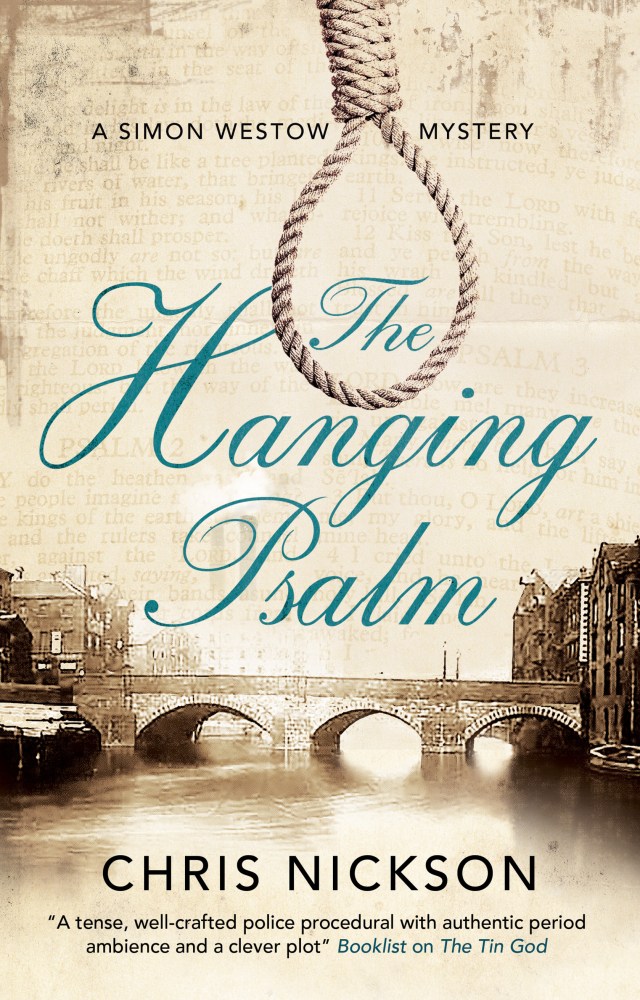
Hanging Psalm revised

Another Extract From The Hanging Psalm

It’s just over three weeks until The Hanging Psalm is published in the UK (Jan 1 in the rest of the world).

That means I’m trying to tempt you into ordering a copy. All the big retailers have it, and if you’re in Leeds there’s going to be a very special launch event. Meanwhile, it’s now available on NetGalley for authorised bloggers and reviewers.

And it’s the Severn House Editor’s Pick of the Month. Read about that here.

Meanwhile…take a step back to 1820. The Regency. But it’s not Assembly Rooms and genteel manners at the Pump Rooms in Bath.

This is Leeds. It’s Regency Noir.

Enjoy.

HS ad_1

The night was quieter than the day. Shops were shuttered. Lamps flickered in the houses. People safe behind locked doors.

But another Leeds arose in the darkness. A different population that came to life with the shadows. Simon had known them for years, people like Colonel Warburton, the former soldier who always wore the tattered French officer’s coat he claimed to have stripped from a corpse on the battlefield at Waterloo. He held court in a back room of the Boot and Shoe, a bottle of good brandy on the table, quietly buying and selling stolen bonds.

Or Hetty Marcombe. She looked like a harmless, vacant old woman wandering forlornly around the yards of the coaching inns. But she had quiet cunning behind the empty eyes, ready to make off with any case that passengers didn’t keep close. Josh Hartley, Silver Dexter, all the flash men and burglars, and the whores who strutted up and down Briggate. Once the daylight faded, Leeds belonged to them.

Simon was at ease in their company. He talked a little and listened as they spoke. With a word or a nod, one person often led him to another. He learned who’d stolen what, if it had been sold and for how much. Information he’d be able to use in the coming weeks. But tonight his eyes were open for a particular man.

At the Cross Keys, just across the river in Holbeck, he stood inside the door and watched the crowd. Almost every face was young, drinking with the grim determination that dashed headlong towards oblivion. A few more years and most of them would be gone. Violence, disease, the gallows, a ship to the other side of the world. Something would carry them away. And deep inside, they knew it. So they forced out their pleasures like duty.

Strange, Simon thought, Harry Smith didn’t seem to be anywhere tonight. People called him the Vulture. He’d earned the name; he relished it like an honour. Smith fed himself on the weak, the gang of young boys who worked for him, picking pockets and robbing shops.

But Harry heard things that didn’t reach other ears. He was sly, he understood that knowledge brought a good price. And he always knew who’d be willing to pay.

Simon moved on. By the time the clock struck ten he’d gone all round the town. No word of anyone anticipating a fortune soon. Finally, close to midnight, he turned his key in the lock and climbed up to bed.


‘You’re a pretty thing. How much do you charge?’

Jane turned away and the man laughed.

‘Don’t play coy, luv. Tuppence and you’ll get the bargain. You might even like it for once.’

She began to walk down Kirkgate, but he staggered along behind, drunk, cursing her. She’d survived the nights out here for too long. She knew the men who populated them. This one was harmless, all drink and bluster and noise. Still, she reached into the pocket of her dress and curled her fingers around the handle of her knife.

The voice faded and she forgot he’d ever been there. No one behind her now. With the shawl over her head, she slipped in and out of the shadows. People passed without a glance. The only light came from gaps in the shutters, but she knew her way around in the darkness.

Lizzie Henry lived out on Black Flags Lane, the far side of Quarry Hill. The building stood alone, looking as if it had once been a large farmhouse. Now, as she entered, she saw a series of rooms off a long hallway. The lamps had been lit and trimmed, the floorboards swept, paintings on the walls; everything was clean and tidy. The faint sound of talk leaked from behind closed doors. But she had no sense of joy from the place.

Jane had heard tales. This was a house that catered to the worst things men desired, anything at all if the fee was right. From somewhere upstairs there was a stifled scream, then silence. She paused for a second, feeling the beat of her heart and the breath in her lungs, then walked on to the open door ahead. Beyond it, a neat, ordered parlour and Lizzie herself sitting in an armchair, close to the blazing fire.

Jane had always pictured the woman as a hag. Instead, the woman was slim, darkly attractive, dressed in an elegant, fashionable gown whose material shimmered and sparkled in the light. She had power and wealth, and wore them easily, a woman who held her secrets close – the names of the men who came here, what they did, those who went too far.

She’d never have difficulty finding girls to serve in the house. Too many were desperate. All it took was the promise of a meal and a bed. And then enough gin and laudanum to dull the pain of living and the agony men inflicted. If a few died, there was ample land for the burials. Girls without names, without pasts; no one would ever ask questions.

Lizzie Henry looked up and her mouth curled into a frown.

‘Who are you? How did you get in?’ Her voice had a harsh rasp. But there was no trace of worry or fear on her face. Beside her, a decanter, a glass and a bell sat on a small wooden table.

Introducing…A New Genre?

Over here, August Bank Holiday has been and gone, a sign that autumn is coming soon – from the weather it feels like it might have arrived.

That means it’s four weeks until The Hanging Psalm is published. And yes, I am excited by it. The series starts here, and it feels very electric and wonderfully jagged to me.

Last week I made the book trailer, presented for your pleasure – and to get you to place your pre-orders for the book, of course. Or if you’re around Leeds, come to the launch at Waterstones on Albion Street, 6.30 pm on Thursday, October 4. No guarantees, but on past experience they might even have free wine. Not that you need the inducement, of course.

Filming the trailer was definitely an interesting experience. Walking around the wild parts of the park at 7 am, trying to find a low enough branch for the noose that could still look high, and doing it without anyone seeing me and calling the police. Luckily, I managed it, with less than a minute before a dog walker came along. By that time the noose was already tucked away in my backpack.

Later the same day, a return trip to the park with my partner, who filmed me tying the noose. So now I have that as a life skill that might come in useful.

The second in the series has just gone to my agent, so fingers crossed for the future on that. Of course, it will help if you all buy the first one.

But the read-through has made realise something I should probably have seen earlier.

Simon Westow, the main character in The Hanging Psalm, is a thief-taker. He searches out items that have been stolen and returns them for a fee. The book is set in 1820, during the Regency, but this isn’t the world of Georgette Heyer, or even Blackadder 3. No silver-tongued gentlemen highwaymen. No balls at the Assembly Rooms in Bath. It’s all Northern. It’s all Leeds.

And the Leeds of the time is a dangerous, deadly place and its crooks mean business. The Industrial Revolution has firmly arrived, on the brink of having the town by the throat, but the transition isn’t complete yet. It’s just a few years since the Luddites shook the country, and there’s still plenty of unrest. Prices for staples are high and wages are low. People are flocking to the industrial towns, looking for work as there’s little opportunity in the countryside. There’s not enough housing to meet the demand.

The rich are few, at the top of the heap and growing wealthier all the time, and the poor…they have little chance.

But down these mean streets a man must go who is himself not mean, who is neither tarnished nor afraid. He is the hero; he is everything. He must be a complete man and a common man and yet an unusual man. (Chandler talking about the private detective in fiction)

And that man is Simon Westow.

In my imagination, Leeds in 1820 is somewhere between the London Dickens describes and the wide-open Los Angeles of Chinatown and Raymond Chandler. It’s a town where danger is always present. And Simon is the early 19th century equivalent of a private investigator. The law is the constable and the night watch; a proper police force is the best part of twenty years away. He’s the best hope people have. He’s an honest man, with principles and morals, who can make his way from the highest to the lowest in society. And he’s a man full of anger at the way he was brought up, in the workhouse and the factories. He’s done well for himself in spite of that, not because of it.

And Jane, who assists him. Well, you’ll have to read for yourself. She intrigues me and she terrifies me at the same time. I’ve no idea where she came from, but the second book digs into her past more.

So yes, it’s the Regency. But not the way we it’s been looked at in fiction.

If you like, think of The Hanging Psalm as Regency Noir.

It’s the Severn House Editor’s Pick of the Month for September. Read more here.

And now, here’s that trailer. And here is the cheapest place to order the book.

Please, let me know what you think.

Hanging Psalm revised

A Different Kind of Book Launch

Let me start by apologising to those of you not in Leeds, and I know most of you live elsewhere. I would love it if you could be involved in this, but the nature of the beast means it’s simply not possible.

As you may know, my book The Hanging Psalm comes out at the end of September. To coincide with that, I’ve teamed up with the lovely people at #foundfiction for something that’s a mix of treasure hunt, geocaching and Pokemon Go.

Probably the easiest thing is to use their words:

HP Press Release

Sounds like fun? I really hope so. And it seems like a good way to introduce a new series about a thief-taker. But for those who can’t take part, there will be a launch event on Thursday, October 4, 6.30 pm at Waterstones on Albion Street in Leeds. No need to book; simply show up. Sadly, no free books, but you’ll be able to hear all about The Hanging Psalm and (please) purchase a copy.

Of course, you can pre-order a copy from your favourite independent bookshop, chain store, or online retailer…and I hope you will. This series definitely feels like it has something (I’ve just finished writing the second book).

Hanging Psalm revised

The Hidden Truths Of The Hanging Psalm

My new book, The Hanging Psalm, comes out in the UK at the end of September (Jan 1 elsewhere and on ebook – you can order it at the best price here). While it’s decidedly fiction, none of the plot based on fact, there are some truths underneath it all. Some, though, reference a few of my other books…


It opens with the main character, Simon Westow the thief-taker, giving testimony to a travelling commission on the abuse of children in factories. I didn’t make up the words he speaks. I just paraphrased things spoken by children to similar commissions in the early 19th century.

Did Leeds have a thief-taker? I don’t know, there’s no record of one, but it’s very likely. At that time, before the police, the only way for people to recover stolen items was to employ someone who’d to it for them in return for a fee. Many thief-takers colluded with thieves and they’d split the fee. Simon, at least, is honest.

Leeds embraced the Industrial Revolution. It transformed the place and drew huge numbers of people, all hoping to make a good living in the factories. They didn’t, of course; wages were low, especially for the unskilled. And those who’d done well before, such as the croppers, who trimmed the nap from cloth, found themselves out of work when their jobs were taken by machines. The Luddites had attempted to stem the tide at the start of the 19th century by breaking the machines that took men’s jobs. But it’s impossible to halt progress.

The book takes place in 1820, pretty much midway between the Richard Nottingham series and the Tom Harper novels. And there are traces of continuity from the past, certainly in Simon’s life. His house is on Swinegate, where the road curves – the one that Amos Worthy owned in the Nottingham series. Simon is the father of twins. Just before their baptism at Leeds Parish Church, he wanders around the graveyard, hunting for inspiration for names and finds it, calling them Richard and Amos. Of course, he never knows the history behind that.

Jane, Simon’s young and very deadly assistant, wears a shawl, as every working-class girl and woman did throughout the 19th century. With it pulled over her hair she becomes, she feels ‘the invisible girl.’ The shawls were a fact of life, but I chose to focus on it because of the way some whites have criticised the Muslim headscarf.  I wanted to show that it’s not too long since something similar was prevalent in a way they might not have expected. Not for religious reasons, but for social and economic reasons; hopefully, it might make a few people think.

By 1820, transportation as the sentence for a crime was commonplace, for seven years, 14, or for life. Few came back, and many never survived the long journey to Australia. It had become a fairly ubiquitous punishment after the statutes were changed and many capital crimes (over 200 of them at one point) became non-hanging offences.

The Hanging Psalm itself did exist. It was spoken by the parson before a person received the drop from the gallows, a couple of extra minutes to commend a soul to God and hope for a last-minute pardon. It’s Psalm 51:

Have mercy upon me, O God, according to thy lovingkindness: according unto the multitude of thy tender mercies blot out my transgressions.

Wash me thoroughly from mine iniquity, and cleanse me from my sin.

For I acknowledge my transgressions: and my sin is ever before me.

Against thee, thee only, have I sinned, and done this evil in thy sight: that thou mightest be justified when thou speakest, and be clear when thou judgest.

Behold, I was shapen in iniquity; and in sin did my mother conceive me.

Behold, thou desirest truth in the inward parts: and in the hidden part thou shalt make me to know wisdom.

Purge me with hyssop, and I shall be clean: wash me, and I shall be whiter than snow.

 Make me to hear joy and gladness; that the bones which thou hast broken may rejoice.

 Hide thy face from my sins, and blot out all mine iniquities.

 Create in me a clean heart, O God; and renew a right spirit within me.

 Cast me not away from thy presence; and take not thy holy spirit from me.

Restore unto me the joy of thy salvation; and uphold me with thy free spirit.

Then will I teach transgressors thy ways; and sinners shall be converted unto thee.

Deliver me from bloodguiltiness, O God, thou God of my salvation: and my tongue shall sing aloud of thy righteousness.

O Lord, open thou my lips; and my mouth shall shew forth thy praise.

 For thou desirest not sacrifice; else would I give it: thou delightest not in burnt offering.

The sacrifices of God are a broken spirit: a broken and a contrite heart, O God, thou wilt not despise.

 Do good in thy good pleasure unto Zion: build thou the walls of Jerusalem.

Then shalt thou be pleased with the sacrifices of righteousness, with burnt offering and whole burnt offering: then shall they offer bullocks upon thine altar.


I’ve already written about some of the historical background to the book (read it here). But now you have a few of the less obvious truths.

Hanging Psalm revised