The 1930s Return, Leeds Style – The Dead On Leave

I was shocked and very pleasantly surprised by how many of you read an extract from my upcoming book last week. Right, I thought, maybe they fancy a bit more…

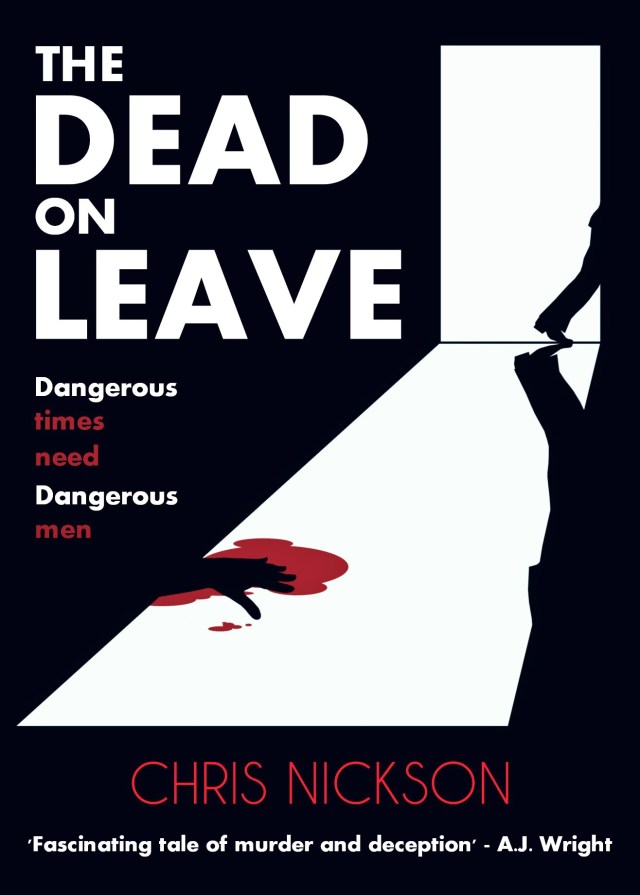
It’s’ 1936, and the Depression has hit Leeds hard. Oswald Mosley has brought his Blackshirts to town, and they’ve been chased off from Holbeck Moor with their tails between their legs by 30,000 Lioners. But there’s a body left behind, and Detective Sergeant Urban Raven has to find his way through the fog of politics and sorrow to discover who the killer might be.

The Dead On Leave is out in paperback on June 18, £7.99

The first man stood on his step and listened as Raven told him about the murder. He was in his sixties, with a shock of pure white hair and a thick moustache the colour of nicotine stains, with deep lines etched into his face. He spat out onto the cobbles, said, ‘About bloody time,’ and closed the door.

The next name was three houses further along Kepler Grove. A young fellow this time, with bulging frog eyes and a bouncing Adam’s apple. He looked downcast at the news, but nothing more. The same at the next few addresses. No grief. No one here was going to miss Frank Benson.

Round the corner on Gledhow Place, a man named Galloway cradled his infant daughter, heard what the sergeant had to say, then snorted.

‘You know what he was like?’ the man asked and Raven shook his head. ‘A real sod, that’s what. He’d dock you for owt. Reckoned he was God an’ all.’

‘What do you mean?’

Galloway tucked the girl’s head against his shoulder, tenderly stroking her hair.

‘About a month back, I were expecting him round. He didn’t even knock, just opened the front door and barged right in like he owned the place, looking around, checking in the cupboards and asking if there was any change in my circumstances. No how do you do, no by your leave, no respect. I told him to get hisself right out again. “My wife could have been washing at the sink, you bugger,” I said. I picked up the poker and waved it at him. That got him back outside right quick and tapping politely. “Any change in things?” he asked when I let him in. “Aye,” I said. “For the worse.” He took a glance in the pantry, and when he was leaving, he told me, “I won’t forget this.” He didn’t, neither. Someone told him I’d been making a little repairing boots and they stopped my relief. Five weeks. Still got three to go. Benson relished telling me, too.’

‘You realise you’ve just made yourself a suspect,’ Raven said, and Galloway shrugged.

‘Arrest me, then. At least you’d have to feed me in jail.’

‘Where were you yesterday?’

‘Right here. Where the hell else would I be?’

‘You’re in the clear, then.’ Not that he suspected the man; Galloway was far too open, his heart showing loud and bright on his sleeve.

He heard similar tales at other houses. Family members who’d been forced to move into lodgings because they were working and their income would cut assistance to the others.

‘The truth is that half of them haven’t moved at all, of course.’ He sat in the scullery of a house on Anderson Mount, a wooden rack in front of the range with clothes drying slowly. Ernie Haynes was a member of the National Unemployed Workers’ Movement. Thoughtful, soft spoken, in his fifties, he seemed to have given up on the idea of ever having a job again. There were plenty more in the same boat. The unemployable. ‘They stay out all the hours they can then sneak home to eat and sleep. Benson liked to try and catch them. As if it was a game.’

‘No one seems to have a good word for him.’

‘How can you, for someone like that?’ Haynes wondered.

*

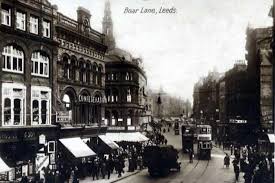
boar lane 30s

‘None of them even said “poor man”,’ Noble told him as they drove back into town, along Mabgate and past the mills and factories that stood empty and forlorn. Rubbish lined the roads; no one cared. ‘Not an ounce of sympathy.’

‘He didn’t seem to have much of that himself.’

‘He’s dead, though.’

‘We all will be some day,’ Raven said. ‘That doesn’t guarantee respect.’

‘It seems wrong, that’s all.’

It was the way of the world. Nothing more. People spoke ill of the living, the dead, of everyone. They enjoyed it. Some revelled in it.

In the office, he passed Mortimer the list, telling him what they’d learned and watching him grimace.

‘We’ll need to get the bobbies onto the rest,’ Raven said. ‘There are far too many for us.’

The inspector nodded and took a piece of paper from the top of a pile.

‘The post-mortem report. Benson was strangled. Whoever it was stood behind him to do it.’

Raven thought of the thin red line on the man’s throat.

‘What did they use?’ he asked. ‘Could the doctor tell?’

‘An electrical flex, he says. He found some of that fabric they put around the wire in the wound. There was some under Benson’s fingernails, too. He must have been trying to pull the cord away from his throat.’ He shuddered. ‘Bloody awful way to go.’

It was. Slow, knowing you were going to die. It didn’t matter how many shades of a bastard Benson had been in his job, that was a terrible death.

*

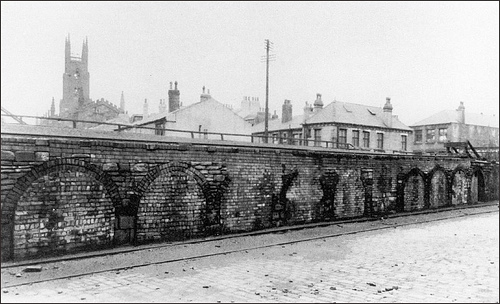
Leeds 30s_2

The inspector drove as if it made him uncomfortable. He was wary, slow, too cautious by half. Going through Sheepscar, they passed a group of men in old clothes standing around a fire in a metal barrel on a corner, nowhere better to go.

‘The dead on leave,’ Mortimer said, so softly he could have been talking to himself.

‘What, sir?’

‘Something my wife heard on the wireless.’ He gave a quick smile and a shake of his head. ‘Someone was talking about all the unemployed. Said they were like the dead on leave. It struck me, that’s all.’

It was good, Raven had to agree. But it wasn’t just those without jobs. What about the fools and the cuckolds? They lived in that same sad, shifting world, too.

He glanced up the hill to Little London. That was what they called the area, but none of the streets were paved with gold. Instead, plenty of the cobbles were missing and fully half the houses were slums. Dilapidated, in need of knocking down, like so much of Leeds. Happen somebody would drag the whole city into the twentieth century before it was halfway over.

Looking Ahead For Tom And Annabelle Harper?

It’s ironic, really. I always swore I’d never write a crime novel set in Victorian times. There era was overdone, with Conan Doyle, Wilkie Collins – even Dickens – and all who’ve followed in their footsteps. And now I have six of them out there, plus a seventh just completed.

annabellefrom book_3

It still makes me shake my head. Especially the reviews that have come in so far for The Tin God. I’ve created something that people seem to love…

Actually, it all began with a painting by Atkinson Grimshaw, the Leeds artist. A woman standing by the canal, holding a bundle. The water is almost empty because of a strike, the smoky skyline of Leeds tries to peer through behind her. She’s alone, just staring.

Aire_1997579i

She was Annabelle. That’s how she came into my life. It simply grew from there. A short story at first. Then, after reading about the Leeds Gas Strike of 1890, a novel. An event where the strikers won in three days, even as the Council Gas Committee imported strikebreakers? I had to commemorate that.

So Annabelle came back. She told me all about it and introduced me to her husband, Detective Inspector Tom Harper and his assistant, Sergeant Billy Reed. Out of that arrived Gods of Gold.

cc8bc6e68505bae687a048f7bd818a80

The books are unashamedly political. No apologies for that. But they’re also crime novels, the two intertwined in a heart around Leeds. The newest, The Tin God, is the most political of all, and one where Annabelle finally takes centre stage.

In fact, she doesn’t, although the plot revolves around her bid (along with six other women) to be elected as a Poor Law Guardian in 1897. Trying to stop the man who doesn’t want women in politics is the core. But the heart, the linchpin, is Annabelle trying to win in the Sheepscar Ward.

annabelle election poster texture

The Tin God was a book that seemed to write itself. I was simply the conduit. And over the last few years, Annabelle (in particular) and Tom have become every bit as real to me as friends I meet. I know them, and they know me. They’re family, in a way.

I’d like to say that I have plans for them, but the truth is, they have plans for me. To tell their story to the end of the Great War. Whether that will happen or not remains to be seen. But I’d like to do it. Although the books themselves aren’t planned out, I know what happens in their lives, and in their daughter Mary’s, too.

The book I’ve just finished writing will actually be my last Victorian (assuming my publisher likes it, of course). No, I’m giving nothing away about it, except it’s set in 1899. If another follows, that will be after 1901, and we’ll be into the Edwardian and George V eras. There’s plenty of Leeds material – the 1908 Suffragette ‘riot,’ the start of the war, news from the Somme in 1916, the Leeds Convention of 1917, and finally, finally, the Armistice a year later.

That will prove interesting. I’d certainly never imagined writing an Edwardian crime novel. Or even given a second through to George V. But I have a strong impression that Annabelle and Tom will guide me through it all.

In the meantime, I’d be very grateful if you read The Tin God. And the other books in the series.

the tin god 4 (1)

Early Reviews…And Listen To Annabelle Speak

It’s’ just over a week until The Tin God is published. I’m hugely proud of this book, it feels as if it’s taken on greater resonance that the crime story I set out to tell – but readers will judge that more objectively than I ever can, of course.

I’m pushing this book hard. Among other things, there’s going to be a blog tour to coincide with publication, and that includes giving away a copy of the novel. So please, keep your eyes on the blogs listed below or follow on Twitter.

Meanwhile…here are a few reactions from early reviewers:

“Chris Nickson is an amazingly skilful author with a love of Leeds, its varied and deep history, and demonstrates it with each book he writes.”

“The whole story has such resonance with today’s current affairs that it makes you realise how much there is still to do regarding social attitudes, as well as how far we have come.”

“I like the strong sense of characterisation in the novels. Annabelle is a suffragette, looking to make things easier for her daughter, Mary, in her path through life. She is, however, no airy fairy dilettante being strong, capable and practical with her feet planted squarely on the ground. I cheer at her every move. She is supported in her efforts by her husband, Tom…He is another strong character. He’s not as enthusiastic about being Superintendent as he might be as the paperwork and meetings take him away from investigative work but this threat to his wife and family gives him the opportunity to roll his sleeves up and get stuck in.”

“There’s a particular talent here with this author’s fine-tuned ability to thread actual historical events into his fiction. This one is quite thought-provoking in reflecting upon those who initially paved the way for women’s rights and those, yet today, who stand tall in the face of current roadblocks. This still grows curiouser and curiouser…”

“The author Chris Nickson is Leeds born (as am I ) and it’s clear that he loves his home city and its place in history, as one of the leading lights of industry. He brings the Leeds of 1897 very much to life both in terms of actual historical events of the time and in the sights, sounds, and smells of this great city. I really enjoyed this particular storyline as it demonstrated the struggle that women had, ( and some would say, still have) to be recognised and valued as legitimate candidates for office, and to be considered equal to men.

I make no bones about it – I love Chris Nickson’s books – love Tom and Annabelle – love the sense of old Leeds with its cobbled streets, the houses huddled together against the chill whipping off the River Aire, the friendly community, and the good old fashioned policing.”

“I always enjoy the sense of period that Mr Nickson evokes and The Tin God is no different. Annabelle’s campaign speeches resound with the possibility of change but don’t ignore the terrible blight of poverty prevalent in the fictional Sheepscar ward.”

And with that mention of Annabelle’s campaign speeches, through the miracle of technology (and the superb voicing of Carolyn Eden), I’ve been able to find one. Take a listen and see if it convinces you….

After that, wouldn’t you vote for Mrs. Annabelle Harper?

annabelle election poster texture

Perhaps you need to discover The Tin God for yourself. I know an author who’d be very grateful…it’s out March 30 in the UK.

tingodsmall1

Free Time Travel

Books are portals to other places, other times. They possess that fragment of magic to transport a reader, to wrap them in another world.

I hope that’s what I’ve managed with Free From All Danger. To take you to 1736, to walk through Leeds with Richard Nottingham, to see the place through his eyes as he returns as Constable. To hear the noise, smell it all, see the faces…

Some of might have have read the previous six books in the series. The last appeared in 2013, more than four years ago. At the end of the last book, Fair and Tender Ladies, Richard retired.

But things change, live never stands still, and circumstances bring him back. The big question for him is whether he can still do the job…


“Sometimes he felt like a ghost in his own life. The past had become his country, so familiar that its lanes and its byways were imprinted on his heart. He remembered a time when he’d been too busy to consider all the things that had gone before. But he was young then, eager and reckless and dashing headlong towards the future. Now the years had found him. His body ached in the mornings, he moved more slowly; he was scarred inside and out. His hair was wispy and grey and whenever he noticed his face in the glass it was full of creases and folds, like the lines on a map. Sometimes he woke, not quite sure who he was now, or why. There was comfort in the past. There was love.

Richard Nottingham crossed Timble Bridge and started up Kirkgate, the cobbles slippery under his shoes. At the Parish Church he turned, following the path through the yard to the graves. Rose Waters, his older daughter, married and dead of fever before she could give birth. And next to her, Mary Nottingham, his wife, murdered because of his own arrogance; every day he missed her; missed both of them. He stooped and picked a leaf from the grass by her headstone. October already. Soon there would be a flood of dead leaves as the year tumbled to a close.”


Bringing Richard back was like spending time with an old, trusted friend and a long time away. I treasured it. I value Richard, his family, and I want to take you with me to spend time with them, to live their lives.

My copies of the book arrived on Monday, and it was a thrill hold hold one, to open it. By now, you’d think I’d be used to it. But this is…special. Some of you had emailed to ask when Richard would return. Here’s your answer.

The book is published in the UK on October 31 – four months later elsewhere. If you’re close to Leeds on Thursday, November 9, I hope you’ll come to the launch for it, at the Leeds Library on Commercial St (the oldest subscription library in England, in the same building since 1808. There will be a specially-composed soundtrack, and some live music. Starts at 7 pm, and I’d love to fill the place…

Obviously, I hope you’ll buy the book. I’d love that. But I know that many can’t afford it. Borrow it from your library – support libraries in every way you can. If they don’t have it on order, request it…

More than anything, I hope you enjoy it. And thank you, because without readers, writers are nothing.

Free From All Danger 1

New Tom Harper

It’s definitely spring out there. The kids are enjoying their holidays, the weather is growing balmier. I’ve been able to get things planted at my allotment, and it’s beginning to take shape for the season.

But life wouldn’t be right if I wasn’t writing, and I have my head deep into what I hope will become the sixth Tom Harper novel, although Annabelle proves to be a very big part of this one. Now I just have to hope that my publisher wants it.

This extract is fairly lengthy and is still in a fairly raw state, so I hope you’ll bear with me on that. More importantly, I hope you like it. Please, seriously, tell me what you think, okay?


Late September, 1897


Tom Harper stared in the mirror.

‘What do you think?’ he asked doubtfully.

He felt ridiculous in a swallowtail coat and stiff, starched shirt. But the invitation had made it clear: this was an official dinner, formal dress required. The fourth time this year and the suit wasn’t any more comfortable than the first time he’d worn it. He’d never expected that rank would include parading round like a butler.

‘Let’s have a gander at you.’ Annabelle said and he turned for inspection. ‘Like a real police superintendent,’ she told him with a nod. ‘Just one thing.’ A few deft movements and she adjusted the bow tie. ‘Never met a man who could do a dicky bow properly. Now you’re the real dog’s dinner.’

She brought her face close to his. For a moment he expected a kiss. But her eyes narrowed and she whispered, ‘I’ve had another letter. Came in the second post. May Bolland’s had one, too.’

His face hardened. He’d expected some outrage when Annabelle announced she was running to be elected to the Board of Poor Law Guardians. A few comments. Plenty of objections. He was even willing to dismiss one anonymous, rambling letter as the work of a crank. But two of them? He couldn’t ignore that.

‘What did it say?’

She turned her head away. ‘What you’d expect.’

‘The same person?’ he asked and she nodded. ‘What did you do with it?’

‘I burned it.’ Her voice was tight.

‘What?’ He pulled back in disbelief. ‘It’s evidence.’

‘Little eyes,’ she hissed. ‘You know Mary’s reading has come on leaps and bounds since she started school. Safer out of the way.’

He breathed slowly, pushing down his anger. For a long time he said nothing. What could he do? It was dust now. Maybe Mrs. Bolland had kept hers; he’d send Ash round to see her in the morning.

‘Button me up and we’d better get a move on.’ Deftly, she changed the subject. ‘That hackney’s already been waiting for five minutes.’

Annabelle was wearing a new gown, dark blue silk, no bustle, high at the neck with lace trim and full leg-of-mutton sleeves, the pale silk shawl he’d bought her over her shoulders. Her hair was elaborately swept up and pinned. She was every bit as lovely as the first day he’d seen her.

There were calls and whistles as they walked through the Victoria pub downstairs. Her pub. She laughed and twirled around the room. He was happy to keep in the background, to try and slink out without being noticed. People didn’t dress like this in Sheepscar. They owned work clothes and a good suit for funerals; that was it.

‘What is this do, anyway?’ she asked as the cab jounced along North Street.

‘The Lord Mayor’s Fund,’ he replied. ‘Charity.’

The Mayor’s office had finally become the Lord Mayor’s office that summer, Leeds honoured by Queen Victoria to mark her Diamond Jubilee. Sixty years on the throne, Harper thought, going back long before he was a twinkle in anyone’s eye, before his parents had even met. There had been parties and civic events around the city all summer, and hardly any problems, as if everyone just wanted to celebrate the occasion with plenty of joy.

The Chief Constable had been pleased, and even happier when the crime figures came out: down everywhere. The biggest drop was in Harper’s division. God only knew why; he didn’t have an explanation. He’d praised his men then held his tongue, not wanting to tempt fate.

Annabelle’s elbow poked him in the ribs.

‘You’re miles away.’

‘Sorry.’

‘Is it a sit-down affair tonight?

‘Three courses, then the speeches.’

She groaned and he turned to smile at her.

‘We’re in for plenty more of these once you’re elected.’

‘If I’m elected,’ she warned. ‘Don’t be cocky.’

Seven women were standing to become Poor Law Guardians, their election costs paid by the Suffrage Society and the Women’s Co-op Guild. The campaign was no more than three days old, but already the Tories and the Liberals were deriding the women for trying to rise above their natural station. The Independent Labour Party had its eye on the posts, too, as stepping stones for their ambitious young men. And the newspapers had their knives out, pointedly advising people to vote for the gentlemen. He’d arrived home two days to find her pacing furiously around the living room, ready to spit fire, with the editorial in her hand.

‘Listen to this,’ Annabelle told him. ‘Apparently they think men “don’t possess the domestic embarrassments of women.” What does that mean? I could swing for the lot of them.’

She threw the paper on to a chair. But he could hear the hurt behind her words. It wasn’t going to be a fair fight.

The first letter arrived the same day. Second post, franked at the main post office in town, no signature or return address. It was a screed about how women should be guided by their husbands, live modestly and look to the welfare of their own families. Religious and condescending, everything written in a neat, practised hand. Senseless, Harper judged when he read it, but no real threat. All the women running for the Board had received one. He’d placed it in his desk drawer at Millgarth and forgotten about it. But another…that demanded attention.


‘Take a look at that,’ Harper said and tossed the letter across the desk. Inspector Ash raised an eyebrow as he read, then passed it on to Detective Sergeant Fowler.

‘Looks like he’s halfway round the bend, if you ask me, sir,’ Ash said. ‘I see he didn’t bother to sign it. Anything on the envelope?’

‘Nothing helpful.’ He sat back in the chair. For more than two years this had been his office, but Kendall’s ghost still seemed to linger; sometimes he even believed he could smell the shag tobacco the man used to stuff in his pipe. ‘All the women candidates running to be on the Board of Guardians received one.’

‘I see. That was Mrs. Harper’s, I take it?’

‘There was another yesterday. She burned it.’

‘Whoever wrote this was educated,’ Fowler said. ‘All the lines are even, everything spelled properly.’ He grinned. ‘Of course, that’s doesn’t mean he’s not barmy.’

He pushed the spectacles back up his nose. The sergeant had been recommended by a copper from Wakefield. He was moving back to Leeds to be closer to his ill mother. Harper had taken a chance on the man. Over the last twelve months it had paid off handsomely.

Fowler didn’t look like a policeman, more like a distracted clerk or a young professor. Twenty-five, hair already receding, he barely made the height requirement and couldn’t have weighed more than eleven stone. But he had one of the quickest minds Harper had ever met. He and Ash had clicked immediately, turning into a very fruitful partnership. One big, one smaller, they seemed to work intuitively together, knowing what each one would do without needing to speak.

‘This woman’s had another letter, too.’ He gave them the address. ‘Go and see her. I doubt we’ll track down the sender, but at least we can put out the word that we’re looking into it. That might scare him off.’

‘Yes, sir.’ Ash stood. ‘How’s Mrs. Harper’s campaign going?’

‘Early days yet.’

She’d only held small one meeting so far, in a church hall just up Roundhay Road from the Victoria. Their bedroom was filled with piles of leaflets read to be delivered and posters to plastered on the walls all over Sheepscar Ward.

‘I’m sure she’ll win, sir.’

He smiled. ‘From your lips to God’s ears.’

Once they’d gone he turned back to the rota for October, trying to recall when he’d once believed that coppering meant solving crimes.


Billy Reed drew back the curtains, pushed up the window sash, and breathed in the sharp salt air. After so many years of soot and dirt in Leeds, every day of this seemed like a tonic. He heard Elizabeth moving around downstairs, cooking his breakfast.

They’d been in Whitby since July, all settled now into the terraced house on Silver Street. The pair of them, and her two youngest children, Edward and Victoria. The older ones had stayed in Leeds, both in lodgings, with work, friends, and lives of their own.

Moving had been a big decision, an upheaval. He’d come to love Whitby on his first visit. He’d left the army, just home from the wars in Afghanistan and troubled in his mind. The water, the beach, the quiet of the place had brought him some peace, and he’d always wanted to live there. But when he’d seen the job for inspector of police and fire in the town, he’d hesitated.

‘Why not write?’ Elizabeth urged him. ‘The worst they can say is no.’

‘We’re settled. I’m doing well the with fire brigade. And you have the bakeries.’

She stared at him. ‘Do you think we’d be happy there?’

‘Yes,’ Reed answered after a moment. ‘I do.’

‘Then sit down and write to them.’

It had taken time. First the application, then an interview, Elizabeth travelling with him on the train and inspecting the town while he was questioned by the watch committee. Another wait until the answer arrived, offering him the position. After that, it was a scramble of arrangements. In the end he’d gone on ahead while she finished up the up sale of the bakeries, packed the rest of their possessions, and said goodbye to all the friends they’d made.

He had no regrets. He liked his job, but it was time for a move, for something new. And this was certainly different. He could make out the shouts of the fishermen at mooring points as they unloaded their boats, and hear the gulls calling.

‘You’d better come and get it while it’s hot,’ Elizabeth shouted up the stairs.

The children were already eating, ready to scramble off to their jobs. Soon enough, Elizabeth would march down Flowergate, across the bridge, and along Church Street to the shop she’d leased, ready to open her tea room and confectioner’s in the spring. She’d made the bakeries in Leeds turn a fair profit, and she wasn’t one to be content as a lady of leisure. She relished work.

‘It’s right by the market,’ she pointed out to him. ‘And all those folk going to the abbey in holiday season will pass by the door.’

She’d developed a good eye, he knew that, and she’d already managed to cultivate a few friends in town, like Mrs. Botham, who ran her bakery and the Inglenook Tea Room on Skinner Street. A formidable woman, Reed thought, but she and Elizabeth could natter on for hours.

He’d quickly settled into the rhythm of his job. During the summer it was mostly dealing with complaints from holidaymakers and breaking up fights once the pub closed. There had only been one fire, and that was easily doused.

He strolled over to the police station on Spring Hill and went through the log with the uniformed sergeant before setting off in the pony and trap. Sandsend and Staithes today. Both of them poor fishing villages, and little trouble to the law, but he still needed to put in a monthly appearance. Show the flag. He covered a large area, going all the way down to Robin Hood’s Bay, but on a day like this, with the sun shining and a gentle breeze blowing off the water, nothing could be a better job.

No, Reed thought with a smile as the horse clopped along the road, no regrets at all.


Two


‘I saw Mrs. Bolland, sir.’ Ash settled on to the chair in the superintendent’s office. ‘She’d kept the letter.’ He ran his tongue round the inside of his mouth. ‘It left her scared.’

‘What does it say?’ Harper put down the pen and sat back.

‘Read it for yourself, sir.’ The inspector pulled a folded sheet of notepaper from his inside pocket.

A woman’s place is in the home, tending to her family and being a graceful loving presence. It’s not to shriek in the hustings like a harridan or to display herself in front of the public like a painted whore.

The Good Lord created His order for a purpose. Man has the reason, the wisdom, and the judgement. He’s intended to use it, to exercise his will over women, not to be challenged by them, the weaker element. Eve was persuaded to eat the apple and tempted Adam, and since that time it has been her duty to pay for the sin.

It is time for you to withdraw your candidacy. Should you fail to do so, if you continue to talk and challenge men for what rightly belongs to them, we shall feel justified in taking whatever means necessary to silence you for breaking God’s profound will.

‘A death threat. No wonder it frightened her.’

‘Yes, sir. Funny what these types come up with in the name of religion, isn’t it? It was all love thy neighbour when I was at Sunday school.’ Ash gave a wry smile.

Harper took out the first letter from his drawer and compared them.

‘The same handwriting. Twice means he’s more than a crank. We’re going to follow up on this and make sure nothing happens to her.’ He thought about Annabelle. ‘To any of the women. Where’s Fowler?’

‘I sent him off to talk to the others, to see if they’d had anything like this.’

‘Odds are that they have. That “we” in there makes me wonder, too.’

‘I noticed that, sir.’ Ash pursed his lips. ‘If I had to guess, thought, I’d say it’s a man on his own.’

‘I agree. Still…’

‘Better safe than sorry, sir.’

‘Exactly.’ He wondered why his wife had destroyed the letter. Not to keep it away from Mary; she could manage that by hiding it in a drawer or on the mantelpiece. Had it terrified her? She was so strong that it seemed hard to believe. But this election campaign was already putting a strain on her and it had hardly begun. ‘No signature again. Handy, isn’t it? He can just pop it in the post, then sit back and stay anonymous behind the paper.’

‘Any ideas for catching him, sir?’

‘No,’ Harper said with a sigh. ‘We’ll just stay on our guard.’

‘How was your dinner last night, by the way, sir?’ The inspector smiled slyly. ‘Big do, from all I hear.’

‘Big?’ Harper asked. ‘Pointless, more like. Tasteless food that was barely warm by the time it reached the table, followed by an hour of mumbled speeches.’

‘The perks of rank, eh, sir?’ Ash’s eyes twinkled with amusement.

‘You’d better be careful, or I’ll start sending you in my place.’

‘My Nancy would probably enjoy that.’ He grinned, slapped his hands down on his knees and stood. ‘I’ll go out and ask a few questions. Who knows, maybe we’ll be lucky and our gentleman writer isn’t as discreet as he should be.’

‘If you really believe that, I’ll look out of the window for a herd of pigs flying over the market,’ Harper told him.

‘Stranger things have probably happened, sir.’

‘Not in Leeds, they haven’t.’


‘Was your letter like this?’ he asked. Mary was tucked up in bed, exhausted by a day of school and an evening of telling them every scrap of learning that had gone into her head since morning. Harper was weary from concentrating, trying to make out all the words with his poor hearing.

Annabelle read it. ‘Word for word,’ she said, quickly folded it and handed it back to him.

‘Ash and Fowler are after him.’

‘Doesn’t help if you don’t know who you’re chasing,’ she said. They were in the bedroom. He sat by the dressing table while she counted election leaflets into rough bundles, ready to be delivered tomorrow. She raised her head. ‘I’m not a fool, Tom. There’s not enough in that for you to find him.’

‘We can ask around. And I’ll make sure there’s a copper at the meetings.’

Annabelle stopped her work and stared at him. ‘Would you do that for the men?’

‘Yes,’ he told her. ‘If I believed things could get rowdy,’

‘Don’t you think it’s wrong that women should need special protection? We’re in England, for God’s sake.’

‘Of course it’s wrong. But when there are men like this poison pen writer, it’s better than something bad happening.’ He let the idea hang in the air. ‘To any of you.’

Her stare gradually softened to a curling, twinkling smile.

‘Well, if you really want to look after me, Superintendent, perhaps you could offer me some very close guarding of my body.’

He grinned and bowed. ‘My pleasure, madam.’


‘They all received identical letters,’ Fowler said. He pushed the glasses back up his nose and produced the papers from his pocket. ‘Three had burned them. But it’s the same wording and the same handwriting as Mrs. Bolland’s.’

‘And the one my wife received,’ Harper confirmed. ‘What do you two have on your plates are the moment?’ he asked Ash.

‘Next to nothing, sir. We’ve been too successful, that’s the problem.’ He smiled. ‘They’re all too scared to commit crimes these days.’

‘Better not get over-confident,’ the superintendent warned. ‘We might be up to our ears tomorrow. While you have the chance, spend some time with this. Do you have a list of where and when these women are holding meetings?’

‘I do,’ Fowler said. ‘There are four tonight.’

‘Make sure there’s a uniform at every one of them. And I want him very visible.’

That should deter any trouble, he thought. If it didn’t, the weeks until the election were going to be difficult.

‘Mr. Ash and I have been talking, sir,’ the sergeant began. ‘We thought perhaps we could each go to a meeting. You know, stay quiet and keep an eye out for anything suspicious.’

‘A very good idea. Not my wife’s, though,’ he added. ‘I’ll take care of that.’


He’d grown used to the routine of running a division, of being responsible for everything from men on the beat to the number of pencils in the store cupboard. But it still chafed. So much of the work was empty details and routine; a competent clerk could have managed it in a couple of hours.

Meetings were the worst times; every month, all the division heads with the chief constable. So far they’d never managed to resolve a single thing. Then there was the annual questioning by the Watch Committee, the council members who oversaw the force. Several of them had no love for him, but he’d managed to fox them. The crime figures kept falling, and he stayed well within his budget. He hadn’t walked away with their praise, but he’d been pleased to see that his success galled them.

Small, worthless victories. Had he really been reduced to that? Sometimes two or three days passed with him barely leaving Millgarth. It felt as if an age had gone by since he’d been a real detective. It was one reason he was looking forward to tonight. Standing at the back of the hall, watching the faces and the bodies, thinking, alert for any danger. At least he could feel like he was doing some real work. That made him smile.


One the stroke of five, Harper pulled on his mackintosh and hat and glanced out of the window. Blue skies, a few high clouds, and a lemon sun; a perfect autumn afternoon. Saturday, and a little time away from this place. Not free, though: he’d spend it walking round Sheepscar, delivering leaflets for Annabelle’s campaign.

Ash was at his desk in the detectives’ office, writing up a report.

‘Did you find anything?’

‘Not a dicky bird, sir.’ He sighed and scratched his chin. ‘You weren’t banking on it, were you?’

‘No.’ He shook his head. ‘If there’s anything tonight, make sure you let me know.’

‘I will, sir. Let’s hope it’s peaceful, eh?’

It was warm enough to walk back out to the Victoria. Even if the air was filled with all the soot and smoke of industry, so strong he could taste it on his tongue, it still felt good to breathe deep after a day in a stuffy office.


‘Do you think I look all right, Tom?’ Annabelle stood in front of the mirror. She was wearing a plain dress of dark blue wool. It was cut high, at the base of her throat, modest and serious. Her hair was up in some style he couldn’t name but had probably taken an hour to engineer so it looked nonchalant.

‘I think you look grand,’ he told her. ‘Like a member of the Poor Law Board.’ He nudged Mary, who was sitting on his lap, staring in awe at her mother.

‘Da’s right. You’re a bobby dazzler, mam,’ she said. ‘I’d vote for you if I could vote.’

‘That’ll do for me.’ Annabelle picked up her daughter and twirled in the air. ‘You’re absolutely sure?’

‘Positive,’ Harper replied. He pulled the watch from his waistcoat. ‘We’d better get going. That meeting starts in three-quarters of an hour.’ It wasn’t that far – the hall at the St. Clement’s just up Chapeltown Road– but he knew she’d want to arrive early, prepare herself, and put leaflets on all the chairs. Ellen would bring Mary shortly before the meeting started.

It was a fine evening for a stroll, still some sun and a note of warmth in the air. The factories had shut down until Monday morning, the constant hums and drones and bangs of the machinery all silenced. The chimneystacks stood like a forest, stretching off to the horizon, their dirt making its mark on every surface around Leeds.

Annabelle took his arm as they walked. He’d put on his best suit, the dove-grey one she’d had Moses Cohen tailor for him seven years before. It was still smart, but growing uncomfortably tight around the waist.

‘It’s going to be fine, isn’t it?’ she asked.

‘Of course it is.’ He glanced over at her. ‘It’s not like you to be so nervous. You usually dive right in.’

‘This is something new, that’s all. And if I fail, well, it’ll be obvious, won’t it? I’d be letting everyone down who’s helping.’ She nodded at the hall, just visible beyond the church, its low outline stark against the gasometers. ‘All of them who turn up tonight. If anyone does.’

‘You’ll be fine.’ He kissed her cheek. ‘That meeting two nights ago was packed.’ He grinned. ‘Trust me, I’m a policeman.’

‘I thought you lot were only good for telling the time.’

The words had hardly left her mouth when he heard the low roar. It grew louder, then a deep violent explosion ripped out of the ground. A column of smoke plumed up from the hall, throwing wood and roof and bricks high into the air.

‘Christ.’ They stared for a second, not knowing what to say. It was beyond words. ‘Stay here,’ he told her, then changed his mind. ‘No. Go home.’

Tom Harper was running towards the blast.
The Death of Tom Maguire

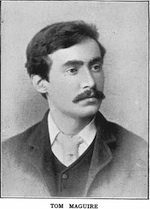
Next month On Copper Street, the fifth book in my Victorian series, will be published. One ongoing minor character has been Tom Maguire, a real person, and one of the unsung heroes of British politics, and one of the greatest unknowns ever to come from Leeds.

He discovered socialism in the 1880s and became a firebrand speaker, rousing the men and helping them win strikes. He was someone who helped in the formation of the Independent Labour Party, only to find himself sidelined by others with more of a taste for power. Tom Maguire died in Leeds in 1895. This is an extract from the new book. The circumstances of Maguire’s are true to reports of the time.

tom-maguire-lead


‘I had word about something while you were gone,’ Superintendent Kendall said.

‘What?’ From his expression, it couldn’t be anything good.

‘Tom Maguire. They found him dead at home. You knew him quite well, didn’t you?’

Knew him and liked him. Maguire had organized the unions. He’d helped them win their strikes, and he’d been there at the birth of the Independent Labour Party two years before. All that and not even thirty yet. But politics never paid the bills; he’d earned his money as the assistant to a photographer up on New Briggate.

‘How?’ The word came out as a hoarse croak. Surely no one would hurt him…

‘Natural causes,’ the superintendent said. ‘The doctor’s there now. I said we’d send someone over.’

‘I’ll go,’ Harper said.

‘A couple of friends called to see him this morning. Nobody had heard from him in a few days. The door was unlocked. They walked in and he was there…’


He knew Maguire had a room on Quarry Hill, no more than two minutes’ walk away from Millgarth, but Harper had never been in the place before; they’d always met in cafés and pubs and union offices. It was up two flights of rickety, dangerous stairs in a house that reeked of overcooked cabbage, sweat, and the stink from the privy next door. How many others lived in the building, Harper wondered? How many were packed into the rooms? How many more had lost their hope and will in a place like this?

The door to the room was open wide. The table was piled with books and magazines and notebooks. Politics, poetry, all manner of things. A few had slid off, scattered across the bare wooden floor. No sink, just a cheap cracked pitcher with a blue band and a bowl. A razor and leather strop, shaving brush and soap. A good, dark wool suit hung on one nail, a clean shirt on another.

That was the sum total of the man’s life.

The doctor was finishing his examination, wiping his hands on a grubby piece of linen. The inspector tried to recollect his name. Smith? That seemed right. An older man. Not uncaring, but hardened by the years. They’d met a few times before, always in situations like this.

‘He’s not one to trouble the police, Inspector.’ Dr Smith closed his bag. ‘Pneumonia. Sad at his age but nothing suspicious.’ He said good day, and the sound of his footsteps on the stair slowly faded away.

Harper could feel the cold all the way to his bones, as if there’d been no heat in here for weeks. The hearth was empty, carefully cleaned, but not a speck of coal in the scuttle. He opened a cupboard. The only thing on the shelf was a twist of paper that held some tea. No food. Nothing at all to eat.

The bed was cheap, pushed into the corner. A thin, stained mattress. Maguire lay under a grubby sheet and a threadbare woollen blanket. On top of that lay a heavy overcoat to give more warmth.

Two bodies in their beds, he thought. So different, he thought, but the ending was just the same. The doctor had covered the man’s face, trying to offer a little decency against the brutality of death. Harper pulled it gently away. The policeman inside needed to see for himself. Maguire’s skin was so pale it barely seemed to be there. His eyes were closed. No lustre in the ruddy hair.

A gust of wind rattled the window. Tom Maguire dead. No heat, no food. And no one to really care. Maguire had been ill; Harper had heard that. But this? How could he have died with nothing and no one around him?

Harper laid the sheet back in place. He’d liked the man. He was honest, he had principles and convictions that didn’t bend with the wind or the chance to line his pockets. He’d believed in the working man. He’d believed in the power to change things.

Very quietly, as if a loud sound might cause the corpse to wake, Harper pulled the door to. He started the walk out to the Victoria public house in Sheepscar. He needed to tell Annabelle.


‘Did you see him?’ she asked. ‘His body?’ He nodded.

When he entered she’d been standing by the window in the rooms above the bar she owned, gazing down at Roundhay Road. At first she didn’t even turn to face him and he knew. The word must have spread like ripples across Leeds: Tom Maguire was dead.

His eyes searched around for their daughter, Mary.

‘I asked Ellen to take her out for a little while,’ Annabelle said.

He put his hands on his wife’s shoulders. ‘I’m sorry,’ he said. He tried to pull her close but she didn’t stir.

‘I knew he was poorly. I should have gone down to see what I could do.’ Her voice was tight and hard. Blaming herself, as if she could have kept him alive. ‘I could have done something.’

What could he tell her? She’d known Maguire all her life. They’d grown up a few streets apart on the Bank, Annabelle a few years older. Life had taken them in different directions, then politics had brought them together again after she began speaking for the Suffragist Society.

Annabelle began to move away, ready to gather up her hat and shawl. ‘I can go over there now. I’ll see what I can do.’

Harper shook his head. ‘Don’t. There’s nothing. Honestly.’ If she saw how Maguire had lived and the way he died, then she’d never forgive herself. He put his arms around her, trying to find some words. But they wouldn’t come, just thoughts of a barren, bitter room.

He thought back over things he’d heard in the last few months. Word was that the new Labour Party was pushing Maguire away, that he was the past, not the future. He’d been seen out drinking a fair few times, so far gone that people had to help him home. That wasn’t the man he’d known, not the one he’d want to remember. It certainly wasn’t the one he’d watched who inspired hundreds of labourers with a speech on Vicar’s Croft and helped win them a cut in working hours. Not the man who led the gas strike like a general and beat the council. And definitely not the shyly humorous man he talked to in the café by the market. That was the Maguire who’d remain in his memory.

on-copper-street

A Christmas Tale

For someone who doesn’t care about Christmas, I seem to end up writing a Christmas story every year. Most of them have been little present for the wonderful Leeds Book Club, and you can find them here if you scroll down the page. This time, though, I thought I’d simply put it up here. And, in an even more unusual twist, for once it’s very contemporary. I hope you like it, and happy holidays of whatever kind you celebrate (or none).


For a moment she didn’t even realise she was doing it. Then Kate caught herself, singing along with Joni Mitchell’s “River” as her car idled at the traffic lights. At least it was a depressing Christmas song. This was always the worst time of year. Both her parents had died in December, years apart, and it always brought back memories, some good, most of them bad.

Ahead of her, the decorations glowed along the Headrow. Four o’clock and it was already full dark. She felt as if she’d barely seen daylight today. In the Magistrates’ Court since nine, waiting, then just five minutes of evidence before she was off the stand. At least she could duck off home early for once.

She glanced out of the passenger window. The big tree in front of the Town Hall was lit up, trying to give some spirit to the city. Kate was about to turn away when something caught her eye. A man looking around cautiously before ducking close to the tree and putting down a pack.

A horn beeped and her eyes slid to the rearview mirror. The lights had changed and traffic was moving. Kate put on her indicator, crept round the corner to Calverley Street, then on to the cobbled forecourt. She could still see the man at the bottom of the steps, gazing up to the top of the tree. Kate turned off the engine and suddenly Joni was silent. She took the radio from her briefcase.

‘This is DI Thornton.’

‘Go ahead, ma’am.’

‘Got something at the Town Hall. A man’s just left something under the big tree outside.’

For a few seconds there was nothing from the other end. She could feel her heart beating fast.

‘Sent out the alert, ma’am.’ The voice was tense now. ‘The super wants to know if you’re you sure you saw it?’

Typical Silver Command question. Don’t believe the bloody officer on the scene.

‘I’m certain. I can make it out. I’m parked close. I can still see the man.’

‘Description, ma’am?’

She stared.

‘White, maybe five feet nine. Wearing a parka. It might be green, hard to tell. Looks a little stocky. Dark bobble cap. Wait, he’s starting to walk away.’

‘We’re going to talk to the CCTV centre. Silver Command says they can track him. He wants you to move away from the area.’

Nobody was saying what could be in that package. These days it was safer to assume the worst.

‘There are people all around. What about them?’

‘Units are on the way. They should be there very soon.’

She could make out the distant wail of the sirens. Five or six of them, maybe more.  Another thirty seconds and they’d probably be here; certainly no more than a minute.

‘I’m going to follow him,’ Kate said. She clicked off the radio, dropped it on the seat and locked the car behind her. Cameras were fine, but nothing beat someone on the ground. Someone there and ready to act. Her heels clicked briskly as she walked. In her pocket the phone was buzzing; she switched it to silent.

He was crossing the road and starting to disappear into the throng on East Parade. Kate hurried, ducking through the traffic and ignoring the blaring horns. Too many people around for him to spot her. He hadn’t even looked back, he wasn’t hurrying.

She kept ten yards away, close enough to keep him in easy sight and rush him if it was needed. A glance over her shoulder. Flashing lights all around the Town Hall, traffic stopped on the Headrow. Good, everything was in hand there.

He left the pavement, going over then along South Parade. For a moment she’d been able to see his face as he turned his head. About fifty, jowly, stubble on his cheeks. Along Park Row, past Becketts Bank, the smokers gathered outside the bar, then on to Bond Street.

Shit.

Kate took out her phone. Five missed calls. She swiped the screen as she walked and pressed the number that had been trying to reach her.

‘What the hell-’

‘Another hundred yards and he’ll be on Commercial Street, sir. How many people do we have close?’

‘Two on Briggate heading your way and another coming up Albion Street. Why-’

Too far away, Kate decided. He needed to be stopped now.

‘I’m moving in on him, sir.’ She ended the call and put the phone back in her pocket.

Deep breath time. Kate could hear the busker on the corner ahead, the old man with the good voice doing his Johnny Cash songs. She walked faster, trying not to run; she didn’t want to panic him. Her heart was pounding so hard she thought it would break her ribs. Kate checked: the handcuffs were in her pocket. Five yards away now. Three. Two.

He went down easily. Before he could even react she had his wrists cuffed behind his back.

‘Police’ she shouted as people stopped to watch. ‘Move away.’

Then she heard the thud of feet as three uniforms came running.

bond-street

No weapon. There was nothing at all, besides his wallet, a couple of pounds in change, and a bloody nose where his face had hit the pavement. He was sitting on the ground, dazed, wrists cuffed behind him.

Kate had laddered her tights, she saw as she squatted to talk to the man. Brand new pair that morning, too.

‘Right, Kenneth.’ She had his wallet open, looking at the driving licence. Kenneth Mitchell. Fifty one. A Belle Isle address. ‘What did you leave under the tree outside the Town Hall?’

‘Eh?’ He squinted at her.

‘You put a package there. I saw you. That’s why we stopped you.’

His face cleared and he smiled.

‘A present,’ he said. ‘For the kiddies.’

‘What?’ She stood again, hands on hips and looked down at him.

‘Me neighbour, like. We were talking and he said wouldn’t it be a good idea if people left presents for the kiddies under that tree? So I bought summat, wrapped it, and came into town. I didn’t mean any harm.’

Christ. She walked few yards away and took out her phone.

‘Detective Inspector…’ Silver Command was purring note, delicious triumph in his voice.

‘He claims he was leaving a present for children, sir.’ Maybe the ground would open up and swallow her so she wouldn’t have to continue this conversation. Kate tapped her foot. Typical luck. No bloody sinkhole.

‘He’s telling the truth. It’s a Fisher Price something or other. You can apologise and let him go. You might take the time to thank him, too, Detective Inspector.’

‘Yes sir.’ Kate swallowed. ‘He had a nosebleed. I’ll have one of the uniforms get a paramedic.’

‘Make sure you do.’ A pause. ‘But good work, eh? These days…’

He didn’t need to finish the sentence. You couldn’t afford to look for the good in people now, only the bad.

‘Thank you, sir.’ Kate ended the call. At least he’d let her off lightly. But it would be all over the station tomorrow.

She turned to look at Mitchell. The cuffs were off now and one of the uniforms was helping him to his feet.

‘I’m sorry, sir. I hope you understand, though, with the ways things are.’ She smiled at him. ‘It was a lovely thought.’

He nodded and she started to walk away.

‘Merry Christmas,’ Mitchell said.

Kate smiled again. ‘Merry Christmas, sir.’


I’ll finish with one of those seasonal reminders that books make wonderful gifts any time of the year, and both The Iron Water and Modern Crimes are still warm-ish off the presses. On Copper Street, the firth Tom Harper novel, comes out in February, and you can pre-order it here.

Lottie at the Market Tavern

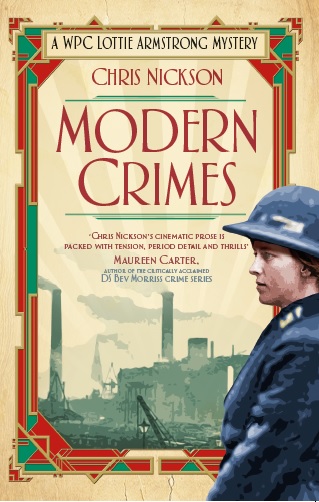
It’s not long until Modern Crimes is published and yes, I’m going to keep putting out teasers about it. I like Lottie Armstrong. She’s somewhat extraordinary by being ordinary – and you’ll have to read it to make sense of that. And so, here’s another short extract to hopefully whet your appetites.

For those who don’t know, the Market Tavern was Leeds institution, about 100 yards from Millgarth Police Station, and many of the city’s crooks gathered there. The force was happy to let them; it meant they knew where they were. But, at least in the 1920s, it wasn’t a place for a respectable woman, and definitely not for a woman police constable…

At the end you can find out more about Modern Crimes. The ebook comes out the same day as the UK paperback, and it’s decidedly cheap. I’ll just leave that thought in your head.


‘By God,’ Tennison said in admiration as they walked back down the street. ‘Where did you learn to do all that?’

‘What?’

‘Get them to talk. You should be a detective.’

She laughed. ‘And pigs will fly. Come on, he wanted to tell us, you could see it in his face. He loves her, he wants to see her safe as much as anyone.’

‘If you say so,’ he said doubtfully. ‘That touching his hand, what made you do it?’

‘I don’t know. It just seemed to be what he needed. Why? Was it bad?’

‘It was ruddy marvellous.’ He smiled at her and glanced at his wristwatch. ‘What time are you due back on patrol?’

She looked at him. ‘I don’t know. As soon as we’re done, I suppose. Why?’

‘Oh, I just thought we could drop in to the Market Tavern before you went back, that’s all.’ He glanced at her from the corner of his eye, a sly grin on his lips.

‘Go on, then,’ she agreed quickly. ‘As long as it stays quiet. Mrs Maitland will have me off the force if she finds out.’

‘I won’t say a word, cross my heart.’ He winked. ‘For a lass, you’re all right, you know that?’

She nudged him in the ribs, hard enough for him to feel. ‘And I’ve come across worse blokes than you.’ Her eyes were laughing. ‘So who’s this rich man, do you think?’

‘Haven’t a clue, but someone’s bound to know. You won’t find many Standards in Leeds, they’re not cheap. Whoever owns it has a bit of brass.’

She’d gone into pubs with Geoff, a few times with gaggles of girls from Barnbow when they enjoyed a night out. A cocktail bar with Cathy. But never anywhere like the Market Tavern. It was early enough in the day to stink of stale beer and old smoke, dust motes hanging in the air.

A few hardened drinkers slumped in the corners, shunning company; a man listlessly mopped the bar. The spittoons hadn’t been emptied and the brass needed a healthy polish.

‘Morning, Bill. Is Nancy about?’ Tennison said, looking around the faces in the place.

‘In the cellar, Henry. She’ll be back in a minute.’ He stared at Lottie, the look becoming a leer as he licked his lips. ‘Who’s the bird?’

‘That’ll be Woman Police Constable Armstrong to you.’ There was an iron edge to his voice. ‘Unless you fancy a belting into next week. Not from me, from her. And don’t go thinking she wouldn’t dare.’

Bill bowed his head and seemed to deflate into himself,.

At Barnbow the men had flirted. Some of them had tried it on, hands free when they thought they could get away with it. But she’d been one girl among many, plenty of them prettier and more happy-go-lucky. Since she put on the uniform it had been worse, as if she was fair game. Plenty of comments, someone trying to grab her breasts on a crowded tram. Even one of the coppers at work had fancied his chances, thinking he could drag her into a cupboard. A sharp knee had ended that idea and kept him off work the next day. Since then they’d treated her warily around the station. Everyone knew what had happened; no-one ever spoke about it.

Footsteps echoed on stone stairs. A door opened and a woman filled the opening. She was large, tall with wide shoulders. Big-boned in every way, around forty, but she carried it handsomely, wearing expensive, stylish clothes, make-up carefully applied to hide the wrinkles, her hair cut to suit her broad face.

‘Well, well, well, look who’s blown in.’ She had a voice like a contented purr, low, pleasant, but with the edge of teasing. ‘Where have you been keeping yourself, Henry?’ Her eyes turned to Lottie. ‘This must be one of them WPCs.’ She nodded approval. ‘The uniform suits you, dear. And Henry wouldn’t be dragging you in here unless you could hold your own.’

‘I’ve got a question for you,’ Tennison said. The attention, and everything that lurked beneath it, didn’t seem to bother him. ‘About someone who drinks in here.’

Nancy took a Woodbine from a packet on the bar and lit it.

‘Well,’ she said finally. ‘Spit it out. I don’t have all day.’

‘He drives a Standard,’ Lottie said quickly. ‘Probably in his twenties or so. Very likely thinks he’s the bees’ knees.’

The woman laughed. ‘You’re not backwards about coming forwards, are you? You’re looking for Ronnie Walker. Comes in here a couple of times a week. Likes to think he’s hard stuff because he’s slumming it. What’s he done?’

‘Maybe nothing,’ Tennison said. ‘We need to talk to him and find out.’

‘You need to take a look in Headingley. Somewhere round there.’ She stared at Lottie. ‘What’s your name, luv?’

‘WPC Armstrong.’

Nancy sighed. ‘Your real name. Like he’s Henry and I’m Nancy.’

‘Lottie.’

The woman extended a large hand and Lottie shook it. ‘You’ll do. You need anything, come and ask for me.’ She nodded at Tennison. ‘You don’t need to wait for him. And no-one will hurt you in here. Not unless they want to answer to me.’ She grinned, showing a set of discoloured teeth. ‘And they don’t, believe you me.’


‘You went in the Market Tavern?’ Cathy put her hands on her hips. ‘Come on, tell me all about it. I keep hoping someone will take me in there.’

They were walking through County Arcade, all the old glamour looking a little faded and dreary, the black and white tiled floor sad and grubby.

‘There’s not much to tell,’ Lottie told her. ‘It’s a dreary place. We weren’t even inside for ten minutes.’

‘What about the woman?’ Cathy asked eagerly. ‘I’ve heard about her.’

‘Nancy? She’s lovely. Big, but… it suits her.’

‘Are they keeping you on the investigation? What did Mrs Maitland say?’

‘The case has gone to the detectives.’

She didn’t want to say more. After her hopes had been raised for a few hours, they’d been dashed again. Still, that was to be expected. Outside the matron’s office Henry had given her a sympathetic look and a shrug before heading back to his beat. It was the way of the world.


Evening report was almost complete when Mrs Maitland looked at her. Her next words seemed to come out grudgingly.

‘Inspector Carter wants you to report upstairs to CID before you leave.’


Want to know more about Lottie and Modern Crimes? Click here.

Lottie cover

Modern Crimes – A Taster

Out on September 7. Remember, since a study shows that reading can lengthen your life, reading this book might help you live longer. It’s a thought.

And maybe you’ll love Lottie. I do.

Oh, last thing. The publisher has decided to make the ebook version nice and cheap. I prefer a hard copy, but grab it while you can. Lottie’s depending on you, So is your life.

Here’s the book trailer and the start of the novel, just to whet your appetite.

Leeds, 1924

As she walked into Millgarth Police Station, Charlotte Armstrong nodded to the desk sergeant then strode back along the corridor to the matron’s office. The day shift of bobbies had already gone on patrol and the building was quiet. She rested her hand on the doorknob, took a deep breath and straightened her back.

‘Good morning, ma’am. WPC Armstrong reporting.’

Mrs Maitland looked up, giving her a quick inspection. She was a pinch-faced woman in her late forties, dark hair going grey and pulled back into a tight bun. She’d never mentioned Mr Maitland, but in two years the woman had never revealed anything personal; the job seemed to be her life. She was here first thing in the morning and long into the evening, as if she had no better place to be.

‘There’s a hair on your jacket, Armstrong.’

Lottie looked down. One hair, dark blonde, hers. She plucked it away, annoyed at herself and at the matron.

‘Sorry, ma’am.’ She stayed at attention.

Maitland returned to the letters on her desk. This was her way. Keeping someone waiting was the way to enforce discipline.

The door opened and Cathy Taylor marched in. She was late and she knew it. Lottie could see it in her eyes. But she just winked, stood to attention and said, ‘WPC Taylor reporting, ma’am.’

‘You were supposed to be here at eight, Taylor,’ Mrs Maitland said.

‘Sorry, ma’am, my watch must be running slow.’

The matron sniffed. There were only two women constables in Leeds and she had to keep them in order.

‘Well, since you’re finally here, I have a job for the pair of you.’ She scribbled an address on a piece of paper. ‘Go and see her. She runs a home for unmarried mothers. One of her girls has been acting strangely and causing a fuss.’ She stared at the pair of them. ‘What are you waiting for? Off you go.’


‘It’s in Woodhouse, we might as well walk,’ Cathy said as they set out up the Headrow. She folded the note and put it in her uniform pocket. Early September but it was already feeling like autumn, enough of a nip in the morning air for their breath to steam. ‘Bet you the girl’s just gone off to find some fun. It’s always old cows who run those places.’

‘At least it makes a change from talking to prossies or chasing lads playing truant.’ Lottie sighed. She loved the job, but she wished the force would let them do more, rather than treat them like delicate flowers with tender sensibilities.

Still, it was better than working in a mill or being a housewife. Like so many others, she’d developed a taste for freedom when she worked. Earning her own money, that was important. Stuff the vote. The government had only given it to women over thirty; she still had five years to go.

Lottie had been a clerk at the Barnbow munitions factory in Cross Gates during the war. 1916, she was just seventeen, fresh in the job with everything to learn, newly promoted from the factory. But she’d managed, even finding time to flirt with the procurement officers who came to check things.

Geoff had been one of them. Shy, diffident, still limping badly from a wound he’d suffered the year before at Gallipoli. He had a modest charm about him, like he had nothing to prove. In his uniform he looked quite dashing.

Lottie was the one who made the running. Someone had to and he wasn’t the type to put himself forward. On his third visit to the factory she’d suggested an outing to the pictures, watching him blush as she spoke. From there it had taken two years until they reached the altar. By then the fighting was over and he’d returned to his job in the Dunlop area office.

She tried to become a housewife, but life chafed around her. Other women were having babies but Geoff’s injuries meant she never would. Lottie needed something, but there was nothing that appealed, until the Leeds Police advertised for policewomen. They particularly wanted married women. And suddenly life excited her again.


‘You’ll be getting yourself shot if you keep coming in late,’ Lottie warned.

Cathy pouted. ‘It was only a couple of minutes. Anyway, Mrs Prissy wouldn’t know what to do if she didn’t have something to complain about.’ She stifled a yawn with the back of her hand.

‘Late night?’

‘I went to the pictures with my friends, then they wanted to go on dancing so I couldn’t say no.’

Cathy was twenty-four, a year younger than Lottie, with a husband who was gone most of the year in the merchant marine. No children. Hardly a wonder she liked to be out a few nights a week, dancing and flirting and enjoying herself. Married but single, she called it with a small laugh.

Lottie had gone with her a couple of times after work, changing into civvies at the station then on to a see a film at the Majestic. It had been fun, but not something she’d want to do often. Cathy had wanted to carry on, to have a cocktail. God only knew where she found the energy. By the end of a shift all Lottie wanted was to be at home and off her feet. When the working week was over, she was exhausted. She was lucky to stay up until ten, never mind the wee hours.

But Cathy wanted to embrace life. She was pretty enough for a portrait, always getting looks from men. She wore her hair in a modern bob, and had a pair of shapely legs and that bony, modern figure that always made Lottie feel huge in comparison.

‘What are you going to do when your Jimmy comes home?’ Lottie had asked her. ‘You can’t go gadding about then.’

‘We’ll enjoy our time together. After a month he’ll ship out again. Don’t get me wrong: I love him and I’d never, you know… but I can’t sit at home every evening, can I? He wouldn’t want me to, anyway.’

They matched each other step for step along Woodhouse Lane and out past the university, going towards the Moor, with its library and police sub-station on the corner.

‘Down here,’ Cathy said, turning briskly along Raglan Road, followed by the first right and second left. She scratched at her calf through the skirt. ‘God, I wish they’d do something about this uniform. It’s not bad enough that it itches, it’s so heavy, too. Like wearing a battleship. This is it. Thirty-six.’

On a street of imposing terraced houses, this one loomed on the corner, detached, standing apart at the back of a long, neat garden and looking out over the Meanwood valley, with all the factories and chimneys spewing smoke into the air. Hardly an inspiring view, Lottie thought.

She knocked and waited. Some lovely stained glass in the window; she wouldn’t mind that at home. She was miles away when the knob turned and a small woman in an apron stared up at her.

‘I was wondering how long it would take the police to get here.’ There was no welcome in the voice. The woman raised an eyebrow and stood aside. ‘Well, are you coming in or do we do it all on the street?’

Lottie led the way, following an open door into a neat parlour. A Sunday room, still smelling of wax, the wood on the furniture gleaming.

‘Go on, sit yourselves down.’ The woman bustled around, flicking off some non-existent dust.

‘You run a home for unwed mothers here, Mrs…’ Lottie said.

‘Allen,’ she answered briskly. ‘Yes, I do. It’s a Christian thing to do, and I try to put on them on the right path.’ She sat very primly, back straight, her stare direct.

‘One of your girls has been causing problems, is that right?’ She took her notebook and pencil from her pocket.

‘She has. Then she went out and didn’t come back last night. No word this morning, either.’

That was bad; a missing girl. Lottie’s eyes flickered towards Cathy, and she felt a prickle of fear.

‘Could you tell us a little bit about her, Mrs Allen? Her name, what she looks like, where she’s from.’ Lottie smiled. She kept her voice calm and even. There was usually a simple explanation.

‘She’s called Jocelyn Hill. Seventeen, but she could easily pass for younger. You know the type, looks like butter wouldn’t melt, but she’s a sly little thing. Always out for a chance. A bit extra food, this and that.’ She shook her head in disgust. ‘Half of me wishes I’d never taken her in.’

‘What does she look like?’ Cathy asked. She liked facts, something solid.

‘Only about five feet tall, I suppose. Dark hair in one of those bobs they all seem to wear. Like yours,’ she added. ‘Thin as you like, no figure on her at all. Apart from the baby, of course.’

‘How far along is she?’ Lottie wondered.

‘Eight months,’ Mrs Allen replied, ‘so it’s not like she can hide it.’

‘Has she gone missing before?’

‘Of course not.’ She snorted. ‘They all know the rules when they arrive. No going out, only family to visit, in bed by ten. Break a rule once and they’re gone. I won’t stand for it otherwise. I give them a warm, clean place to have their children and I help find good homes for the little ones. I’m not about to let them take advantage of me.’

‘Have you had others disappear, Mrs Allen?’ Cathy asked quietly.

‘Only the one,’ the woman said after a while. ‘Three years ago. But she was a wild one, wouldn’t ever settle down here. Jocelyn liked to push things, but she was nothing like that.’

‘Where did she come from?’ Lottie had her pencil poised, ready to take down the address. Mrs Allen took a ledger from one of the empty bookshelves, found a pair of glasses in her pocket and began to search.

‘Here we are.’ She read out an address in Cross Green. Lottie glanced towards Cathy and saw a tiny shake of the head.

‘Thank you,’ she said, standing. ‘Is it possible to take a look in her room? Perhaps we could talk to some of the other girls who knew her?’

‘Nothing to see in the room,’ the woman told them. ‘I’ve already packed her case. If she shows up at the door she’s out on her ear. And she never really got along with the others. Kept herself to herself.’

‘Maybe a look in her case, then…’ Lottie suggested.

‘Two dresses and some underwear that’s as flimsy as nothing. Not hard to see how she ended up this way, is it?’


The door closed quickly behind them. As they walked back along the street Cathy looked over her shoulder.

‘She’s watching us from the front window.’ She shivered a little. ‘Blimey, I think I’d run off from that place, too. She’s…’

‘Strange?’ Lottie suggested.

‘Worse than that. Did you smell it in the hall?’

‘You mean the mothballs?’ She crinkled her nose. ‘She must have them everywhere.’

‘I could feel the joy being sucked out of me as soon as I walked through the door.’

They didn’t even need to talk about where they were going next. Over to Cross Green to see if Jocelyn Hill had gone home. A tram back into the city centre, then a walk through the market and up the hill towards St Hilda’s and Cross Green.

Wherever they went, people stopped to look at them. Policewomen were still a novelty in Leeds. By now Lottie was used to it. If she had sixpence for every time someone had asked if she was a real rozzer, she’d be a rich woman. She was every bit as real as the beat bobbies out there. Probably better at her job than half of them, too.

Even Lottie’s mother had been doubtful about her taking the job. It wasn’t becoming, she said. Not like marrying a grocer three months after being widowed and upping sticks to Northallerton. That was perfectly acceptable.


There was nothing inspiring about Cross Green. Not even much that was green. Street after street of tired people and back-to-back houses. Small groups of men hung around on the street corners and outside the pubs. Far more than there should have been, Lottie thought. But what were they supposed to do when there weren’t any jobs?

The men who fought had been promised a home fit for heroes. Fine words, but if they’d built any homes it hadn’t been in Leeds. There had been jobs when the women were sacked, but not much of that work had lasted. According to the newspapers it was the same all over the country.

There was nothing she could do about that. Lottie was just glad Geoff’s position was secure. And that she had work of her own.

‘You’re miles away,’ Cathy said.

‘Sorry.’

They passed another group of men and she was aware of them watching her backside as she walked. Someone said something in a low voice and there was a flurry of laughter.

‘Ten to one that was a mucky remark.’

‘More like two to one.’ Cathy smiled. ‘Look on the bright side. At least they noticed.’

Lottie wasn’t too certain. Just because that was part of life she didn’t have to like it.

‘Charlton Street,’ she said. ‘Down here.’

It was close to the railway embankment. Number nine stood towards the far end, exactly like its neighbours on either side. She assessed it quickly: dirty windows, mud on the doorstep. No pride in the place.

‘Ready?’ she asked.

‘As I’ll ever be,’ Cathy said.

The woman who opened the door stared at them with folded arms and a glare on her face.

‘He can’t have done too much wrong if they’re sending the lasses out,’ she said with a sneer. ‘What is it this time?’

‘Jocelyn,’ Lottie said. ‘Is she here?’

‘Here?’ The woman’s expression moved from surprise to panic. ‘Why would she be here? Oh God, something’s happened, hasn’t it?’

‘Why don’t we talk inside?’ It was a gentle question, and Mrs Hill gave a short nod, leading them back to the scullery. A scarred wooden table, battered chairs. Stone sink and a blackleaded range. How many of these had she seen in the job?

‘Right.’ The woman had gathered herself. ‘You’d better tell me what’s going on. What’s happened to our Jocelyn?’

‘She left the home last night and hasn’t come back.’

‘Stupid little bitch.’ She spat out the words like venom. ‘I told her it were for her own good.’

‘Why don’t you tell me about it?’ Lottie suggested. ‘Then we can find her.’ She gave Cathy a look: make some tea. As she started to bustle around, Mrs Hill was looking down and biting her lip.

‘Why did you send Jocelyn over there?’ Lottie asked softly but the answer was obvious. Woodhouse was far enough away that no-one would recognise her.

‘She got herself in the family way. Why the bloody hell do you think?’ The woman sneered. ‘It weren’t for the fun of it. Didn’t want everyone round here talking about us like that.’

‘Have you talked to her since she went there?’ It had been a while; there must have been some contact.

‘Oh aye, I pick up the telephone every day and we have a natter.’ She snorted. ‘Course I haven’t. Don’t have time to write letters. She wouldn’t answer if I did, anyway.’

Lottie tightened her lips.  ‘Mrs Hill, do you have any idea why she might have run off, or where she might have gone?’

‘Not really. But once our Jos gets an idea in her head there’s no shifting it.’ She shrugged. ‘Been that way since she was little.’

‘Do you have any idea at allwhere she might have gone?’

‘Not really.’ She reached into the pocket of her apron, took out a packet of cigarettes and lit one, just as Cathy put three mugs of tea on the table. The woman heaped in two spoonfuls of sugar and took a long drink. ‘I’ll tell you what, I’ll swing for her if she’s done owt daft.’

‘What about the baby’s father? Could she have gone to him?’

‘Possibly,’ Mrs Hill admitted. ‘She’d never say who it were, though, not even when her dad took a belt to her.’

‘No idea who it could be?’

‘One or two.’

And they could easily deny it, Lottie thought. Not much help at all.

‘What about her friends? Who are they?’

‘You’d do best talking to Elizabeth Townend and Eileen Donnelly, then. Thick as thieves, the three of them.’ She gave a dark glance. ‘I’ll warn you, though, they wouldn’t tell me owt.’

‘Where do I find them, Mrs Hill?’

Lottie cover

One More Richard Nottingham Story

This is the last of the Richard Nottingham stories I have sitting on the hard drive. Called December, I probably wrote it as a Christmas story for Leeds Book Club in 2012, and it’s just been sitting there quietly ever since. So it’s time it saw daylight again.

Will there be more? I’ve a feeling there will. I’m just not sure when.

The frost lay heavy on the grass and the branches as he walked towards Timble Bridge, his breath blooming wide in the air. The dirt was hard under his boots and the air bitter against his face. Richard Nottingham pulled the greatcoat more tightly around his body and walked up Kirkgate.

It was still dark, dawn no more than a line of pale sky on the eastern horizon. In some houses the servants were already up and labouring, plumes of smoke rising from a few chimneys. At the jail he checked the cells, seeing a drunk who’d been pulled from the street and a pair brought in by the night men for fighting at an alehouse. Another quiet night.

He pushed the poker into the banked fire and added more of the good Middleton coal kept in an old scuttle nearby. As warmth filled the room he removed the coat and settled to work. So far the winter had been gentle, he thought, but it was still only December. Come January and February, once the bitter weather arrived, the poor would freeze and die.

It was the same every year, he thought sadly. He’d been Constable of the City of Leeds long enough to know that all too well. When the cold bit it was always those without money who paid the price.

Down on Briggate the weavers would be setting up their trestles for the cloth market. They’d be laying out the lengths ready for the merchants, then eating their Brigg End Shot breakfast of hot beef and beer in the taverns, close enough to the door to keep a wary eye on their goods. He’d go down there before the bell rang to show the start of trading, walking around to watch for cutpurses and pickpockets, hearing the business of Leeds carried out in low whispers, thousands of pounds changing hands quietly in an hour.

He fed a little more coal onto the fire and straightened as the door swung open, bringing in a blast of chill air.

“Morning, boss,” said John Sedgwick, edging closer and holding his hands out as if he was trying to scoop up the heat. He’d been the deputy constable for little more a year, still eager and hardworking, a lanky, pale lad with pock marks fading on his cheeks.

“Looks like you had an easy time of it last night,” the Constable said.

“Aye, not too bad,” he agreed, pouring himself a mug of ale. “You know what it’s like. As soon as the nights turn chilly they stay by their hearths at night.”

“You wait. It’s Saturday, they’ll all be out drinking come evening,” Nottingham warned him. “You’ll have your hands full then.” He shook his head. “Get yourself home, John. Have some sleep.”

The deputy downed the ale and wiped the back of his hand across his mouth. “I’ll be glad to see my bed, right enough. I might even warm up for a few hours.”

Alone, Nottingham wrote his daily report for the mayor, nothing more than a few lines. He delivered it to the Moot Hall, the imposing building that stood hard in the middle of Briggate. The city was run from there, from rooms with polished furnishings and deep Turkey carpets that hushed the dealings and the sound of coins being counted. He gave the paper to a sleepy clerk and made his way down the street just as the Parish Church bell rang the half hour to signal the start of the cloth trading.

The merchants were out in their expensive clothes, the thick coats of good cloth, hose shining white as a sinless day and shoes with glittering silver buckles. They were moving around the stalls, making their bargains and settling them with a swift handshake before moving on to the next purchase. He saw Alderman Thompson softly berating a clothier, his face red, trying to beat the man down in price in his usual bullying manner.

The alderman glanced around, noticed him and glared. There was bad blood between them and Thompson was loath to forget it, a man who kept grudges in his mind like a ledger. But the man had been a fool, trying to cheat a whore of the few pennies that would have been food and shelter for her. The girl had complained and the Constable had confronted the man in front of his friends, shaming him, forcing the money from his pocket and passing it on to the lass.

He knew what he’d risked, the enmity of a man who was powerful on the Corporation. But the girl had earned her payment and deserved it; the man could afford it easily enough.

The Constable walked up and down the road, alert for quick movements, but there was nothing. He settled by the bridge, leaning on the parapet and looking at the rushing black water of the Aire. How many bodies had they pulled out of the river this year? Twenty, perhaps? Enough to lose count, certainly. Those who couldn’t cope any more with life and had found refuge in the current, the ones who’d drunk too much and fallen in, unable to get out again. There was always death, always hopelessness.

He shook his head and started to make his way back to the jail. Atkinson was striding out, thirty yards ahead of him. A girl running headlong down the street crashed into the man, and he batted her away idly with his arm, sending her tumbling before uttering a loud curse moving on.

The girl picked herself up and began to walk. As she passed, Nottingham took her by the arm.

“You shouldn’t have done that,” he told her, his grip tight.

“Done what?” she asked, the fright in her eyes as she raised her eyes to him and tried to pull away. She was young, no more than thirteen, thin as March sunlight, cheeks sunken from hunger, wearing nothing more than an old, faded dress and shoes where the upper was coming away from the soles. Her flesh was cold under his touch, puckered in goose pimples.

“You know exactly what you did. You cut his purse.”

“I didn’t,” she protested and began to struggle.

“Do you know who I am?” he asked gently. She shook her head, her mouth a tight, scared line. “I’m the Constable of Leeds. I think you’d better come along with me.” She tried to wriggle away, but his hand was firm on her. After a few moments she gave up, hanging her head and shuffling beside him.

The jail was warm, the fire burning bright and loud. He sat her down then held out his hand for the purse. Reluctantly, she brought it from the pocket in her dress and gave it to him.

“What’s your name?” he asked.

“Elizabeth, sir.” Now, with the cells so close she could see them, she was shivering in spite of the heat. “What’s going to happen to me?”

“Nothing just yet,” he assured her. “But I can’t make you any promises, Elizabeth. Where do you live?”

“Nowhere, sir.” He looked at him. “Me and my man and my sisters, we sleep where we can.” It was a familiar tale, one he’d heard so many times before, one he’d lived himself when he was young.

“How many of you?”

“Five, sir.”

He nodded at the purse. “How long have you been doing that? And give me an honest answer,” he warned.

“Two month, sir. But I’ve only managed to take three,” the girl pleaded.

He sat back, pushing the fringe off his forehead then rubbing his chin. “When did you last eat?”

“Thursday.”

“How old are your sisters?”

“Nine, seven and six, sir.”

“What happened to your father?”

“He died, sir. A horse kicked him in the head during the summer.” He could see the beginning of tears in her eyes.

“What was his name?” Nottingham wondered.

“William Marsden, sir. He worked at the stables.”

He remembered the name and the incident. The man had been a farrier, experienced and good at his trade. He’d been about to put fresh shoes on a horse when it reared, the sharp hoof catching him on the temple. He’d died instantly. “Doesn’t your mam work?”

“She has a bad leg, sir, she can’t walk proper.”

“And what about you? You’re old enough.”

“I’ve tried to find work, sir, but no one has anything.” The girl raised her chin defiantly. “I have, sir, honest.”

He stared at her face. All the guile vanished now, leaving a terrified girl who knew she could be sentenced to hang for what she’d done. He hesitated for a long moment, then said, “When you leave here, go next door to the White Swan. Talk to Michael and tell him the Constable sent you. He needs a girl to help there. It won’t pay much, but it’s better than nothing.”

Her eyes widened in astonishment and happiness as she began to understand he was letting her go. “Thank you, sir. Thank you. Do you really mean it, sir?”

He nodded, weighing the purse in his hand. It was heavy enough. With a small movement he tossed it to her. As she caught it, her mouth widened into a silent O.

“Rent a room for all of you and buy some food. Now go.”

He stood at the window, watching her in the street, looking back in disbelief before she vanished into the inn. Off to the west the clouds were heavy and pale as pearls. If they came in there’d be snow later.


I hope you won’t mind me going on about it, but another favourite character of mine, Annabelle Harper, takes to the stage in June. Seats are limited, and if you’re near Leeds I hope you’ll book a ticket here.