The Return Of The Thief-Taker

On October 7, Jane is coming back…

The scream sliced through the sky. Loud, clear, a cry of pure terror that crashed into her thoughts. Everyone near Seaton’s old mill turned to look. Carts halted, their drivers searching for the sound. Men and women walking together clutched each other’s arms.
All of them stopped except the couple Jane was following. Heads down, they kept moving steadily along, as if they hadn’t heard a thing.
A second scream, stronger, more awful than the first. Two men ran along the road, carrying a girl on a wooden hurdle. She was a small creature, no more than nine, clothes drenched in blood. Her dress was torn, showing a leg where the flesh hung ragged, ripped through to pale bone. Her fists were clenched, thrashing against the wood to try and stop the pain.
‘Be quiet,’ one of the men ordered in a harsh voice. ‘Surgeon will take care of it.’ They all knew what that meant: the leg would go. People shuddered and stepped back as the girl wailed no, no, no, no, the fear raw in her voice….

Jane realised she’d been digging her nails hard into her palms. Pain arrived so suddenly; it could touch anyone. She knew; seeing the girl had brought back the torment of losing her own little
finger. Hers had been a deliberate act of violence, but in some small way she understood. She was still for a moment, trying to push everything she’d just seen out of her mind. She knew it
would return later. As soon as she closed her eyes that night.

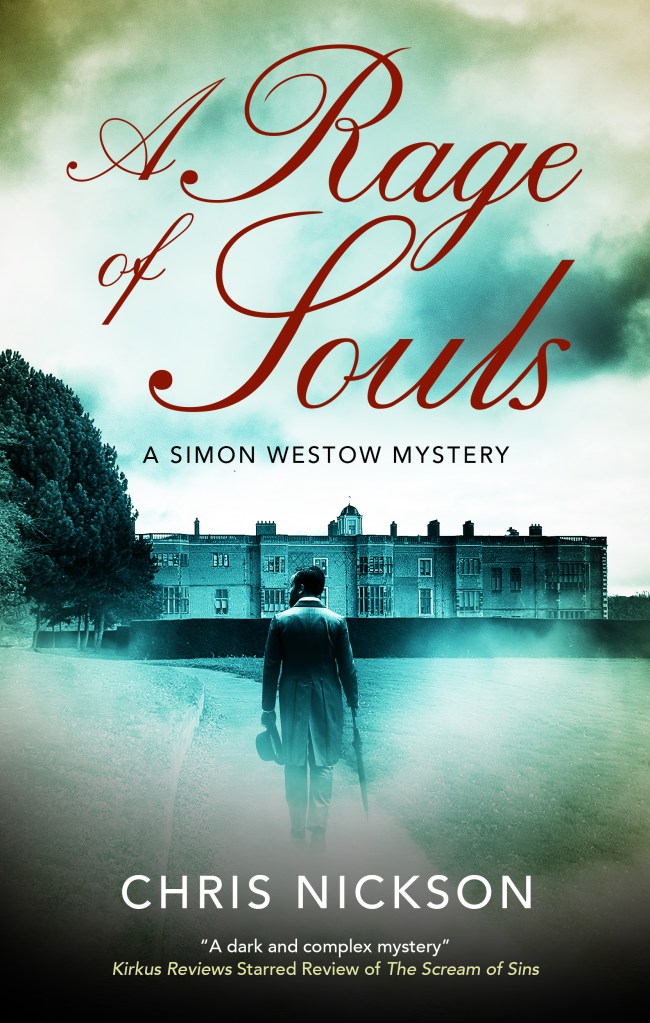
You can pre-order it here (UK) or here (US). It might look like the links don’t work, but if you click on the ‘here,’ they do. And yes, the building on the cover is Temple Newsam.

The Book Launch Last Week…

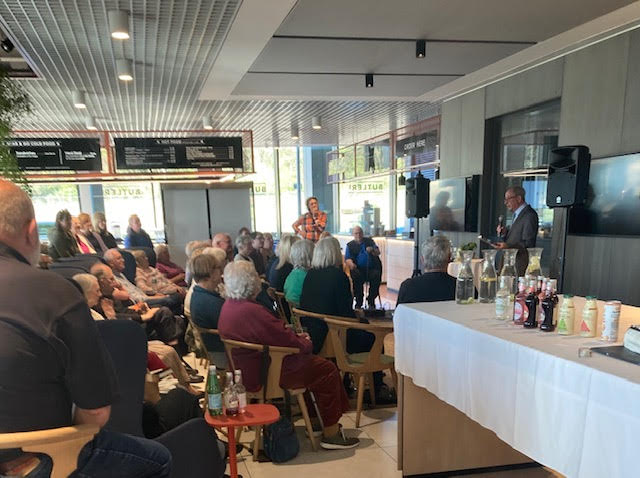
I’m sorry you couldn’t be there, out at Kirkstall Forge for the launch of No Precious Truth. I never counted how many came, but the estimates are between 50 and 60 – a hell of a turnout for a sunny Thursday evening, and I’m flattered so many attended.

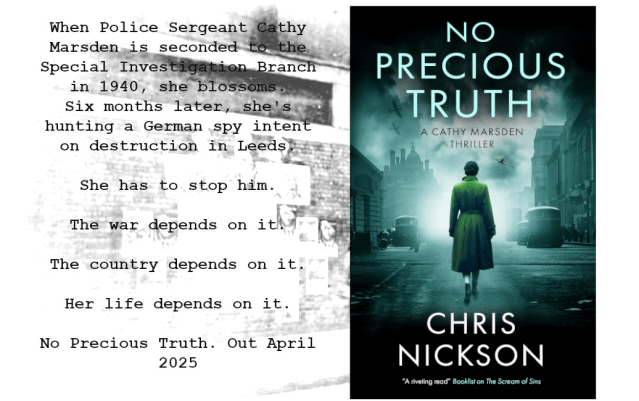
A number of faces I knew, and far many more that I didn’t. There had been an article about the event in the regional newspapers that must have made people curious. But also people familiar with my books, curious to see Leeds in a World War 2 setting, and to meet Woman Police Sergeant Cathy Marsden. And to be terrified by that rare vision of me in a suit.

The Forge features in the book, making it an ideal location for the launch. It had been important in the war (and was bombed in 1942, with five men losing their lives). I’m grateful to Lucinda Yeadon, who ended up in hospital two nights before the event (all wishes for a speedy recovery), to Marius and Shelly for being so receptive to the idea and organising everything, as well as providing refreshments for everyone.

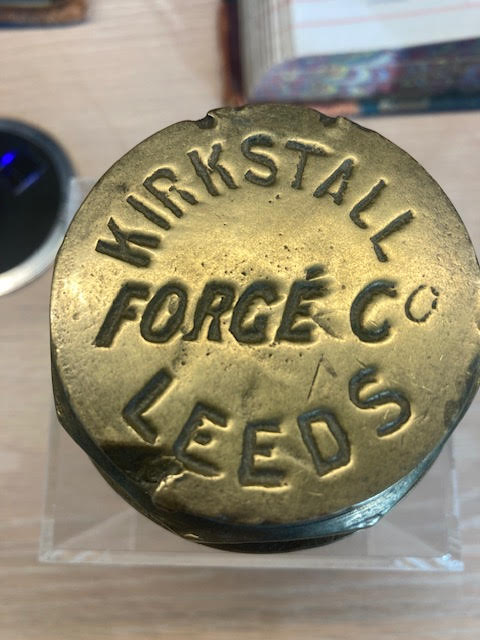
Plenty of artifacts and ledgers from the Forge in wartime were on display, along with replica war documents, like ration books and identity cards, and newspapers.

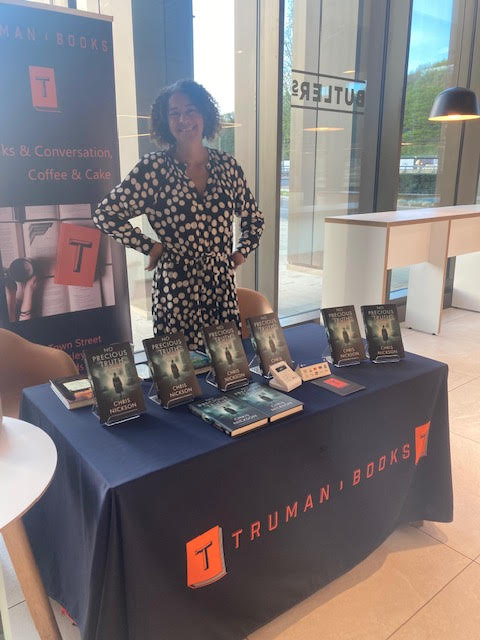
Truman Books, a wonderful independent from Farsley, was the bookseller. 22 copies of No Precious Truth were sold, as well as two from the Tom Harper series. Thank you, everyone who bought a copy.

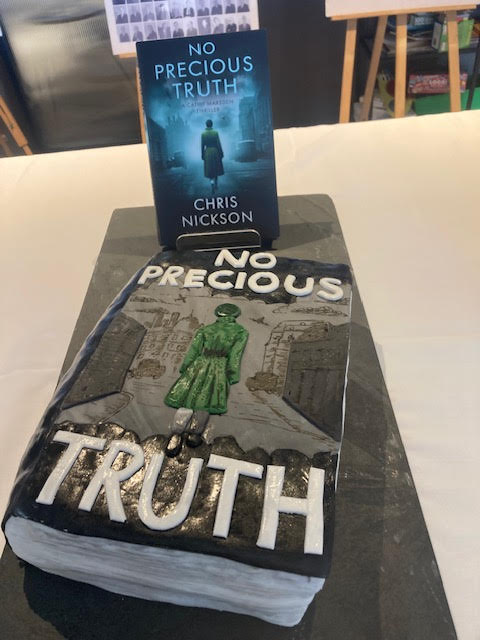
The centrepiece, though, was the cake, made and decorated by Lizzie, the daughter of Shelly, who runs Butler’s café, the venue for the event. Isn’t it glorious? Here it is, before and after.

I’m grateful to everyone who came and all those involved in putting on the event. Thank you. I hope the photos make you feel you were there. Remember, you can buy the book and see what all those people have discovered. Cheapest UK hardback price, with free postage, is here.

A Non-Pirate Looks At Seventy

A curious title, isn’t it? It’s actually an oblique reference to a Jimmy Buffett song. I’ve never heard it, I’m not a fan of his music, but I always liked of it – the title “A Pirate Looks At Forty.”

But at seventy? Well, that’s coming up fast. Next week. None of the earlier milestones ever bothered me, but this seems to loom very large. A real intimation of mortality.

I’m keeping a tighter focus for my work, concentrating on my novels only, and an occasional album review to remind myself I was once a music journalist, and loved it. Music still moves me, but even in my little corner of it – roots and world music – so much is passing me by. It’s time for younger voices with a different language to brin g it all alive.

But the books…I have plenty to keep me going. The seventh Simon Westow novel, Them Without Pain, is coming out in two months, and I’m moving along with the eighth (eight? I’m not sure how that’s happened). In May next year, you’ll meet Woman Police Sergeant Cathy Marsden and a little down the line I’ll be joining up with her again in Leeds, this time in 1942. Like I say, ample to keep me going.

I do have a definite sense of time passing these days. It doesn’t worry me; I’ve always been a fatalist. Just don’t let me keel over until I’ve finished whatever I’m writing, because I’m the only one with a clue who it ends, and even them, I’m frequently not certain until I’m almost there. Probably a good reason to keep writing. It’s my talisman, my lucky charm.

I was a late bloomer. I’d always written, and published bits and pieces. But I was almost forty before the music journalism became regular and my first non-fiction quickie bio appeared. Quite a number of those followed, but I was 55 when the first novel – The Broken Token – landed in the world. Since then, 36 others have followed, 31 one of them set in Leeds.

I love this place and its history, even if I came to that later, too.

So yes, 70. No banners, no bunting, definitely no party.

Let it come and I’ll make of it what I can.

By the way, before you go, let me tell you a little about this upcoming novel, Them Without Pain.

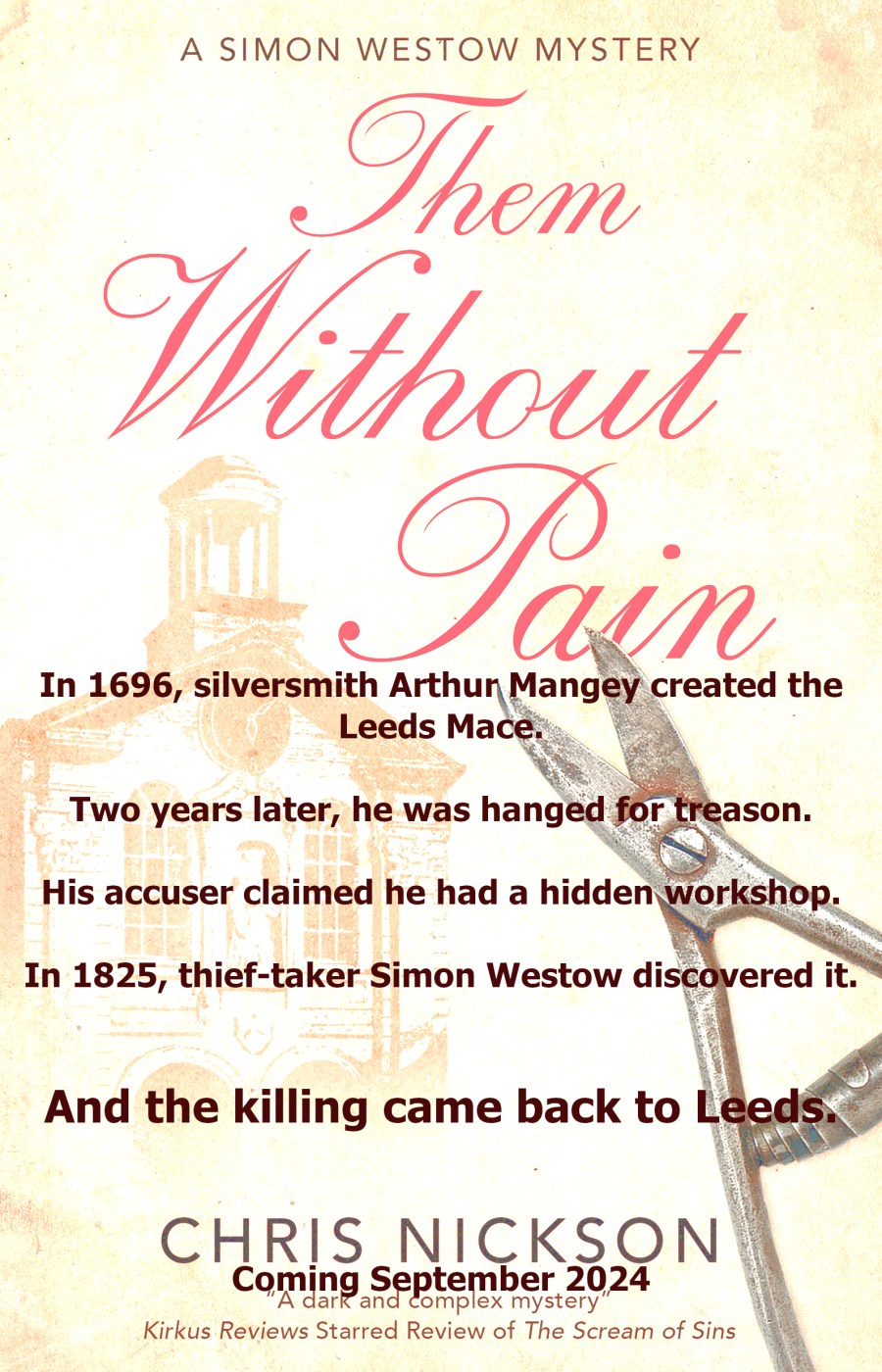
This one adds an extra layer as it has a real root in local history: in 1696, goldsmith Arthur Mangey created the elaborate ceremonial Leeds Mace. Two years later, he was accused of treason for coin clipping (debasing the coinage), found guilty and hanged. It was a dubious conviction, at best. In testimony, someone claimed he had a secret workshop where he committed his crimes, but nobody searched for it.

In 1825, they knocked down the block where the workshop was supposed to be, and…they found it. Inside were two pairs of metal shears and an Elizabethan coin.

Those are the facts. In the fiction, the room also contains the body of a man Westow has been hunting who stole a set of silver cups made by Mangey. How does the past connect to the death – and who killed him?

It’s Regency noir, as dark as it can get, set in a town polluted by the growing number of factories belching out their smoke. A place where people arrive, hunting for work and pavements covered to gold, to find only scraps. But where the rich have money, and the criminals can be deadly.

If you’re on NetGalley and approved for Severn House, you can read it now (please leave a review!). If not, you can still pre-order it. Independent bookshops would love your business, but all your favourite places will carry it. Speedy Hen has the cheapest British price, plus free UK delivery. Just saying.

Thinking About Richard Nottingham

While I love Tom and Annabelle Harper dearly, along with Simon Westow, his wife Rosie, Jane and Sally, and can’t imagine them not in my life, there’s someone I all too often forget, and it’s to my shame that I do, especially as he’s the only one who truly existed.

Richard Nottingham, the Constable of Leeds.

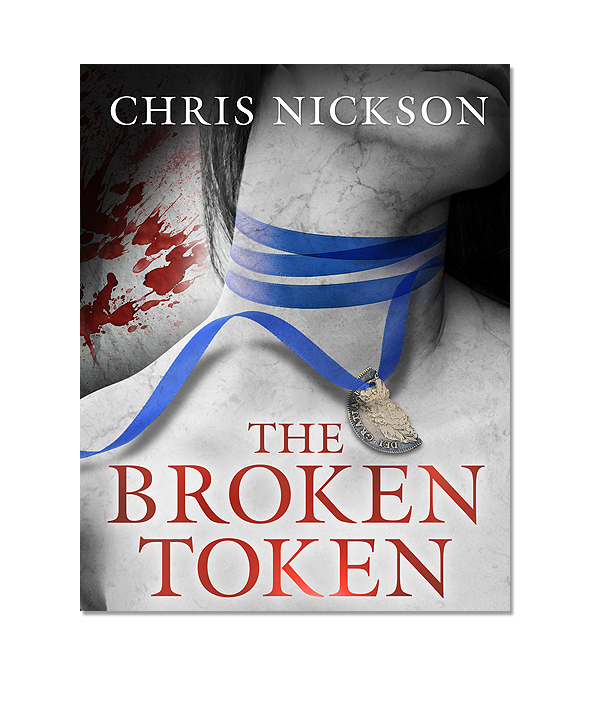
I wrote seven books with him in the role he had in real life (and to settle any possible questions, no there won’t be more). He gave me my start as a published fiction writer with The Broken Token

(which was also an Independent on Sunday best audiobook of the year) and got me a rating as one of the 10 best crime novels of the year for Cold Cruel Winter. All seven of the novels in that series won starred review in Publishers Weekly.

Richard was kind to me, a true inspiration. I’m proud of all those books, of him, and the community around him in Leeds during the 1730s.

From records, I know he was given a reward in the 1690s for informing on a highwayman – and this well before he became the law himself. Maybe it gave him the taste. Or possibly the fact that Walter Nottingham, perhaps his father or brother, was constable before him.

I made what was a title, a sinecure, a man who take part in official processions, into a proto coppers, with the night watch underneath him. He solved crimes. He found himself in danger. I was stretching history, but Richard seemed to enjoy himself doing it.

My Richard had a wife and two daughters. The real one had other children, of course, one of whom was a young woman who went in to marry into the minor nobility. Richard owned property in town. On Kirkgate at first, then Briggate; Leeds was a very small place at that time. People kept arriving, but there were fewer than 10,000 inhabitants.

I have written about the real Richard Nottingham here, with plenty of detail snippets from documents. Sadly, I’ve never found a portrait of him.

Why mention him at all? Most of the books are out of print in hardback, after all (and only the first is available in paper, I believe). But a number of you who came to my work through Tom or Simon might not know about Richard. You might like him.

The ebooks are all pretty cheap, and you’ll discover a family, as well as a place and time that are close to my heart. I always had Leeds, of course, but Richard showed me what to do with it, and that’s a gift I can never fully repay.

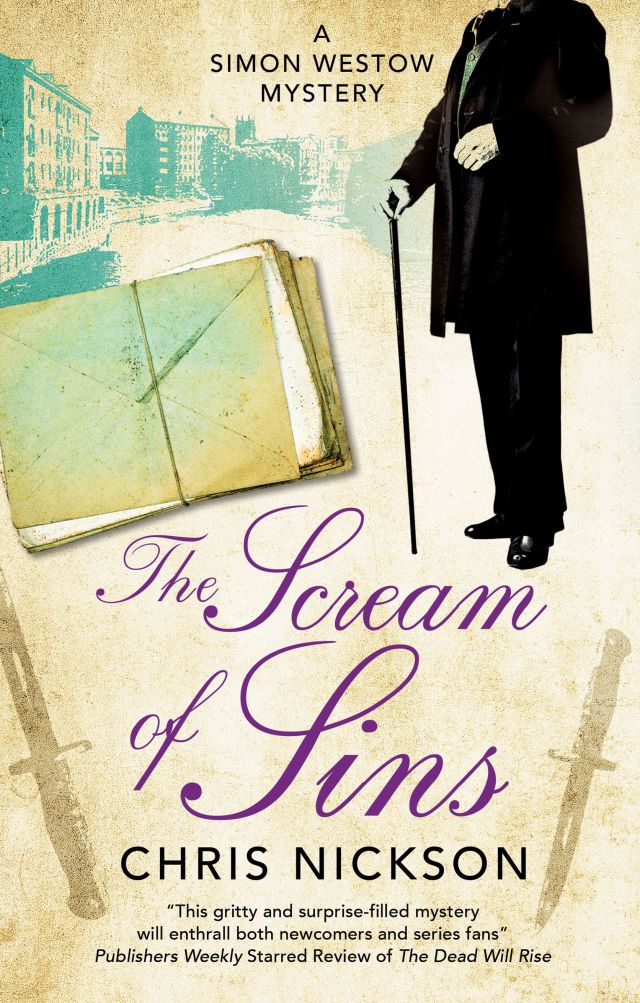
I will remind you that if you haven’t read The Scream of Sins yet, it’s been out for a month now – and God, the reviews have been so good it’s amazed me, since it’s so dark. Why not read it and judge for yourself?

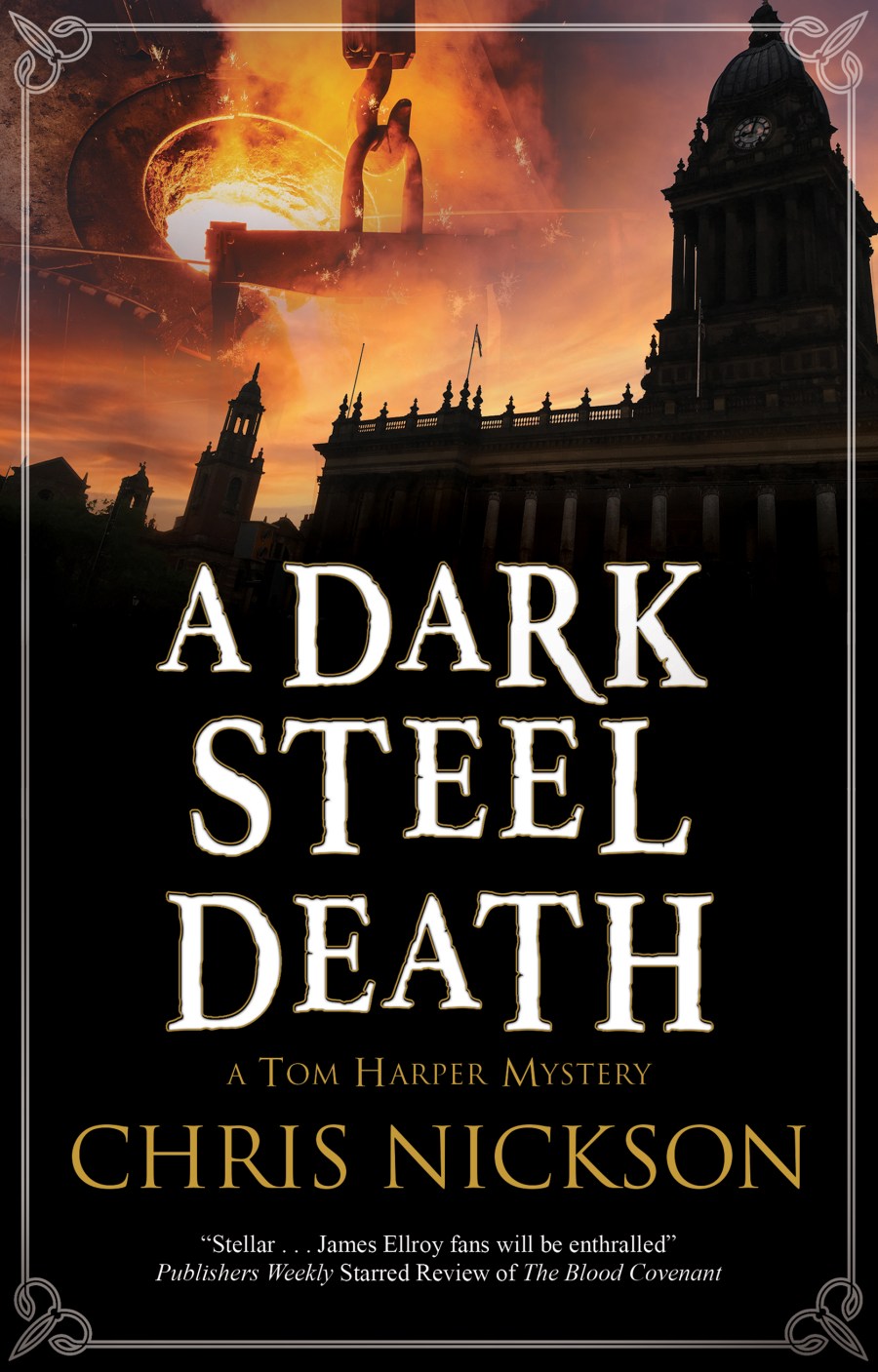
A Dark Steel Death – The Video

Leeds, December 5, 1916

The car slid quickly through the streets. Deputy Chief Constable Tom Harper stared out of the window. Leeds was black, a wartime winter-darkness, barely a single thin sliver of light showing through the blackout. A quarter of an hour before, he’d been comfortably asleep in bed, until he was torn out of a dream by the telephone bell. As he hurried to answer, he wondered if it was finally happening: the Zeppelins had come to attack Leeds.

            No. This was worse. Far worse.

            He could see the fire from half a mile away. Flames licked high into the sky. A moment later he smelled the hard, overwhelming stink of cordite.

            ‘Duty sergeant, sir.’ He’d had to press the receiver against his good ear to make out the words. The man’s voice was flat, empty of expression. ‘Our officers at Filling Station Number One rang in. There’s been an explosion. A car is on its way for you.’           

  Filling Station Number One. Everyone around here knew it by a different name – Barnbow.

The book is out everywhere, hardback and e-book, in September. You can pre-order it now.

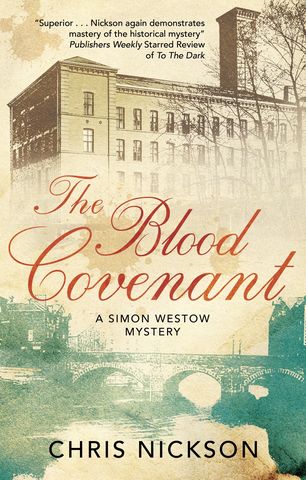
Another Extract from The Blood Coventant

Another short extract from The Blood Covenant that I hope will tempt you into buying a copy (or asking your library to buy one – maybe even both!) Most bookshops seem to have copies now, although it’s not out until the 30th officially. If you ask them nicely, they might well be able to get it to you for Christmas…for online ordering, this place has the cheapest price, with free UK postage, and they can get it straight out.

Jane’s turn this time.

Jane turned off Boar Lane on to Albion Street and knew someone was there. She had the sense of him before she could see anything. Tightening her grip on the hilt of the blade, she peered into the darkness.

            Suddenly he was in front of her, no more than three yards away. As if he’d appeared from nowhere. Looming like a giant. Tall, broad as a house. If she allowed him to come close enough, he’d be able to crush the life from her.

            The bayonet that usually hung from his belt was in his right hand.

            Perkins. Arden’s bodyguard, grinning at the sight of her.

            ‘You and your boss, you’ve been poking in places where you don’t belong. Causing trouble for Mr Arden’s friend.’

            Jane didn’t reply. She was watching him, her mind racing over the advice Dodson the crippled soldier had given her. A dirty fighter, brutal, with years of experience. If he won, he’d leave her for dead without a qualm.

            A weak right knee. That was what Dodson had said. Not much, but it was something.

            Perkins moved towards her. Only a single pace, but it was enough. He was going to use his size and weight against her. He had to be in his fifties now, grey hair cropped close against his skull; old for work like this. But he still had power. What he’d lost in speed he made up for in trickery.

            Jane could see it in his eyes; he believed she was an easy target. A girl who’d have no fight in her. He took another pace forward. She tried to feint to her right, but he was already moving to stop it. Old, but not so slow. And not slipping on the packed, frozen snow.

            He wanted to keep her moving backwards until she was pinned against the wall. Once that happened, he could take his time. Finish her as quickly or slowly as he wanted.

            She was watching. His eyes, his hands. His feet. They’d give the clues. Even knowing she might die here, she felt calm. She touched the gold ring. A single step back, to see what he’d do. His eyes glinted, as if he already sensed victory.

            Good, she thought, let him. Maybe he’d let down his guard a little.

            Perkins swung his arm, the bayonet slicing through the air. But that wasn’t the danger; it was a diversion, he’d put no power into it. He was shifting his balance, preparing to kick her. As soon as he raised his foot, she darted forward with a kick of her own.

            She put all her weight behind it. She felt the hobnails on the sole of her boot crash into his right knee. The feel of something giving in his leg. He staggered, arms out to try and keep his balance. Mouth shut tight to stifle the cry. Eyes filled with fury and surprise.

            She could run. He wouldn’t be able to follow. But if she did that, Jane knew he’d recover and come for her another time. When that happened, she wouldn’t have the smallest chance of staying alive.

            The thoughts flew through her head in a moment. No hesitation. She kicked his knee again. This time it gave. He fell on to the pavement, scrambling backwards so he could try to defend himself.

Three Weeks To Go

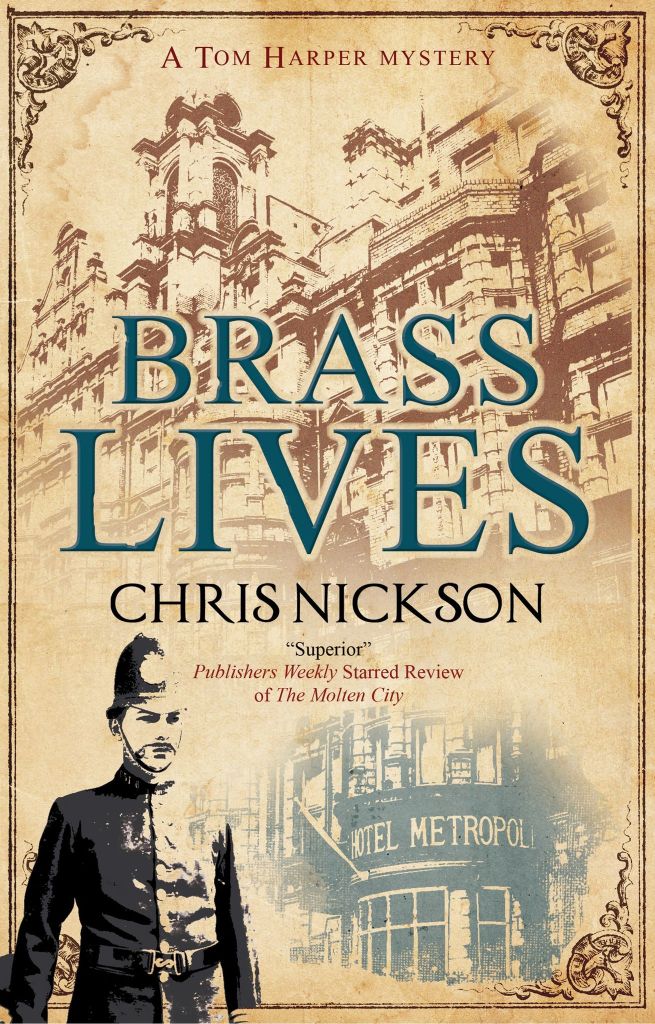
Yes, as June arrives and summer really seems to be here – 23C yesterday and the allotment is grateful! – the times is paxssing quickly. In just over three weeks, Brass Lives will be published in the UK (ebook everywhere on August 1, and US hardback publication in September, I believe).

It’s the first time I’ve used a real, well-known person as the foundation for a major character, and given his life the kind of turn it never had.

Who? A Leeds-born man who moved young to New York and become notorious as a gangster and bootlegger – and as a killer. Owen Madden. Here’s a short film I made about him in my other role as writer-in-residence at Abeey House Museum. He really is a fascinating person.

My version of him, Davey Mullen, is a little different.

Why not read it and find out? This place has the cheapest price, and free shipping (and they’re not Amazon).

Thank You

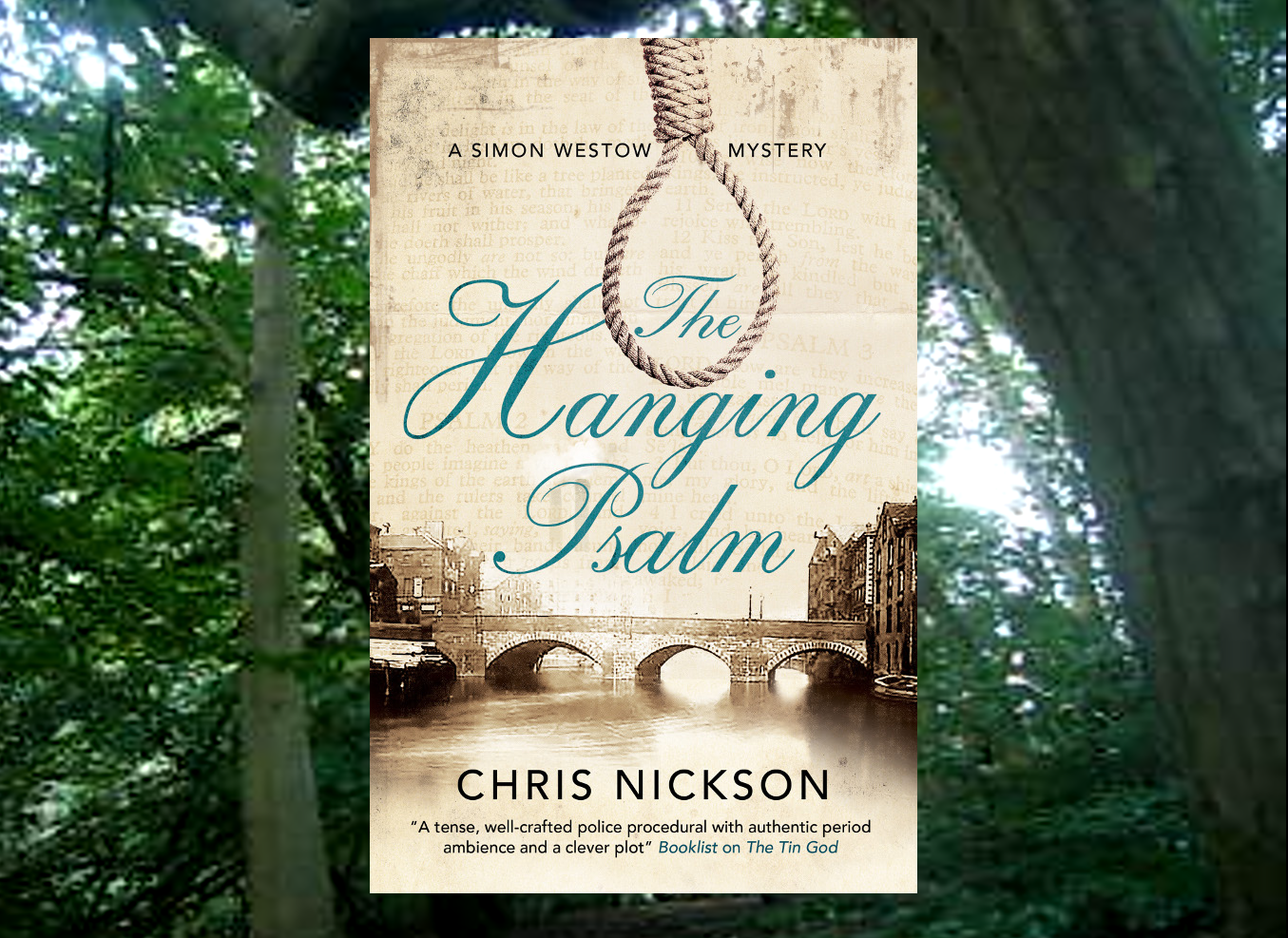
It’s almost four weeks since The Hanging Psalm was published, three since the launch event. The conventional wisdom is that there’s a two-week window after publication in which to make a splash about a book, something that can be especially important with a new series.

noose4

I’m perhaps luckier than most; with a gap between UK and US publications, I have two of those windows. That said, one isn’t any easier than the other. So many books appear these days, from traditional publishers and independents, that it’s hard to be heard above the noise.

Reviews help. They help beyond compare, especially in these days when we’re all online. But still, the most important is word of mouth. I don’t expect everyone to like my books. Historical crime is niche enough. Leeds historical crime is an even smaller niche. and I certainly don’t expect everyone to like all my books (although I can live in hope).

But, if you do like one, please tell your friends. Ask your local library to stock a copy – most library services will order the book if they don’t already have it. Like every other author, I love people taking my books out of the library. They’re such a vital community resource and they need to be used as much as possible. Read all you want and it costs you nothing. What could be better than that?

There’s also a bonus for writers. Not only do we receive the royalty when the service buys a copy, we receive a small amount whenever someone borrows one of our books, whether a physical or ebook copy. Win-win, truly.

Yes, I want to sell books. I want people to read what I write. That’s why it’s out there. But I depend on people like you. Without you, it all falls apart very quickly.

So I thank you for all you’ve done, and hope I can keep you entertained and make you think for quite a few years yet.

One final thing. If you’re in the UK and haven’t read The Tin God yet (I’m immensely proud of that book, and of Annabelle Harper in it), the hardback is currently £10.07 on Amazon (sorry, US readers). Not my favourite retailer, but if you’re looking to give the feminist in your life a Christmas gift, well…this would definitely fit the ball. Maybe you can see the printing sell out – that would be a great present for me.

But whatever happens, thank you all.

tingodsmall1

The 1930s Return, Leeds Style – The Dead On Leave

I was shocked and very pleasantly surprised by how many of you read an extract from my upcoming book last week. Right, I thought, maybe they fancy a bit more…

It’s’ 1936, and the Depression has hit Leeds hard. Oswald Mosley has brought his Blackshirts to town, and they’ve been chased off from Holbeck Moor with their tails between their legs by 30,000 Lioners. But there’s a body left behind, and Detective Sergeant Urban Raven has to find his way through the fog of politics and sorrow to discover who the killer might be.

The Dead On Leave is out in paperback on June 18, £7.99

The first man stood on his step and listened as Raven told him about the murder. He was in his sixties, with a shock of pure white hair and a thick moustache the colour of nicotine stains, with deep lines etched into his face. He spat out onto the cobbles, said, ‘About bloody time,’ and closed the door.

The next name was three houses further along Kepler Grove. A young fellow this time, with bulging frog eyes and a bouncing Adam’s apple. He looked downcast at the news, but nothing more. The same at the next few addresses. No grief. No one here was going to miss Frank Benson.

Round the corner on Gledhow Place, a man named Galloway cradled his infant daughter, heard what the sergeant had to say, then snorted.

‘You know what he was like?’ the man asked and Raven shook his head. ‘A real sod, that’s what. He’d dock you for owt. Reckoned he was God an’ all.’

‘What do you mean?’

Galloway tucked the girl’s head against his shoulder, tenderly stroking her hair.

‘About a month back, I were expecting him round. He didn’t even knock, just opened the front door and barged right in like he owned the place, looking around, checking in the cupboards and asking if there was any change in my circumstances. No how do you do, no by your leave, no respect. I told him to get hisself right out again. “My wife could have been washing at the sink, you bugger,” I said. I picked up the poker and waved it at him. That got him back outside right quick and tapping politely. “Any change in things?” he asked when I let him in. “Aye,” I said. “For the worse.” He took a glance in the pantry, and when he was leaving, he told me, “I won’t forget this.” He didn’t, neither. Someone told him I’d been making a little repairing boots and they stopped my relief. Five weeks. Still got three to go. Benson relished telling me, too.’

‘You realise you’ve just made yourself a suspect,’ Raven said, and Galloway shrugged.

‘Arrest me, then. At least you’d have to feed me in jail.’

‘Where were you yesterday?’

‘Right here. Where the hell else would I be?’

‘You’re in the clear, then.’ Not that he suspected the man; Galloway was far too open, his heart showing loud and bright on his sleeve.

He heard similar tales at other houses. Family members who’d been forced to move into lodgings because they were working and their income would cut assistance to the others.

‘The truth is that half of them haven’t moved at all, of course.’ He sat in the scullery of a house on Anderson Mount, a wooden rack in front of the range with clothes drying slowly. Ernie Haynes was a member of the National Unemployed Workers’ Movement. Thoughtful, soft spoken, in his fifties, he seemed to have given up on the idea of ever having a job again. There were plenty more in the same boat. The unemployable. ‘They stay out all the hours they can then sneak home to eat and sleep. Benson liked to try and catch them. As if it was a game.’

‘No one seems to have a good word for him.’

‘How can you, for someone like that?’ Haynes wondered.

*
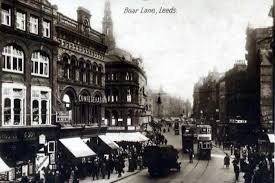
boar lane 30s

‘None of them even said “poor man”,’ Noble told him as they drove back into town, along Mabgate and past the mills and factories that stood empty and forlorn. Rubbish lined the roads; no one cared. ‘Not an ounce of sympathy.’

‘He didn’t seem to have much of that himself.’

‘He’s dead, though.’

‘We all will be some day,’ Raven said. ‘That doesn’t guarantee respect.’

‘It seems wrong, that’s all.’

It was the way of the world. Nothing more. People spoke ill of the living, the dead, of everyone. They enjoyed it. Some revelled in it.

In the office, he passed Mortimer the list, telling him what they’d learned and watching him grimace.

‘We’ll need to get the bobbies onto the rest,’ Raven said. ‘There are far too many for us.’

The inspector nodded and took a piece of paper from the top of a pile.

‘The post-mortem report. Benson was strangled. Whoever it was stood behind him to do it.’

Raven thought of the thin red line on the man’s throat.

‘What did they use?’ he asked. ‘Could the doctor tell?’

‘An electrical flex, he says. He found some of that fabric they put around the wire in the wound. There was some under Benson’s fingernails, too. He must have been trying to pull the cord away from his throat.’ He shuddered. ‘Bloody awful way to go.’

It was. Slow, knowing you were going to die. It didn’t matter how many shades of a bastard Benson had been in his job, that was a terrible death.

*

Leeds 30s_2

The inspector drove as if it made him uncomfortable. He was wary, slow, too cautious by half. Going through Sheepscar, they passed a group of men in old clothes standing around a fire in a metal barrel on a corner, nowhere better to go.

‘The dead on leave,’ Mortimer said, so softly he could have been talking to himself.

‘What, sir?’

‘Something my wife heard on the wireless.’ He gave a quick smile and a shake of his head. ‘Someone was talking about all the unemployed. Said they were like the dead on leave. It struck me, that’s all.’

It was good, Raven had to agree. But it wasn’t just those without jobs. What about the fools and the cuckolds? They lived in that same sad, shifting world, too.

He glanced up the hill to Little London. That was what they called the area, but none of the streets were paved with gold. Instead, plenty of the cobbles were missing and fully half the houses were slums. Dilapidated, in need of knocking down, like so much of Leeds. Happen somebody would drag the whole city into the twentieth century before it was halfway over.

Early Reviews…And Listen To Annabelle Speak

It’s’ just over a week until The Tin God is published. I’m hugely proud of this book, it feels as if it’s taken on greater resonance that the crime story I set out to tell – but readers will judge that more objectively than I ever can, of course.

I’m pushing this book hard. Among other things, there’s going to be a blog tour to coincide with publication, and that includes giving away a copy of the novel. So please, keep your eyes on the blogs listed below or follow on Twitter.

Meanwhile…here are a few reactions from early reviewers:

“Chris Nickson is an amazingly skilful author with a love of Leeds, its varied and deep history, and demonstrates it with each book he writes.”

“The whole story has such resonance with today’s current affairs that it makes you realise how much there is still to do regarding social attitudes, as well as how far we have come.”

“I like the strong sense of characterisation in the novels. Annabelle is a suffragette, looking to make things easier for her daughter, Mary, in her path through life. She is, however, no airy fairy dilettante being strong, capable and practical with her feet planted squarely on the ground. I cheer at her every move. She is supported in her efforts by her husband, Tom…He is another strong character. He’s not as enthusiastic about being Superintendent as he might be as the paperwork and meetings take him away from investigative work but this threat to his wife and family gives him the opportunity to roll his sleeves up and get stuck in.”

“There’s a particular talent here with this author’s fine-tuned ability to thread actual historical events into his fiction. This one is quite thought-provoking in reflecting upon those who initially paved the way for women’s rights and those, yet today, who stand tall in the face of current roadblocks. This still grows curiouser and curiouser…”

“The author Chris Nickson is Leeds born (as am I ) and it’s clear that he loves his home city and its place in history, as one of the leading lights of industry. He brings the Leeds of 1897 very much to life both in terms of actual historical events of the time and in the sights, sounds, and smells of this great city. I really enjoyed this particular storyline as it demonstrated the struggle that women had, ( and some would say, still have) to be recognised and valued as legitimate candidates for office, and to be considered equal to men.

I make no bones about it – I love Chris Nickson’s books – love Tom and Annabelle – love the sense of old Leeds with its cobbled streets, the houses huddled together against the chill whipping off the River Aire, the friendly community, and the good old fashioned policing.”

“I always enjoy the sense of period that Mr Nickson evokes and The Tin God is no different. Annabelle’s campaign speeches resound with the possibility of change but don’t ignore the terrible blight of poverty prevalent in the fictional Sheepscar ward.”

And with that mention of Annabelle’s campaign speeches, through the miracle of technology (and the superb voicing of Carolyn Eden), I’ve been able to find one. Take a listen and see if it convinces you….

After that, wouldn’t you vote for Mrs. Annabelle Harper?

annabelle election poster texture

Perhaps you need to discover The Tin God for yourself. I know an author who’d be very grateful…it’s out March 30 in the UK.

tingodsmall1