Proper Coppers – A Brand New Story

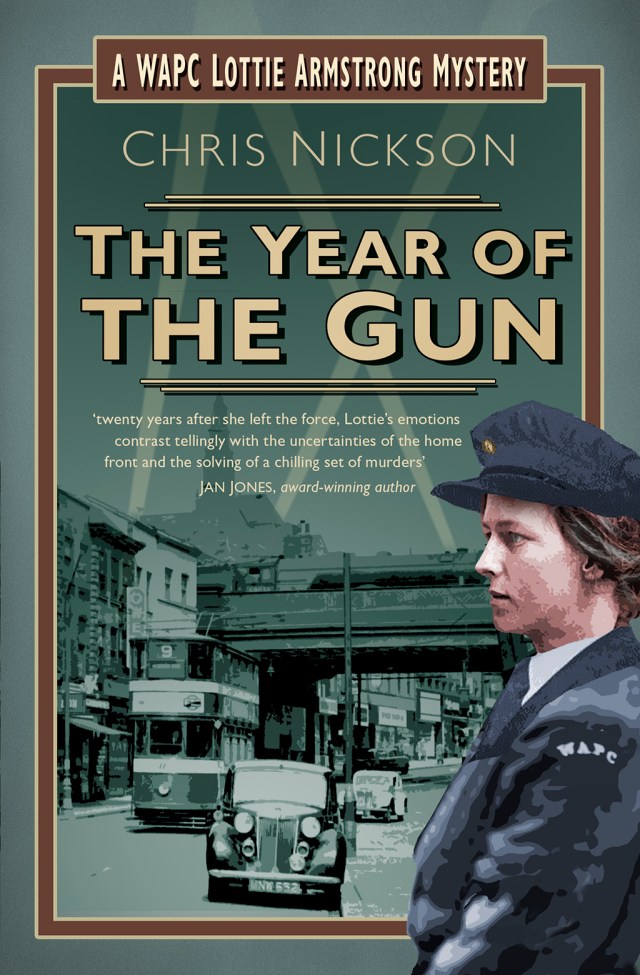
It’s just under three weeks until Modern Crimes is published. You haven’t really had chance to get to know its heroine, Lottie Armstrong. What better way than in a new short story that gives you the opportunity to know a little more about WPC Lottie Armstrong, and how she wants to be a proper copper.

You can order the book. The paperback comes out on the 7 September, January 2017 in the US. But the ebook edition is published everywhere September 7, and it’s dead cheap (thank my publisher). Details after the story.

Proper Coppers

‘Come on.’ Lottie stopped and turned, hands on her hips. ‘It’ll take us an hour to get there at this rate.’

Cathy Taylor bent over and retied her laces. ‘You’re not the one breaking in new shoes. They’re killing my bunions’

‘Half a dozen men are craning their neck to look at you like that,’ Lottie hissed.

‘Let them.’ Cathy straightened and grinned. ‘I’m don’t mind being the centre of attention.’ She wiggled her toes. ‘That’s a little better. We’ll be there in two shakes of a lamb’s tail.’ Cathy began to stride out across Woodhouse Moor and looked over her shoulder. ‘Well? Are you coming?’

1924, and they were the first two women police constables in Leeds, their first year on the beat. WPCs looked after the women and children; those were the orders. Shoplifters, truants, moving on the prostitutes. Not proper coppers, one officer had told them with a sneer.

Lottie Armstrong didn’t care. She’d heard worse when she’d worked out at Barnbow during the war. A fews insults ran off her like water from a duck’s bath. She was twenty-five, loved the work, and she had a husband who liked her to be happy. Cathy? Well, her husband spent most of his time away with the merchant marine. Work filled her days, brought in some money, and gave her the chance to flirt with anything in trousers. And she was right; she always liked being the centre of male attention. She didn’t even have to work with it. Skinny as a rail, one of those fashionable figures, and with her hair in a bob, men regularly gave her a second glance. Lottie was…rounder. Not that she really cared. Most of the time.

They knew exactly where they were going. It was May and already their third trip to the same address that year. Once in April, twice this month. Elsie Chalmers. Bold as brass, she nicked things from shops. Classy shops and good department stores. Matthias Robinson, Marks and Spencer, Schofield’s, the Pygmalion, Marshall and Snelgrove – none of them were safe from her. Knickers, gloves, a blouse or two. Everyone knew she did it; they’d simply never managed to catch her with the goods. It had been going on for five years, always in the spring and summer, as if she took winter off.

‘It’s like cricket,’ the desk sergeant said. ‘April rolls around and it’s the start of Elsie’s shoplifting season.’ But no matter how often they searched her house, they’d never found the items she’d taken.

This time, though, she’d outdone herself. Elsie stolen an expensive coat, on sale after the winter season. Heavy wool, with a fox collar. It wasn’t something she could slip into her handbag as she passed. She’d tried it on, admired the fit in the mirror and waltzed out still wearing it. By the time the shop assistant realised, Elsie had vanished into the crowds on Briggate.

That had been two hours before.

Now they had their orders. Go and search Elsie Chalmers’ house. Again. The way she kept coming back here, Lottie thought, she might as well rent a room from the woman. She already knew the layout as well as she knew her own home on Oak Road.

It was a decent three-storey terrace with a front garden no bigger than a postage stamp. A tiny spot of lawn that could be clipped with a pair of nail scissors and a rose bush that climbed awkwardly towards the neighbour’s hedge.

Cathy knocked on the door. They waited a moment then heard footsteps clicking down the hall. Then, finally, Elsie herself.

‘Hello.’ She managed to sound surprised. ‘What brings you two here? Why don’t you come in?’ She stepped aside to let them through.

‘Elsie,’ Lottie began, ‘you’ve been at it again, haven’t you?’

‘At what, dear? What do you mean?’ She was fifty if she was a day, but she tried her best to hide it, always beautifully turned out. A strong girdle to keep her figure under control, neat, stylish clothes, a hair style that hadn’t come from the shop on the parade down the road. And plenty of make-up to hide the wrinkles. ‘Would you like some tea?’

Every visit here meant tea and cake. It was a ritual, part of the game for the woman. Lottie looked at her, wondering what was going on in her head. Why did she do this? What did she gain from it?

‘Where’s the coat, Elise?’ Cathy asked.

‘What coat is that, dear?’

‘The one you stole this afternoon.’

Elsie gave a sweet smile. ‘But I haven’t stolen anything.’ She waved a hand. ‘Take a look around.’

She still wore the wedding ring, although her husband had been dead since the Somme. He’d left her a little, enough to get by. Lottie knew that much from talking to her. She could afford the clothes she took. Maybe stealing brought a little thrill into her life.

Never mind, she thought. Maybe this time they’d catch her.

Cathy was in the bedroom, moving clothes along the rail.

‘She’s got enough dresses to fit an army. I bet she never paid for half of them, either.’ She held one out. ‘Feel that. Real silk. She couldn’t afford that.’

Lottie knelt and checked under the bed, then in the box room, the empty spare bedroom, and finally the attic. She pushed the cobwebs away with her hand, looking for feet marks on the dirty floor. Not a thing.

They marched back downstairs, feeling the frustration. Wherever it was, Elsie had a good hiding place. The best. But this time, Lottie decided, this time she’d find it, even if she had to tear the place apart brick by brick.

The parlour, the kitchen: no coat. That left the cellar. Lottie raised an eyebrow. Cathy sighed. They’d been down there before. Last time they’d found a huge spider over the sink and a rat had scuttled across the floor before vanishing into a hole. But they had to do it. Lottie gritted her teeth.

Five minutes of searching everywhere. They moved old furniture that had been left here, coughing as dust rose into their faces. By the time they climbed back up to the kitchen, their uniforms were filthy. They patted themselves and each other. Best to be immaculate before they reported back in to Millgarth police station or Mrs. Maitland, the matron, would be tearing strips of them both.

Lottie stared out of the windows at the yard.

‘Just wait a minute,’ she said.

It was no more than six steps across the yard to the coal shed up against the back wall. There’d be an opening on the other side, so the coalman could deliver from the ginnel.

Lottie opened the door. She expected a small dark cloud to rise as she stepped inside. Instead the small space was swept spotlessly clean.

A long bag hung from a nail on the wall. A few carefully sealed boxes were stacked on the floor. Lottie began to smile.

‘Elsie,’ she called once she was in the kitchen again, her arms full, ‘Could you come here a moment?’

‘What is it?’ She heard the small sigh of the chair as the woman rose. As soon as she entered the room, her face fell. ‘Oh dear,’ she said. ‘Oh dear.’


‘How did you know?’ Cathy asked. They stood in the ladies’ at Millgarth Police station, washing off the day’s grime after their shift. Elsie Chalmers was down in the cells, waiting for her solicitor. ‘None of the blokes who’d searched the place before ever thought of it. We didn’t, either. What made you look there?’

‘I’m not sure.’ She studied her reflection. It was true. She’d had a sudden flash, that was all. Seeing the coal shed, remembering that there hadn’t been a fire in the grate, that day or the month before, that the woman only shoplifted when the weather grew warmer. In a moment, everything seemed to fit together. ‘It doesn’t matter. We got her.’ She smiled. ‘Just like proper coppers.’

Want to know more about Modern Crimes? Click here.

Lottie cover

Modern Crimes – A Taster

Out on September 7. Remember, since a study shows that reading can lengthen your life, reading this book might help you live longer. It’s a thought.

And maybe you’ll love Lottie. I do.

Oh, last thing. The publisher has decided to make the ebook version nice and cheap. I prefer a hard copy, but grab it while you can. Lottie’s depending on you, So is your life.

Here’s the book trailer and the start of the novel, just to whet your appetite.

Leeds, 1924

As she walked into Millgarth Police Station, Charlotte Armstrong nodded to the desk sergeant then strode back along the corridor to the matron’s office. The day shift of bobbies had already gone on patrol and the building was quiet. She rested her hand on the doorknob, took a deep breath and straightened her back.

‘Good morning, ma’am. WPC Armstrong reporting.’

Mrs Maitland looked up, giving her a quick inspection. She was a pinch-faced woman in her late forties, dark hair going grey and pulled back into a tight bun. She’d never mentioned Mr Maitland, but in two years the woman had never revealed anything personal; the job seemed to be her life. She was here first thing in the morning and long into the evening, as if she had no better place to be.

‘There’s a hair on your jacket, Armstrong.’

Lottie looked down. One hair, dark blonde, hers. She plucked it away, annoyed at herself and at the matron.

‘Sorry, ma’am.’ She stayed at attention.

Maitland returned to the letters on her desk. This was her way. Keeping someone waiting was the way to enforce discipline.

The door opened and Cathy Taylor marched in. She was late and she knew it. Lottie could see it in her eyes. But she just winked, stood to attention and said, ‘WPC Taylor reporting, ma’am.’

‘You were supposed to be here at eight, Taylor,’ Mrs Maitland said.

‘Sorry, ma’am, my watch must be running slow.’

The matron sniffed. There were only two women constables in Leeds and she had to keep them in order.

‘Well, since you’re finally here, I have a job for the pair of you.’ She scribbled an address on a piece of paper. ‘Go and see her. She runs a home for unmarried mothers. One of her girls has been acting strangely and causing a fuss.’ She stared at the pair of them. ‘What are you waiting for? Off you go.’


‘It’s in Woodhouse, we might as well walk,’ Cathy said as they set out up the Headrow. She folded the note and put it in her uniform pocket. Early September but it was already feeling like autumn, enough of a nip in the morning air for their breath to steam. ‘Bet you the girl’s just gone off to find some fun. It’s always old cows who run those places.’

‘At least it makes a change from talking to prossies or chasing lads playing truant.’ Lottie sighed. She loved the job, but she wished the force would let them do more, rather than treat them like delicate flowers with tender sensibilities.

Still, it was better than working in a mill or being a housewife. Like so many others, she’d developed a taste for freedom when she worked. Earning her own money, that was important. Stuff the vote. The government had only given it to women over thirty; she still had five years to go.

Lottie had been a clerk at the Barnbow munitions factory in Cross Gates during the war. 1916, she was just seventeen, fresh in the job with everything to learn, newly promoted from the factory. But she’d managed, even finding time to flirt with the procurement officers who came to check things.

Geoff had been one of them. Shy, diffident, still limping badly from a wound he’d suffered the year before at Gallipoli. He had a modest charm about him, like he had nothing to prove. In his uniform he looked quite dashing.

Lottie was the one who made the running. Someone had to and he wasn’t the type to put himself forward. On his third visit to the factory she’d suggested an outing to the pictures, watching him blush as she spoke. From there it had taken two years until they reached the altar. By then the fighting was over and he’d returned to his job in the Dunlop area office.

She tried to become a housewife, but life chafed around her. Other women were having babies but Geoff’s injuries meant she never would. Lottie needed something, but there was nothing that appealed, until the Leeds Police advertised for policewomen. They particularly wanted married women. And suddenly life excited her again.


‘You’ll be getting yourself shot if you keep coming in late,’ Lottie warned.

Cathy pouted. ‘It was only a couple of minutes. Anyway, Mrs Prissy wouldn’t know what to do if she didn’t have something to complain about.’ She stifled a yawn with the back of her hand.

‘Late night?’

‘I went to the pictures with my friends, then they wanted to go on dancing so I couldn’t say no.’

Cathy was twenty-four, a year younger than Lottie, with a husband who was gone most of the year in the merchant marine. No children. Hardly a wonder she liked to be out a few nights a week, dancing and flirting and enjoying herself. Married but single, she called it with a small laugh.

Lottie had gone with her a couple of times after work, changing into civvies at the station then on to a see a film at the Majestic. It had been fun, but not something she’d want to do often. Cathy had wanted to carry on, to have a cocktail. God only knew where she found the energy. By the end of a shift all Lottie wanted was to be at home and off her feet. When the working week was over, she was exhausted. She was lucky to stay up until ten, never mind the wee hours.

But Cathy wanted to embrace life. She was pretty enough for a portrait, always getting looks from men. She wore her hair in a modern bob, and had a pair of shapely legs and that bony, modern figure that always made Lottie feel huge in comparison.

‘What are you going to do when your Jimmy comes home?’ Lottie had asked her. ‘You can’t go gadding about then.’

‘We’ll enjoy our time together. After a month he’ll ship out again. Don’t get me wrong: I love him and I’d never, you know… but I can’t sit at home every evening, can I? He wouldn’t want me to, anyway.’

They matched each other step for step along Woodhouse Lane and out past the university, going towards the Moor, with its library and police sub-station on the corner.

‘Down here,’ Cathy said, turning briskly along Raglan Road, followed by the first right and second left. She scratched at her calf through the skirt. ‘God, I wish they’d do something about this uniform. It’s not bad enough that it itches, it’s so heavy, too. Like wearing a battleship. This is it. Thirty-six.’

On a street of imposing terraced houses, this one loomed on the corner, detached, standing apart at the back of a long, neat garden and looking out over the Meanwood valley, with all the factories and chimneys spewing smoke into the air. Hardly an inspiring view, Lottie thought.

She knocked and waited. Some lovely stained glass in the window; she wouldn’t mind that at home. She was miles away when the knob turned and a small woman in an apron stared up at her.

‘I was wondering how long it would take the police to get here.’ There was no welcome in the voice. The woman raised an eyebrow and stood aside. ‘Well, are you coming in or do we do it all on the street?’

Lottie led the way, following an open door into a neat parlour. A Sunday room, still smelling of wax, the wood on the furniture gleaming.

‘Go on, sit yourselves down.’ The woman bustled around, flicking off some non-existent dust.

‘You run a home for unwed mothers here, Mrs…’ Lottie said.

‘Allen,’ she answered briskly. ‘Yes, I do. It’s a Christian thing to do, and I try to put on them on the right path.’ She sat very primly, back straight, her stare direct.

‘One of your girls has been causing problems, is that right?’ She took her notebook and pencil from her pocket.

‘She has. Then she went out and didn’t come back last night. No word this morning, either.’

That was bad; a missing girl. Lottie’s eyes flickered towards Cathy, and she felt a prickle of fear.

‘Could you tell us a little bit about her, Mrs Allen? Her name, what she looks like, where she’s from.’ Lottie smiled. She kept her voice calm and even. There was usually a simple explanation.

‘She’s called Jocelyn Hill. Seventeen, but she could easily pass for younger. You know the type, looks like butter wouldn’t melt, but she’s a sly little thing. Always out for a chance. A bit extra food, this and that.’ She shook her head in disgust. ‘Half of me wishes I’d never taken her in.’

‘What does she look like?’ Cathy asked. She liked facts, something solid.

‘Only about five feet tall, I suppose. Dark hair in one of those bobs they all seem to wear. Like yours,’ she added. ‘Thin as you like, no figure on her at all. Apart from the baby, of course.’

‘How far along is she?’ Lottie wondered.

‘Eight months,’ Mrs Allen replied, ‘so it’s not like she can hide it.’

‘Has she gone missing before?’

‘Of course not.’ She snorted. ‘They all know the rules when they arrive. No going out, only family to visit, in bed by ten. Break a rule once and they’re gone. I won’t stand for it otherwise. I give them a warm, clean place to have their children and I help find good homes for the little ones. I’m not about to let them take advantage of me.’

‘Have you had others disappear, Mrs Allen?’ Cathy asked quietly.

‘Only the one,’ the woman said after a while. ‘Three years ago. But she was a wild one, wouldn’t ever settle down here. Jocelyn liked to push things, but she was nothing like that.’

‘Where did she come from?’ Lottie had her pencil poised, ready to take down the address. Mrs Allen took a ledger from one of the empty bookshelves, found a pair of glasses in her pocket and began to search.

‘Here we are.’ She read out an address in Cross Green. Lottie glanced towards Cathy and saw a tiny shake of the head.

‘Thank you,’ she said, standing. ‘Is it possible to take a look in her room? Perhaps we could talk to some of the other girls who knew her?’

‘Nothing to see in the room,’ the woman told them. ‘I’ve already packed her case. If she shows up at the door she’s out on her ear. And she never really got along with the others. Kept herself to herself.’

‘Maybe a look in her case, then…’ Lottie suggested.

‘Two dresses and some underwear that’s as flimsy as nothing. Not hard to see how she ended up this way, is it?’


The door closed quickly behind them. As they walked back along the street Cathy looked over her shoulder.

‘She’s watching us from the front window.’ She shivered a little. ‘Blimey, I think I’d run off from that place, too. She’s…’

‘Strange?’ Lottie suggested.

‘Worse than that. Did you smell it in the hall?’

‘You mean the mothballs?’ She crinkled her nose. ‘She must have them everywhere.’

‘I could feel the joy being sucked out of me as soon as I walked through the door.’

They didn’t even need to talk about where they were going next. Over to Cross Green to see if Jocelyn Hill had gone home. A tram back into the city centre, then a walk through the market and up the hill towards St Hilda’s and Cross Green.

Wherever they went, people stopped to look at them. Policewomen were still a novelty in Leeds. By now Lottie was used to it. If she had sixpence for every time someone had asked if she was a real rozzer, she’d be a rich woman. She was every bit as real as the beat bobbies out there. Probably better at her job than half of them, too.

Even Lottie’s mother had been doubtful about her taking the job. It wasn’t becoming, she said. Not like marrying a grocer three months after being widowed and upping sticks to Northallerton. That was perfectly acceptable.


There was nothing inspiring about Cross Green. Not even much that was green. Street after street of tired people and back-to-back houses. Small groups of men hung around on the street corners and outside the pubs. Far more than there should have been, Lottie thought. But what were they supposed to do when there weren’t any jobs?

The men who fought had been promised a home fit for heroes. Fine words, but if they’d built any homes it hadn’t been in Leeds. There had been jobs when the women were sacked, but not much of that work had lasted. According to the newspapers it was the same all over the country.

There was nothing she could do about that. Lottie was just glad Geoff’s position was secure. And that she had work of her own.

‘You’re miles away,’ Cathy said.

‘Sorry.’

They passed another group of men and she was aware of them watching her backside as she walked. Someone said something in a low voice and there was a flurry of laughter.

‘Ten to one that was a mucky remark.’

‘More like two to one.’ Cathy smiled. ‘Look on the bright side. At least they noticed.’

Lottie wasn’t too certain. Just because that was part of life she didn’t have to like it.

‘Charlton Street,’ she said. ‘Down here.’

It was close to the railway embankment. Number nine stood towards the far end, exactly like its neighbours on either side. She assessed it quickly: dirty windows, mud on the doorstep. No pride in the place.

‘Ready?’ she asked.

‘As I’ll ever be,’ Cathy said.

The woman who opened the door stared at them with folded arms and a glare on her face.

‘He can’t have done too much wrong if they’re sending the lasses out,’ she said with a sneer. ‘What is it this time?’

‘Jocelyn,’ Lottie said. ‘Is she here?’

‘Here?’ The woman’s expression moved from surprise to panic. ‘Why would she be here? Oh God, something’s happened, hasn’t it?’

‘Why don’t we talk inside?’ It was a gentle question, and Mrs Hill gave a short nod, leading them back to the scullery. A scarred wooden table, battered chairs. Stone sink and a blackleaded range. How many of these had she seen in the job?

‘Right.’ The woman had gathered herself. ‘You’d better tell me what’s going on. What’s happened to our Jocelyn?’

‘She left the home last night and hasn’t come back.’

‘Stupid little bitch.’ She spat out the words like venom. ‘I told her it were for her own good.’

‘Why don’t you tell me about it?’ Lottie suggested. ‘Then we can find her.’ She gave Cathy a look: make some tea. As she started to bustle around, Mrs Hill was looking down and biting her lip.

‘Why did you send Jocelyn over there?’ Lottie asked softly but the answer was obvious. Woodhouse was far enough away that no-one would recognise her.

‘She got herself in the family way. Why the bloody hell do you think?’ The woman sneered. ‘It weren’t for the fun of it. Didn’t want everyone round here talking about us like that.’

‘Have you talked to her since she went there?’ It had been a while; there must have been some contact.

‘Oh aye, I pick up the telephone every day and we have a natter.’ She snorted. ‘Course I haven’t. Don’t have time to write letters. She wouldn’t answer if I did, anyway.’

Lottie tightened her lips.  ‘Mrs Hill, do you have any idea why she might have run off, or where she might have gone?’

‘Not really. But once our Jos gets an idea in her head there’s no shifting it.’ She shrugged. ‘Been that way since she was little.’

‘Do you have any idea at allwhere she might have gone?’

‘Not really.’ She reached into the pocket of her apron, took out a packet of cigarettes and lit one, just as Cathy put three mugs of tea on the table. The woman heaped in two spoonfuls of sugar and took a long drink. ‘I’ll tell you what, I’ll swing for her if she’s done owt daft.’

‘What about the baby’s father? Could she have gone to him?’

‘Possibly,’ Mrs Hill admitted. ‘She’d never say who it were, though, not even when her dad took a belt to her.’

‘No idea who it could be?’

‘One or two.’

And they could easily deny it, Lottie thought. Not much help at all.

‘What about her friends? Who are they?’

‘You’d do best talking to Elizabeth Townend and Eileen Donnelly, then. Thick as thieves, the three of them.’ She gave a dark glance. ‘I’ll warn you, though, they wouldn’t tell me owt.’

‘Where do I find them, Mrs Hill?’

Lottie cover

Red Letter Weeks

Last week was quite a week, one of those that stand out on the calendar in bright, brilliant red. The great highlight was a couple of days with my closest friend and his wife, in Leeds for a couple of days between France, Germany, London, Bath, Bolton, and Bantry Bay in Ireland. He was between the final of the Bath International Short Story Competition, which he didn’t win, and the literary festival in Bantry, where he has a story in a new anthology. Thomas M. Atkinson. Discover his work, you won’t regret it. He’s a far better writer than I’ll ever be.

He lives in the American Midwest. We talk regularly, but the last time we met was in 2000. I was on my way from Seattle to cover Lotus Fest in Bloomington, Indiana and I spent a night with him. It was an occasion to together the band which had been our introduction to each other.

This time we covered York and Whitby on a glorious weekend of weather. We’re older, more crotchety, but, as in every conversation, it was like picking up where we’d left off, only with visuals. The only bad part? Time was too short.

Then on the Wednesday, I received an email from my agent. The publisher wants to publish my fifth Tom Harper novel, On Copper Street. That makes a thrilling opening to the day. It’s a little different to its predecessors, a bit more meditative. To me it seems like a mix of the best of Tom and Richard Nottingham. But others will offer their judgement.

Later in the day, another email. The other publisher I work with wants to publish my third John the Carpenter novel, set in medieval Chesterfield and currently called The Holywell Dead. This on the basis of the first 4,000 words I’d sent them.

Yes, I sold two books in one day. Staggered myself. I’ll never repeat the feat and it doesn’t matter. I was thrilled. But you know what? It didn’t compare to seeing my closest friend again after all this time. Now we need to start making plans for 2032.

Oh, and I should remind you that the fourth Tom Harper Novel, The Iron Water, is published in the UK on Friday. Just to round everything off perfectly.

the iron water 4 blue legs

The Dead On Leave

I discovered that I had a maternal great-uncle called Urban Bowling. Great name, isn’t it? Too good to leave, definitely. I never knew him, or anything about him. But with a little imagination…

I’ve been tossing around the idea of a book set in Leeds in the 1930s. Not a Downton ’30s, but one where people struggled, where the Depression scraped at hearts and lives. And that’s the basis of The Dead On Leave. This is the beginning. There’s more, but we’ll see if it pans out into a full book. I try many ideas, but only some of them reach completion…


Leeds, September 1936

He saw the signs on the shop windows as they strode past. All so familiar. Bisto. Mazawattee Tea. Uncle Joe’s Mint Balls. The names rattled through his mind as hobnails on his boots stuck up tiny sparks from the pavement, a fast rhythm on the flagstones.

He’d set off from City Square, right at the heart of Leeds, a few minutes before. He was dressed in an old suit, shiny at the elbows and seat, a cap on his head, shirt without a collar, and a glum expression on his face. He looked like hundreds of other men out searching for work. God knew there were still plenty of them in 1936. Things might be improving down south; up here the Depression still had its hands round the north’s throat.

But Urban Raven had a job, a very steady one. Detective sergeant with Leeds City Police, fourteen years on the force, working his way up the ranks. Now he was surveying the route Oswald Mosley and his Blackshirts would take for their march and rally on Holbeck Moor. Two more days until it happened. This coming Sunday. Already shopkeepers were starting to nail boards over windows and people were ready for the worst. It would happen. It would definitely happen. The pressure was building all over the city. You could cut the atmosphere with a knife.

“It’s going to be a bloody disaster.”

“Sarge?’ The young man beside him jerked his head around. Detective Constable Daniel Noble. Clever, when he put his mind to it. All too often, though, the lad was a dreamer. Never mind, Raven thought; he’d grow out of that sharpish.

“Too many places to attack the bloody fascists.’ He gestured with an arm. ‘All they need to do is wait at the end of every street. It’s going to be a massacre. You might as well hang signs round their necks saying “Please attack me.”’

‘I thought you didn’t like them,’ Noble said.

‘Can’t stand them,’ Raven said sharply. He’d no time for anyone who liked Hitler and thought they had all the answers. Not that the Communists were any better. ‘But it’s the coppers who’ll have to clean up the mess.’

They were close enough to the moor to hear the carpenters building a stage. The sound of hammers, shouting, laughter. Paid work. No one would turn that down. Didn’t matter if you liked Mosley or loathed him.

‘Do you really think it’ll be that bad on Sunday, Sarge?’

He looked at the lad, still so naïve. He hadn’t been on the force during the General Strike, nine years before. There’d been plenty of violence back then, wading in with the truncheons and the boots to get the job done. And Noble had been too young for the Great War. Just as well, maybe; he wouldn’t wish that experience on anyone. With Hitler growing more powerful in Germany, the young man might have his chance of service in a few years.

‘Bad?’ He shook his head. ‘They’ve been out painting swastikas on the Jewish businesses along North Street. Then the Watch committee dithered about whether they’ll allow the march. Meanwhile we’ve got the Communists chalking notices on every street corner about where to meet and what weapons to bring.’ Raven was close to shouting; he stopped himself before heads started turning. ‘That’s worse than bad. I tell you what, Danny boy; you’d better get ready for a pitched battle.’

‘My missus says they won’t be that stupid.’

His missus was going to be surprised, then. By Sunday night they’d be mopping the blood off the cobbles. A pair of motor cars went by, a Morris and a Jowett, a lorry close behind them. All bloody speed these days, he thought. They crossed the road and stood at the bottom of Holbeck Moor. A broad, empty space of hard earth and scrubby grass. Nowhere to hide when things turned ugly. The force was going to need plenty of coppers along the route and many more here. A fair few in plain clothes among the crowd. And even then they didn’t have a cat in hell’s chance of stopping the violence.

‘They’ll all be spoiling for a fight,’ Raven said with a sigh. ‘Come on, we might as well go back. Before you know it we’ll be seeing more of this than we want.’

It was a grey day, late September on the slow glide into autumn. But there were precious few trees in Holbeck to shed their leaves. Just street after street of back-to-back houses, brick dulled black from generations of smoke in the air. Here and there, small groups of unemployed men, the future leached from their faces, stood and talked on the corners. The only colour came from the posters; they filled every empty space. Advertising sales at the shops, shows at theatres, the latest and the best. Coming attractions at the City Varieties and the Empire. Everything and anything that was here today and old news tomorrow.

Back in town they walked along Duncan Street, face all around them, moving quickly, waiting in the tram shelters. The light bulbs in the Bovril sign across from the Corn Exchange constantly flickered on and off. Once it had been a distraction; these days, nobody noticed it.

A motorcycle roared past, the rider’s head hidden by goggles and a leather crash helmet. Sometimes Raven wished he could cover himself the same way; it might make life easier He noticed how men and women glanced away quickly as they passed. Raven didn’t pay them any mind these days; after the better part of two decades, he was used to it. The people who looked didn’t even see the worst of it.

Born with the century, he’d joined the Leeds Pals on his eighteenth birthday. Training, then a posting to the trenches of the Western Front at the start of October 1918. He’d scarcely been there for two weeks, not even fired a shot, when a Hun shell exploded in a fuel dump as he was walking by.

He was lucky to be alive; that was what they told him later. There were plenty of times he doubted that, when the pain felt like a punishment for something. Months of surgery and skin grafts. Days and weeks when he disappeared into the agony.

The burns covered half his body: his chest, his arm, neck, his left cheek. He knew the surgeons had performed a miracle. He knew it. But whenever he stared in the mirror all he saw the ugly, charmless reality and it was hard to feel grateful. To feel anything at all.

Urban Raven had a face people remembered. It was a face that scared people; maybe that wasn’t such a bad thing when you were a policeman.


Raven sat in the office at Millgarth police station with Inspector Mortimer and Superintendent Kennedy. The sergeant was pointing out the most dangerous spots on a large map of the city centre and Holbeck spread out on the desk.

‘If you want my opinion, sir, the best thing would be to cancel the march,’ he said. ‘We can’t keep anyone safe. There’s a good chance plenty of our own men will be injured.’ They’d wanted his assessment of the route. Now they looked grim as he gave his report.

‘Doesn’t matter,’ Kennedy told him. ‘The Watch Committee’s said it can all go ahead. Be grateful they’re not allowing the Blackshirts near the Leylands.’ To let fascists in uniform parade through the city’s Jewish area? That would have been a recipe for disaster.

‘We’d better prepare for the worst, then,’ Raven said.

‘We already have,’ Inspector Mortimer replied. ‘We’ve drafted in special constables to cover the beats. Every other man on the force will be looking after the march.’

‘And the Chief Constable’s authorized three marksmen,’ the superintendent said. His voice was low, sober. ‘But not a word of that goes beyond this office.’

‘Yes, sir.’ Men with guns? In Leeds? That terrified him more than anything.

‘According to our intelligence, Mosely’s bringing his I squad with him. They’re the hard men and they love a scrap. Most of those who’ll be marching won’t be from around here. They’re estimating a thousand, all told.’

‘A thousand? Is that all?’ Raven asked in disbelief. ‘They’ll be eaten alive. I was talking to someone I know from the Communist party, sir. They reckon there’ll be twenty thousand or more out there.’

‘Then we’re going to have our hands full,’ Superintendent Kennedy said. He was in his late forties, an officer during the war, a major, used to command, battle and sacrifice. He had an easy style, the kind of manner people obeyed without thinking. ‘Go home, gentlemen. Be ready for Sunday.’

The New Tom Harper Is Coming, Part II

Just in case you think Annabelle Harper isn’t an important figure in The Iron Water…well, you’d be wrong. But her life has changed a little, as you’ll see. And a new character enters the series…

‘Let’s hope she doesn’t wake us during the night.’ She looked over at the crib next to the bed. Mary was sleeping soundly. Fourteen months old on Wednesday. Mary Grace Harper. Her smile, her hair, her eyes, her laugh… from him and Annabelle.

As soon as the pregnancy was common knowledge, the women around Sheepscar had frowned and clucked and tutted. She was too old to have a bairn. Something would be wrong. A list of the problems that could happen. If he’d believed it he’d have been terrified for her. But that was the way here, always some mutterings under all the care and the smiles. In the end everything had gone smoothly. The labour had been long, but the midwife had done her job and mother and daughter emerged hearty and hale. He could still scarcely believe it when he looked at Mary. She was his, a part of him, named for the girl who’d been his wife’s best friend as she grew up. Dead now but living on this way.

‘Shhh, don’t tempt fate,’ he whispered. Since she’d passed three months and the colic went, their daughter had been a good sleeper. Growing so fast, a hefty weight when he picked her up after arriving back from work. No real illness, touchwood; the worry always remained at the back of his mind.

Annabelle had insisted on feeding the baby herself. No wet nurse; she’d never even considered the idea. ‘Why wouldn’t I give her the breast?’ she asked as if it was the most obvious thing in the world. ‘I have milk, that’s what it there for.’  And that was what she did until she weaned their daughter at nine months.

No nanny either, and no talk of one. They could afford it, but she wasn’t interested. When she went to one of the bakeries she owned, she pushed the child in a baby carriage, wrapped up against the weather.

‘I’ll not have people saying I’m getting above myself,’ she insisted. ‘There’s enough round here work all the hours God sends and still bring up families. If they can do it, so can I.’

He was proud of her. Of both of them. He loved his wife; even now he was still astonished that she’d agreed to marry him. But until Mary was born he hadn’t known how loudly his heart could sing.

Annabelle curled against him. She’d been out this evening at a meeting; the new Independent Labour Party. He couldn’t understand how she found the time for it all. Running the Victoria pub downstairs, keeping an eye on her three bakeries, a baby, and her politics. She’d turned down the chance to become part of the committee of the local Suffrage Society, but she was still very active locally, helping to organize and speaking at meetings. Sometimes she took Mary with her, enjoying the fuss everyone made of the child. This time, though, she’d gone alone and he’d had his little one to himself for two hours, the first time she’d trusted him.

‘The experience will be good for you,’ Annabelle had told him briskly before she left. ‘I showed you what to do, Tom. Just you remember, women have been doing it for thousands of years. I think a man can cope for a little while. Oh,’ she added, ‘after you change her, there’s some lard to use as cream on her bum.’ She gave him a big smile.

He managed, even bathing Mary before reading to her from The Water Babies, watching as her eyes gently closed.

Remember, you can get your order in for the book here – the cheapest price I’ve found and you’ll be supporting independent bookshops. It’s out July 29.

the iron water 4 blue legs

The New Tom Harper Is Coming

The new Tom Harper novel is coming. The Iron Water, out in the UK on July 29.

Have a taste of it. And if you’re a fan of Annabelle…there’s plenty of her, too. You can order a copy here.


Early July, barely dawn as he strode up Roundhay Road in his best suit, the soft grey wool, his present from Annabelle three Christmases before. Already men were starting to emerge from the streets of back-to-back houses, on their way to the early shift. By the time he reached Harehills the air began to smell cleaner, the houses larger and more prosperous. Out beyond that was wealth. Oakwood was nothing more than a hamlet, a few houses by the road and the terminus for the electric tram by the arched entrance to the park. A copper saluted him as he approached.

‘Anyone here yet?’ Harper asked.

‘They brought the ordnance a few minutes ago. Along the Wetherby Road and the Carriage Drive. And a fire engine right behind it. I daresay the toffs will show up in their own good time. No reporters allowed at this one, sir.’

He strolled along Park Avenue, relishing the quiet and the soft early light. Along the hillside, a few large houses stood back from the road, only the servants up and around at this hour.

There was plenty of activity by the lake, men manoeuvring a wagon into place with a welter of shouting and swearing. The brass of the fire engine glittered in the early sunlight, the horses that drew it enjoying their feed bags. And Harper spotted a familiar figure.

‘Hello, Billy.’

Inspector Billy Reed of the Fire Brigade, looking uncomfortable in his best blue uniform. Detective Sergeant Reed once, until he transferred over and earned his promotion.

‘Hello, Tom.’ They shook hands. ‘Here for the spectacle?’

He nodded.

‘Whatever it is. How about you? For show, or just in case there’s a problem?’

‘We’ve been involved from the start.’ He pointed along the length of the lake and explained, ‘They’ll tow the boat out soon. If everything goes to plan, at seven they’ll fire two of those rocket-powered torpedoes and they’ll destroy it.’

‘Sounds simple enough.’

Reed snorted. ‘As long as the damn things work. Half the time they fizzle out. Are you showing the flag for the police?’

‘Something like that. I’m not even sure why they need me.’

‘They just like us all on our toes.’ A small pause. ‘How’s crime? Are they keeping you busy?’

Harper shrugged. ‘It never stops. You know what it’s like.’ He should, they worked together for several years. ‘And then there’s always Mary.’

‘How is she?’ He smiled. Reed’s wife, Elizabeth, was the manageress for Annabelle’s bakeries; the two women were close.

‘Wonderful.’ It felt like a stilted, awkward conversation, like two friends who hadn’t met in years and realizing they had little in common any more. ‘I think I’ll take a walk and see this boat.’

By a quarter to seven the important folk had arrived in their carriages. Sir James Kitson, from the engineering company, top hat gleaming. Charles Parsons, an industry grandee, greeted with proper deference. The Lord Mayor and men in the bright braid of naval uniforms. Harper bowed as he was introduced, then kept his distance.

It all seemed like a waste of his time. The important people were making an early picnic of the event, wicker baskets full of food, popping bottles of champagne. Enough to remind him that he hadn’t eaten yet. And no one was offering him a bite. Of course.

Then the sharp whistle blew and the men were making their final adjustment to the metal torpedoes, checking the angle and the fuses. Finally, exactly on the order, the missiles were launched, vanishing into Waterloo Lake. All that remained was a thin wake through water the colour of iron, bubbles rising to the surface.

And then the explosion.

Three hundred yards and it was still loud enough to make his ears ring. Complete destruction. My God, Harper thought, is that what war at sea was going to be like in future? How would anyone survive? He glanced across at Billy; the man’s face was impassive. Reed had been a soldier, he’d fought with the West Yorkshires in Afghanistan.

‘What do you think of that?’

‘Impressive, I suppose.’ He hesitated for a second. ‘Dreadful, too.’ He turned and walked away towards the fire engine.

Harper was lost in his thoughts for a few seconds. Then he heard shouting in the distance. Somewhere along the bank of the lake. Even with the hearing almost gone in his right ear he could make out one of the words: ‘Police.’

He started to run.

the iron water 4 blue legs

As We Are Now, So Shall You Be

It’s been quite a moving week. Digging deeper into my family tree, I discovered that my great-great grandparents both rest in common graves at Beckett St. Cemetery in Leeds, bundled in there with quite a few others. The man from the Friends of the Cemetery – it’s no longer in use – show me the overgrown places.

But plenty more of my relatives lie there. Several members of the extended family sharing one plot. One of the pleasure of this week has been finding a couple of them, and cleaning off the weeds around one of them.

FullSizeRender (10)

I’m trying to clean the stone on the other, but things I have don’t seem to work well, so I’m open to ideas if anyone has good suggestions.

FullSizeRender (11)

And then the discovery that one relative is buried in a guinea grave. The idea is much as it sounds. You share the grave with a number of others, but for your guinea, your name is on the headstone. You’re remembered, and that’s important. For Edward Nickson, who died in 1900 aged three months, what else could there be from such a short life.

DSCF1804

There was one more family grave, but it was shown as not having a headstone. When we reached the plot, though, there was a broken headstone, face down I the ground, looking as if it had been that way for many years.

Yesterday I returned with a spade and was able to turn the top part of the stone. For the first time in decades, the names of my relatives saw the light of day. That meant something to me.

FullSizeRender (13)

I couldn’t shift the bottom part of the stone until I returned today with help. And we put the two of them together.

FullSizeRender (9)

It’s an odd feeling to be in such close contact with family members who’ve died. Especially as I’ve never been a big one for family. But this exploration of the past becomes more important with the great sense of mortality. I feel them saying to me ‘As we are now, so shall you be.’ But we all will, in time.

FullSizeRender (8)

The Empress on the Corner – Some Thoughts

After a long time, it happened.

The Empress on the Corner appeared in public. In part, anyway. As part of Leeds Big Bookend festival, Carolyn Eden became Annabelle Harper. She’d done it briefly, at the launch for Skin Like Silver. But this was longer, more intense, as she recounted some of the scenes from Annabelle’s life.

It wasn’t the entire play, and there were different formats – a couple of scenes performed live, script-in-hand, two recorded on audio, like a radio play, and one on video, filmed in the Victorian pub at Abbey House Museum in Leeds.

A sharing, to explore the possibilities for the future.

Pretty much a full house, about 50 people, more than I could have hoped, really. And we’d had a good build-up. Friday brought this piece in the Yorkshire Post.

scan0001

Then, Saturday morning, we were on BBC Radio Leeds with Nick Ahad. Listen here; it starts about 40 minutes in – plus you’ll hear a fragment of one of the audio scenes.

The play tells the story of Annabelle’s life, as you’ll have gathered. The compressed version from yesterday is very much a work in progress. The festival believed in the idea enough to put it on, and Leeds Libraries believes in it enough to give us a grant, for which we’re very grateful (not a royal we; this has become very much a joint enterprise between myself and Carolyn, who’s also teaching me a lot about theatre. It’s very different from the publishing end of things). And there are plenty of others to thank, too, who’ve helped us – more than I can name here. But I hope you know who you are and that we’re grateful.

From the feedback forms, people enjoyed it. And that, of course, was the whole intention. But with a performance as good as this, that’s understandable.

One of the highlights for many was the performance of the suffragist speech from Skin Like Silver. While we didn’t film the Bookend performance, this was Carolyn’s first outing as Annabelle from the book launch, just as a reminder.

We intend to do more with the play. Quite what directions remain to be seen. But for an author, it’s so wonderful to see someone come to such perfect life. I don’t feel I created Annabelle. She found me. Maybe she found Carolyn, but that would be a silly idea, wouldn’t it? But I feel lucky to have found someone who is Annabelle.

Stay tuned to discover where it all goes.

IMG_0944

The Soul Awakes

Annabelle Harper. A successful woman, with the Victoria public house at the bottom of Roundhay Road and three bakeries, all of them making money. Respected all around Sheepscar, she’s become the empress on the corner, and happily married to Detective Inspector Tom Harper.

And then a political awakening. But simpler to let her tell you herself. Better yet, come down this Saturday and here her tell it to you. You can get tickets here.

DSCF1780


I’m going to tell you a story…


I still can’t quite believe it happened, although I know it did. We had a coalman who used to deliver to the pub. He retired and a new one showed up. Cocky little devil. Thought he could fob me off with stuff that wasn’t worth the money. When I told him I wasn’t standing for it, he told me that maybe my husband needed to give me a clout or two. I picked up a shovel and I swear I’d have gone for him if he hadn’t turned and run off. I needed to take a walk to try and calm myself down. I ended up by the outdoor market – couldn’t even remember getting there. I must have looked a sight because this woman came up, a little old dear, and asked if I was all right. “Looks like a man’s got to you,” she said. She put a pamphlet in my hand. Votes for Women. All I did was glance down at the title, couldn’t have been more than a second. Blow me down if she didn’t disappear. Like I’d dreamed her up. But I had the pamphlet. Took it home. A fortnight later and I had the parlour full of books. I wanted to know it all. Those words I read…it was like someone had looked into my head and put everything I’d thought down on paper. It made sense. Me, I’d hardly read a book in my life. Who had the time? Once I was done with school, I was too busy working. Now I was sitting there going through them like the pages were the most important thing in the world. And Tom, bless him, he took it all in his stride. Didn’t even blink when I started going to the suffragist meetings. I was worried what the police might think, an officer’s wife involved in all that. He told me to go ahead, to do what I felt was right. I did. I listened. I liked what they had to say. But most of them, they’d never needed to do a day’s graft. They’d never had to try and feed a family on a mill girl’s wages. Course, it wasn’t long before I was up on my hind legs, saying this or that. Putting me two pen’orth in. That was how I met Miss Ford. She was in charge of it all. She’d worked with the unions, helped with strikes. People respected her. Mind like a razor, sharp as you like, and a heart as big as Yorkshire. She sat me down. Told me I could make a good speaker for the Suffrage Society. I thought she was joking, that it was her way of gently telling me to shut my mouth. But she was serious. I didn’t know which way to look. And she made me think that I did have something to give. Something different. I said yes, then I wished I hadn’t. My mind was whipping backwards and forwards like nobody’s business: I was going to back out. I was going to do it. Then everything I tried to write sounded so false. Be yourself, Tom told me. Who was I? A jumped-up piece of muck from the Bank whose husband had left her a pub. What did I have to tell anyone?  It wasn’t as if I knew any answers. Even when I was up on that podium I wasn’t sure I could go through with it. My teeth were chattering so hard they must have heard it in London. Then someone was saying my name and people were looking at me and it was too late to run away.  

Well, now I know what it must be like to be on the halls. I feel like I should sing a song or something. You don’t know me. No reason you should, really. I run a public house in Sheepscar. Nothing grand but it pays the bills. And I grew up on the Bank, on Leather Street. I know what they say: you grow up on the Bank and you’ll never amount to anything. I’ve heard it all my life. I started out in the mills when I was nine. It’s a hard life, I can tell you that right now. Moved into service a few years later because it paid better and it wasn’t as dangerous. I’m still not above scrubbing a floor if it needs it, or giving something a cleaning. Most of the girls I played with ended up doing the same. Maids or mills. If I ever see them now, the ones who are married have five or six children and husbands who bring in next to nothing every week. They survive, and that’s all they do. It’s down to the pawnbroker with the good clothes of a Tuesday morning so they can last until their men are paid. Redeem everything Friday evening. Do you know what they wish for when they’re walking down the street holding everything of value that they own? That their little ones will have something better. But they won’t. Do you know why not? Because there’s no one to speak up for them. They live, they die. Probably half of the girls I played hopscotch with when I was in pinafores are in the ground now. I’m not saying having the vote would put everything right. I’m not a fool. Men will still run things, same as they always have. There’ll still be more poor people than you can shake a stick at. But at least we’ll have a say. All of us. That’s the women on Leather Street, where I grew up, as much as anyone here. Maybe they need it even more than us. I’ll tell you something else. Every day, every single day, I see women with all the hope gone from their faces. It’s been battered away long before they’re old enough to work. And we need hope. That’s why every woman needs the vote. Every man, too. The only way those men standing for Parliament will ever do anything is if they need our votes to win. Half their promises will still vanish into thin air. Of course they will, they always do. And they still won’t do anything more than they absolutely have to. (Pause) But for the first time they’ll have to listen to us.

And that was it. I couldn’t believe I’d said it all. Couldn’t believe I’d made that much sense. At least I wasn’t shaking anymore. And to see their faces and hear them clapping, well, it didn’t seem like that could be for me. But Miss Ford must have liked it – she wanted me to start speaking regularly. I had to take a deep breath before I said yes. As soon as I agreed to that, she started talking about having me on the committee. Give them an inch and they want a mile. I said no. All that travelling hither and yon. Not when I had the pub and the bakeries. And…

I was up the duff. Couldn’t be. That’s what I thought at first. After all, I hadn’t caught before. I thought the miscarriage meant I couldn’t. So I wasn’t about to say anything till I was sure. Not tempting fate. And I was older, not one of the young lasses popping them out. Tom, he was over the moon. (Smiles) Once he picked his jaw off the floor, any road. From the way he tried to look after me you’d think no one had ever had a bairn before. You have thought I was the best family china. How do you think you got here, I asked him finally? And your ma, and all those before her. It’s nature. That shut him up and he let me get on with things. There was work to do. I tell you what, nature decided to make hard work of me in the end. It had the last laugh. The best part of twenty-four hours in labour. Sweating and cursing and screaming. I was holding the midwife’s hand so hard I’m surprised I didn’t break her fingers. But it was worth it. Called her Mary, after Mary McLaughlin I grew up with on Leather Street. That’s right, I’m talking about you. Bit over a year now and into everything when she’s awake. Daren’t take your eyes off her for a moment. Talk to her da and you’d think butter wouldn’t melt. He’d learn quick enough if he spent all day with her. She won’t want for anything, I’ve already made sure of that. She’s lucky. I have the brass. Not like most round here, where the hunger never leaves the eyes. But I’m going to make sure she knows what the world is really like outside the door. She needs that. I owe her that. I’ve not forgotten all those years when I was muck. Scratch me hard enough and it’s still under there. I want my Mary to have the things I never did. The vote. Rights. A life that doesn’t have to depend on a fella. The things that matter. Might as well wish for the moon, eh? It’s like having a tiny hammer and chipping away at a big block of stone. You keep doing it and nothing seems to happen. But you keep believing that one day the stone will just fall apart. Maybe I can get in a few blows. Do my bit. Yes, I speak at meetings. Maybe it helps, I don’t know. I sold the bakeries. Miss Ford asked me to be secretary of the Suffrage Society. No going out of Leeds, she promised. Aye, I thought, I can do that. But there weren’t enough hours in the day to do everything, not with this one scampering around. The shops gave me what I needed. But maybe I didn’t need that any more. I’ll never get rid of this place, though. The Victoria, it’s home. Don’t want anywhere else. They’ll have to carry me out of here in a box. Won’t be for a long time yet, not if I have anything to do with it. Too much to do. And here I am, barely started. Up from the muck and still a long way to go. What I’ve learned: you do what you have to do. You get on with it.

When You’re Muck – From Mill To Maid

For working-class girls in Victorian Leeds, there were two options, mills or maids. It wasn’t an easy life, there were no luxuries.

For Annabelle Harper, the mill was purgatory. Maybe becoming a maid might be better. Her experience was that of so many girls. This is a fragment of her story. To know more, come and see The Empress on the Corner.

PhotoFunia-1463832187

When you’re muck, you’re muck. Soon as they see you, everyone knows it and they don’t forget it. Not them upstairs, the ones who pay for it all. I mean down in the servants’ hall. Got a pecking order so strict you’d think Moses had handed it down himself. And right at the bottom was muggins here. Scullery maid. Up before anyone to lay a fire, put the kettle on the range and make tea, and God help you if you’re late. Scrub the pans after every meal. But not the good china, because I can’t be trusted with it. Can’t even eat with the other servants. Dish the food out to them, clear it away when they’re done, then skulk away in a cubbyhole with whatever’s left. Mills or maids? When you’re muck it doesn’t seem to make much difference. I found that out soon enough. Kitchen maid, downstairs maid, it’s like climbing a ladder. You go up rung by rung. But very slowly. The lass who replaced me in the scullery lasted a fortnight. Can’t say I blame her. If I’d an ounce of sense I’d have done exactly the same thing. But I was bloody-minded. I wasn’t going home with me tail between me legs. I wasn’t going to give me da the satisfaction. They could have set me to shovelling the sewers and I wouldn’t have left. Sixteen and I’m finally an upstairs maid. Polish the glass on the windows, look out and there’s the whole world in front of you. Out towards Otley, that big valley just spread there, all green. I used to gaze out at that every minute I could get. Didn’t matter the season. Because that looked like freedom. The little farmhouses with the smoke curling up to the sky. I used to think if I could just live in one of those places I could be happy for the rest of me life. My brain must have been addled. As if a life in the back of beyond with mud and pigs and cows would ever be anything for me. Then the housekeeper would come along, all silent because the rugs were so thick. She’d give me a clout and tell me to get back to work.

I turned seventeen and I was used to the job. I should have been by then, five years there. That house had become my world. Half day off every other week. Walk into Leeds to see me da and me family. An hour sitting in silence, then the walk back.  Maybe visit a lass or two I knew who worked at Black Dog. Didn’t tell them I was still sharing a bed with one of the other maids up in the attic. Or that the second son of the house had started noticing me. Some things you’re better off keeping to yourself. He had hands everywhere. Didn’t think he had to take no for an answer. Wasn’t too bad at first. I threatened to tell his ma and he left me alone for a few weeks. But all I had was empty words. I knew that and he realised it soon enough. After that he didn’t care. Why would he? I couldn’t do anything. Pinched my bum until it was black and blue. His family owned mills. They had the money, they had the power. I was just muck. I knew what was going to happen. Might as well have been written right there on the wall. I knew, but that didn’t mean he was going to get it easy. I’d make damn sure he’d never want to come for me again. I fought him. I made him pay. I bit, scratched, shouted. Went for his eyes. Hurt him. For all the good it did. He was always going to win. His kind always does. Once he started it wasn’t even a minute and he was done. I’ll never forget the sneer on his face as he buttoned himself up. I told him that if he ever came back and tried that again I’d slide a knife across his throat and let him bleed like a pig at slaughter. I spat in his face. I wasn’t going to let the tears start while he was there. I wasn’t going to let him see me weak. He might have got what he wanted but I wasn’t going to give him any bloody satisfaction. Then he was gone and I was lying there, crying my eyes out, pushing my face into the pillow. Did anyone come? Course they didn’t. I hurt right enough. Not just in my body. Here. And here. And when I was cried out I wiped my eyes and I had to make the bed where he’d had me, as if nothing had happened. Had to make it the next day, too, and all the ones after, and pretend nothing had happened there. But I’ll tell you what, he never tried it on with me again. I kept a knife in my pocket, just in case. I’d have hung for him, I’d have done it without thinking. I thought I’d hated people before that, but it didn’t even compare. I wasn’t about to leave, though. That would be running. Instead he was going to have to see me every day, to have his guilt staring him in the face. I was going to be there to remind him of what he’d done. He didn’t come sniffing round me and he didn’t bother any of the other girls. That was something. It wasn’t ever going to be over, of course. As long as I saw him, as long as I had to clean that room, it was like ripping the wound open again every day. But I’d do that, I’d grit me teeth and change the sheets and put on a smile for as long as it took to throw it all back at him. When you’re muck, though, nothing goes right. Six week later and I hadn’t come on yet. I knew what that meant. Up the spout, bun in the oven, whatever you want to call it. Not that I was going to say a word. Soon as the mistress heard she’d be throwing her hands up in horror, telling me how wicked I was. They’d have me out on me ear before you could say Jack Robinson, and not a word of a reference. Problem is, you can only go so long before people can tell. A question or two from the housekeeper and that was that. Didn’t even get the pleasure of telling the mistress it was her precious boy who’d caused it. Not that she’d have believed me or done owt about it. If you had money you were untouchable. I was on my way, wages paid, everything I had wrapped up in a shawl. God, it were like something from one of them penny novelettes. Should have seen my da’s face when I turned up on the doorstep. “Got the sack, have you? Don’t be thinking you can loll around here all day.” Aye, that’s the sort of welcome a daughter needs. He was always on at me. Put money in for me keep. Cook for him. Wash the pots and the clothes. I did me bit. He was down the pub when it happened. Where else would he be of a night? I’d just finished all the jobs and I was going to put me feet up. All of a sudden I had a pain like someone was trying to tear my insides out. Couldn’t hardly stand. I looked down and I saw blood. I didn’t know one body could have that much of it inside and it was all coming out. I knew what was happening but it didn’t matter. All I could think was ‘I’m going to die.’ I must have started screaming blue murder. I don’t know, I don’t remember. The next thing I knew old Mrs. Riley from next door was there. Sixteen stone if she was an ounce and a voice that could strip paint. But she looked after me. Got a pair of women in to help, then bullied a doctor into coming to Leather Street. That might have been a first. Stayed with me until me da rolled back and told him to take care of me or else. I’d lost the babby, of course. For the best, that’s what I reckoned. Didn’t stop me crying like a little lass, though. It kept coming back, that empty feeling like something had been stolen from me. And all the time me da was saying I had to get myself well and find some work. That let me know how welcome I was. And soon as I could, I started looking. Anything that got me away from him. Then I ran into Mary McLaughlin when I went for a quarter of tea to the shop. She told me they were looking for someone to work at the Victoria in Sheepscar.