The Molten City – An Extract

Five week now until The Molten City is published. To whet you’re appetite and get you ordering it (hopefully), here’s a very short extract from the book. It’s 1908, and Harper’s daughter, Mary, is 16 now, a Suffragette supporter; her mother, Annabelle, is a Suffragist, opposed to the violence Mrs Pankhurst’s women espouse. Herbert Asquith, the Prime Minster, is about to arrive to give a speech in Leeds. The Suffragettes, led by a woman named Jennie Baines, are demonstarting at his opposition to women’s suffrage, and the unemployed men are holding their own rally in opposition to the government inaction on jobs.  If they come together outside the Coliseum, where the PM is giving his speech, there’s going to be a riot.


Harper looked around the railways station. It all seemed ordinary. No sign of anyone lurking. Just the everyday travellers and people waiting for arrivals. He let out a breath, then he was aware of someone running.

A constable in uniform, his face red as he gasped for breath, boots skidding over the tiles. A hasty salute.

‘I was looking for you up by the Coliseum, sir. Message for you from Millgarth. Sergeant Mason says to tell you it’s important.’

‘What does he want?’ He felt fear creeping up from his belly.

‘Don’t know, sir. He just told me to give you this and get back sharpish.’ He thrust a piece of paper in Harper’s hand and ran off.

Your wife telephoned. Vital you ring her as soon as possible.

He opened his watch. Twenty past four. God Almighty. The Prime Minister’s train was due in ten minutes.

‘You keep watch,’ he told Emerson. ‘If anything happens, come and get me immediately.’

In the station master’s office, he lifted the receiver, waiting impatiently for the connection.

‘What is it?’ he asked as soon as Annabelle was on the line. ‘The prime minister’s arriving any minute.’

‘It’s Mary,’ she said, and he stopped, unable to say a word. ‘She told me she was going to do some shopping after work this afternoon.’ Annabelle caught her breath. ‘She telephoned half an hour ago. She’s going to the demonstration, Tom. I’ll swing for the little madam, behaving like this.’

Christ, he thought. Bloody girl.

‘I can’t do anything now. Nothing.’ He tried to think. ‘I’ll tell Ash.’

‘I’m coming down there.’

‘Don’t—’ he began, but she’d already gone.

Damn the girl. They’d told her, but she had to go and bloody defy them. Now she was going to be trapped in the middle of a war and there was nothing he could do to help her. If she was hurt, injured . . . not just her. Annabelle, too.

He dared not let himself think about it. Not now. Not—

‘Sir,’ Emerson said, ‘the Chief Constable is looking for you.’


Harper hurried up the hill, crossing Great George Street, passing the Mechanics’ Institute. Ash stood in the middle of the road, tall, bulky in his overcoat and new bowler hat.

He nodded towards the Coliseum. ‘Almost full in there, sir. They’re just waiting for the guests of honour. Everything in order?’

‘No.’ He pointed at the suffragettes, close to a hundred of them now, penned in on Vernon Street. ‘My daughter’s in with them and Mrs Harper is on her way down here.’ He could hear how frantic he sounded. It didn’t matter. He didn’t care.

There was too much to juggle. The prime minister would arrive at any moment. The last of the audience was filing into the hall. Businessmen in expensive suits, tickets checked at the door before they could gain entry.

Mrs Baines was addressing the women, her voice loud and strident. And somewhere among them . . .

‘It’s probably just a matter of time before the unemployed men break out from that rally they’re holding,’ Harper said.

‘We have the reinforcements, sir.’

He shook his head. ‘I’m holding them back for when we really need them. We’d just better be prepared for the worst. It’s not far away.’

‘We’ll manage, sir. You leave things up here with me. I’ll have that lass of yours out of there.’ He marched away, shoulders back, shouting orders at the constables.

Harper stood. For a moment he felt utterly lost, out of his depth. Too much was happening, his head was on fire. This was like trying to keep a dozen balls in the air, knowing that if one fell, chaos would follow.

Suddenly, off in the distance, he made out a faint swell of cheering. He cocked his head, leaning his good ear towards the sound. It was definitely there. Asquith’s procession was drawing closer, all those people by the side of the road happy to have a sight of their prime minister. A tiny glimmer of sanity among the madness.

He ran his palms down his cheeks.

Everyone was relying on him to make sure the politicians were safe. Let the demonstrators bray all they liked, that wasn’t going to do any damage. Words might fill the air, but they couldn’t wound. Nobody would die from them. But if it went beyond that – when it did – he’d stop them.

A final breath and he was ready.

The first of the motor cars came in sight. A chorus of boos, a clamour of shouting from the women. He searched their faces for Mary. Couldn’t see her. A swift prayer to keep her safe. Her and Annabelle.


You can order from your favourite bookshop (or ask your library to get it in). This place has the cheapest price (currently £15.66, with free UK postage).
Molten City

An Interview, Teaching, A Book

10 years

February has barely begun, but it feels like a flying start.

I’ll begin with the teaching. I’m involved in the Leeds Year of Reading, and proud to be part of it. Because of that, yesterday I went in and taught two writing workshops to students at my old school. Truthfully, it felt as if I’d achieved one of my ambitions. My day there was long ago, but I received an excellent education, and some of the English teachers were among the first to encourage my writing. This is some small way I can give something back and I greatly enjoyed it, even if I’m not one of nature’s teachers.

Secondly, the interview. It’s with Mystery People. You can read online here, but i’m also posting it in full here. It’s quite lengthy and conducted by the woman who first publishe me – she put out The Broken Token 10 long years ago.

And that leads on to the book. As I’ve said (often), The Molten City comes out at the end of March. And that month will also see The Broken Token available in print again, after so long as just an ebook or audiobook.

9781906790844

And the 10th anniversary celebrations are just beginning!

The Molten City

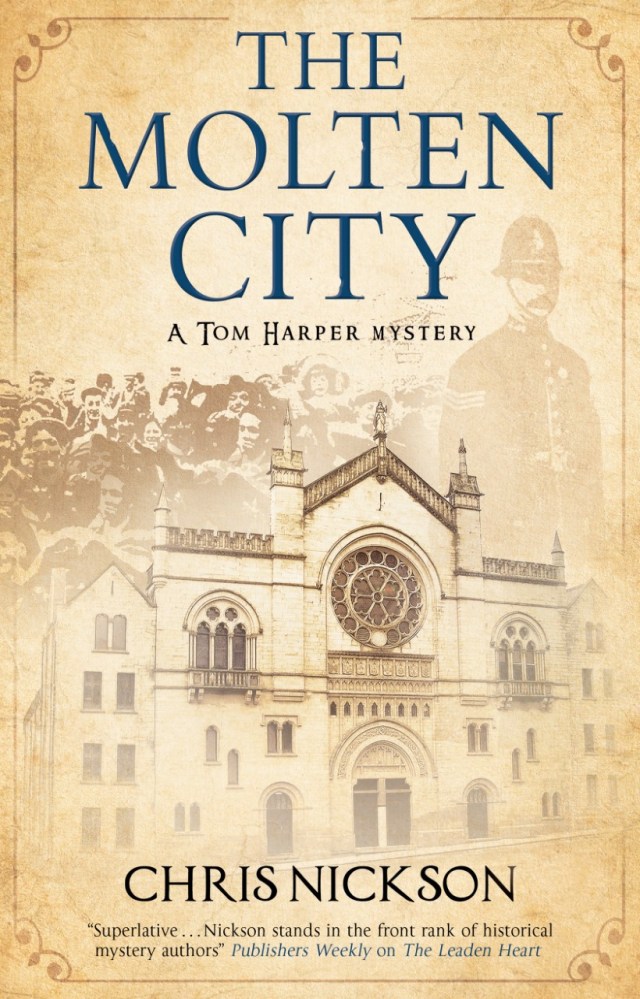
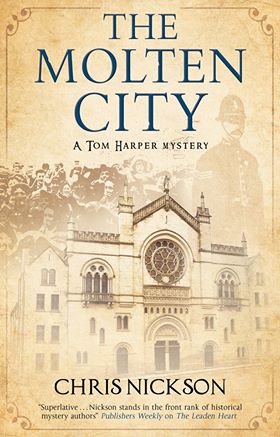
Since it’s already available for pre-order on Amazon and other online shops, I’m hardly giving away any secrets when I reveal the cover and tell you a little bit about the next (eighth!) Tom Harper book. It’s called The Molten City, and see Tom and Annabelle firmly in the 20th century.

Detective Superintendent Tom Harper senses trouble ahead when the prime minister plans a visit. Can he keep law and order on the streets while also uncovering the truth behind a missing child? Leeds, September 1908. There’s going to be a riot. Detective Superintendent Tom Harper can feel it. Herbert Asquith, the prime minster, is due to speak in the city. The suffragettes and the unemployed men will be out in the streets in protest. It’s Harper’s responsibility to keep order. Can he do it? Harper has also received an anonymous letter claiming that a young boy called Andrew Sharp was stolen from his family fourteen years before. The file is worryingly thin. It ought to have been bulging. A missing child should have been headline news. Why was Andrew’s disappearance ignored? Determined to uncover the truth about Andrew Sharp and bring the boy some justice, Harper is drawn deep into the dark underworld of child-snatching, corruption and murder as Leeds becomes a molten, rioting city.

Molten City revised


Where Do The Characters Come From?

Just to start, I have to tell you the Kirkus Reviews, one of the major trade journals in the US, has given The Hocus Girl a starred revew (they also gave one to my last book, The Leaden Heart). you can read the full review here, but this is the final line: “This historical tour de force reminds readers who come for the mystery that life hasn’t changed for the disenfranchised.

I’ll take that.

Meanwhile..

10 years


They say that an author draws on people he knows for his characters.

I beg to differ.

I feel that in many cases I simply channel the people who populate my books. But if they have any traits, they’re not from people I know; they’re all small facets of me.

Richard Nottingham, for instance, is a very straight arrow, an utterly honest and upright man. Someone to be admired. He’s who I’d like to be, in an ideal world. The Leeds equivalent of the sheriff from a Western (albeit an old one). Amos Worthy is that creeping darkness in my soul. It’s there, I just need to let it out.

Dan Markham is cooler than I’ll ever be, a man at home in a jazz club or standing up to a criminal. He has style, something I’ve always aspired to but never achieved. Carla, his girlfriend, is the creative spirit I always wished I could be. But I never have quite managed to throw off the shackles of society.

Lottie Armstrong. She’s strength in adversity, someone who doesn’t give up. I suppose in some ways I have that, since I kept on fight to be published and eventually got there. But she’s a woman and that automatically makes her stronger than any man. And revisiting her 20 years later, she’s still got the resilience under all the sorrow. Urban Raven, from The Dead on Leave, has some of the same qualities. But with a crude plastic surgery face, his obstacles are more visible and obvious.

Simon Westow is resourceful, brave, intelligent, a man who’s overcome his past. That’s not me, of course; I’ve been far luckier than that. But I’d like to believe I had to spirit to be able to work my way up. Maybe I would, too. But probably not. Jane…Jane is my real darkness, the side we keep in because that’s what society teaches us. There are times I feel as isolated from the world as her. As an only child I’m good at keeping things inside, at being able to compartmentalise everything in my head. She’s the extreme, with everything coloured by a very deadly nature.

Tom Harper? He’s perhaps as close as I’ve come to a younger me, and his hearing problem certainly mirrors my own

Annabelle? No, Annabelle is channelled. She truly did come out of the ether. But thank God she’s here.

The Ten Year Project


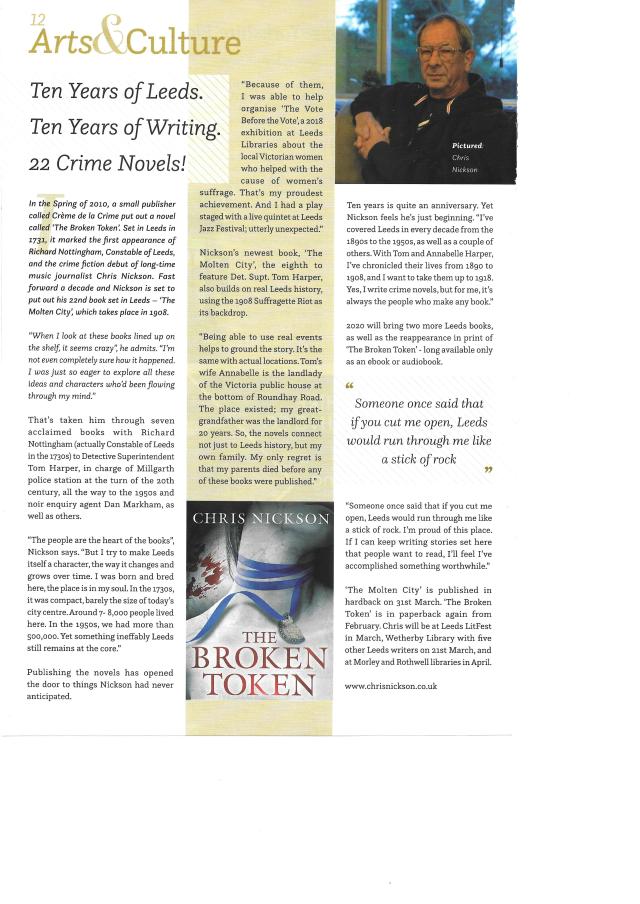
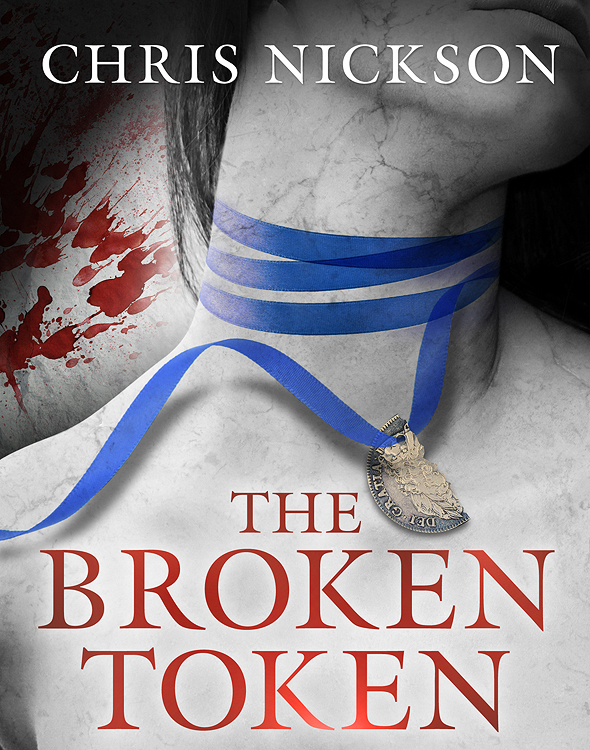
It’s hard to believe, but next Spring it’ll be 10 years since my first book set in Leeds was published – The Broken Token, in case you’re curious. There will be a new Tom Harper novel appearing then, the eighth in the series, which will mean I’ve published a total of  22 novels and a collection of short stories set in Leeds in the last decade.

That’s not counting a couple of plays and involvement in the exhibition The Vote Before The Vote, where Annabelle Harper stepped into Leeds history.

annabellecard 200_2

Phew.

I’m going to celebrate it. 10 years is worth celebrating. It took a while to figure out how, though…

It has to be stories. After all, I’m a writer. So from November to next March I will have a short story with one of my Leeds characters each month. I’ll be starting with Dan Markham, taking him into the very beginning of the 1960s, then working my way back through time – Urban Raven, Lottie Armstrong, Tom Harper, Simon Westow, and finishing, quite rightly, with Richard Nottingham.

It’s going to be a challenge. I need to try and capture the essence of each of them, and in some cases it’s been a few years since we met. But I never like to make it easy for myself. I’ve even come up with a logo for everything 10th, just to warn you.

10 years

The Dan Markham story will appear in early November. I hope you’ll like in. In the meantime, you could read the new Simon Westow book, The Hocus Girl. It’s out in the UK in hardback now, and it’ll be available everywhere as an ebook from November 1.

Hocus Girl final

A Passion For Leeds

Every so often I have to think about the things that make me write.

It’s a compulsion, there’s no doubt about that, and my first novel was published quite late in life (I was 55) that I’ve been filled with a hunger to say all the things I’ve wanted to say in books.

What changed everything for me was writing about Leeds. Leeds as it might once have been. When I began writing novels, I hadn’t loved in Leeds for 30 years. I had no idea what things were like in the day-to-day now. I was back often to see my parents, but I wasn’t here. I couldn’t write about it now and make it feel real.

The history of Leeds had captured me several years before that. I like to think it still does. But that’s what I keep checking it to consider. My next book (The Hocus Girl) has plenty of things from the city’s past: the first steam locomotive able to move heavy loads, Joshua Tetley opening his brewery, and the government using agent provocateurs – something uncovered and written about in a Leeds newspaper. Making history part of a tale is something I relish. I try to bring Leeds alive, to make people feel they were there, walking the streets.

tetley

Joshua Tetley’s Brewery

Next spring, my novel Rusted Souls, the eighth in the Tom Harper series, is centred around the 1908 Suffragette Riot, which actually happened, although it wasn’t a great riot and the Suffragettes weren’t really behind it. My characters are involved in this history. Not in a Zelig way, but because it’s happening around them in Leeds. It’s natural that they’d be involved.

Leeds isn’t London. It doesn’t have that glamour. It doesn’t even have the big history of York. But it’s a city that made its fortune on wool, grew powerful and rich with industry, and saw its fortunes decline with industry began to decline after World War I. These days it’s money is in retail and digital. The thing is, rich or poor, it’s my home. I care about it. I’m proud of it, happy to be from here. If I have a loyalty to any place, it’s Leeds.

That passion for the city isn’t the only thing that makes me write – I like to tell a story and crime provides the perfect moral framework for drama and tension, good against evil. I like to create characters. Or perhaps I channel them, I’m not really sure.

As I said, it’s a compulsion. But you know what? I’ll never feel bad for writing about the place I feel in my bones.

An Author’s Distraction

I write. It’s largely how I define myself, it’s what I love to do. My chance to be published arrived when I was 54, and since then I’ve grabbed it with both hands. And until three years ago, I was generally as happy as Larry.

Since then, however, I’ve gone up and down. It’s politics, and I know I’m far from the only one. But I’m lucky, I do have something to take me away from the world and its problems for a while.

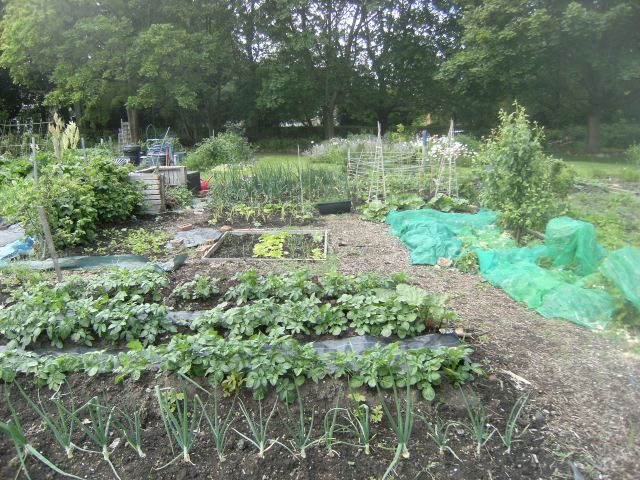
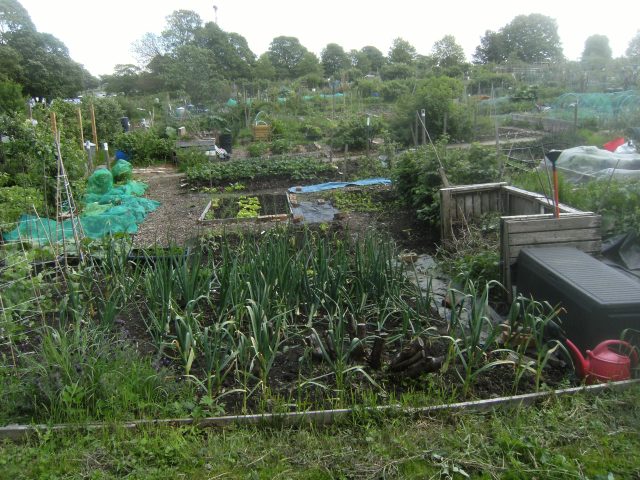
My allotment.

DSCF2159

Maybe it sounds silly that a piece of ground 10 metres by 7.5 could bring me so much joy, could lighten the load so much, but it does. I’ve had the allotment for four years now. It came with raspberries, blackberries, redcurrants, rhubarb, and strawberries. It was overgrown and neglected. It needed plenty of work. It was utterly on a whim that I call in a put my name down for one. I didn’t really garden, and flowers had never greatly interested me. But after about twelve months I received a call – was I still interested.

Yes. The romance might not last, but I’d give it a shot.

That first year was mostly about that. I enjoyed the fruit, apart from the currants, which I dug out, and I had chance to clear a little ground a plant a few things. Since then I’ve been watching, listening, reading, learning and experimenting.

The winter days when I can dig in compost and manure and wonderful, as if the year is beginning to wake and I can stretch my muscles after a few months of doing nothing. It’s not nothing, of course – garlic and some onions have gone in during the autumn – but it feels like it.

DSCF2162


I could go on about the things I’ve done but let’s face it, unless planting things is a pleasure for you, then you’ll find it boring. Let’s just say I’ve made some big changes in the last 12 months; well, as big as you can on 170 square metres. And this year I feel I’m utilising every scrap of space. It means I have to tread very carefully to avoid killing plants.

What is growing on the plot? I’m glad you asked…

Onions, garlic, kale, radishes, several types of lettuce, salad leaves. Two varieties of peas, mangetout, runner beans, two varieties of climbing beans. Squash, cucumber, carrots, corn, tomato, green and yellow courgettes. Leeks, spring onions, parsnips, spinach. Rhubarb, plum, tree, strawberries, blueberries, gooseberries, blackcurrants, blackberries, raspberries, dwarf apple tree. And potatoes. Plenty of potatoes. A bit of lavender and rosemary, too, but I don’t really count those.

When I’m there I’m doing what needs to be done, the physical work that requires thought solely about the task at hand. I never consider checking my phone. It only comes out if I want to know the time. In today’s world, that’s freedom of a sort.

I could talk about mindfulness, that trendy word. But instead I’ll simply says that going there (it’s about five minutes’ walk from home, which was part of the appeal) makes me feel better and happier.

And there’s a hug bonus. All that fruit and veg, with things to ear from May onward. From the look of the strawberries, I’m going to be making plenty of jam this year (I know, there’s no need to say a word…).

It’s not something that would be a slave for everyone. It works for me, and that’s fine. So if you ever wonder what I do when I’m not writing books set in Leeds, now you know.

large old paper or parchment background texture
old paper or parchment