Finding The Leaden Heart – Two Bronze Pennies

When I started out, I had a plan of sorts for the Tom Harper books, a series arc, if you like. Of course, like all good books, they’ve long since ignored that and developed their own scheme that looks further into the future than I’d ever imagined when it all began.

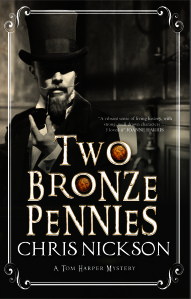
But in 2015, when Two Bronze Pennies appeared, it was still sticking close to the idea.

I definitely wanted to write about the Jews in Leeds. They’ve been such a powerful, vital force, although in 1890, most of those here were poor and powerless, crammed and squeezed into the Leylands, just north of the city centre.

I did that, and I hope I did it well. There are some references to the legend of the Golem (at one point I wanted to call the book The Golem of Leeds, but my publisher said no. A wise move, in retrospect).

It’s a novel of changes. The influx of immigrants to Leeds, the prejudice against them that still echoes in today’s Islamophobia. The change, the rift that occurs between Tom and his sergeant, Billy Reed.

And there’s another story in there, too, that of Louis Le Prince, the man who arguably invented the moving picture. He lived in Leeds, developed those early movies here, and vanished without trace on a visit home to France.

Le Prince’s first film, taken in his father-in-law’s garden in 1888

Traffic Crossing Leeds Bridge, shot by Louis Le Prince in 1888

Even today, more than a century on from those times, no one knows what happened to him. But a mystery like that was too good not to use in a book about Leeds at the time. Sometimes life makes your decisions for you.

I wanted to capitalise on the wonderful reviews that Gods of Gold had received. I had plans for the launch people. Big plans. Something that could involve people from all over the world.

Live streaming was still new and unusual then. Hard to believe, I know, when it was only five years ago, but that’s the case. I signed up to use a particular platform. I was going to talk, answer questions people typed, and my friend Shonaleigh, a storyteller and drut’syla, was going to tell a Jewish story (please go and see her if you ever have the chance; she’ll transport you).

For whatever reason, when the time came, I wasn’t able to connect to the platform. It was all a bit of a bust. I felt foolish, that I’d let everyone down and disappointed them. My big plans had crumbled, defeated by technology. I did the only thing I could – hurriedly made this video the next day and posted it (apologies for the sound quality). The beard has long since gone, you’ll be pleased to know.

The reviewers liked the book (thankfully). And with two books, Tom Harper was on his way. From swearing I’d never write Victorian crime, I was up to my neck in it. But the characters didn’t intend to keep to the plans I’d made for them…

two-bronze-4

Finding The Leaden Heart – Gods Of Gold

As I’ve mentioned before – and I’ll be saying again and again – the end of March sees the publication of my new book, The Leaden Heart. It’s the seventh in the Tom Harper series, set in 1899, on the cusp of a brand-new century that is set to bring more changes that anyone could imagine.

In the weeks leading up to it seeing the light of day, time to revisit some of the book in the series…

Hard to believe that it’s only five years since Tom made his first appearance, met as he sprints down Briggate in pursuit of a thief. That’s where it all started, with Gods of Gold, set during the 1890 Leeds Gas Strike, which the union won in just three days, a rare example of the workers coming out on top.

gods of gold cover

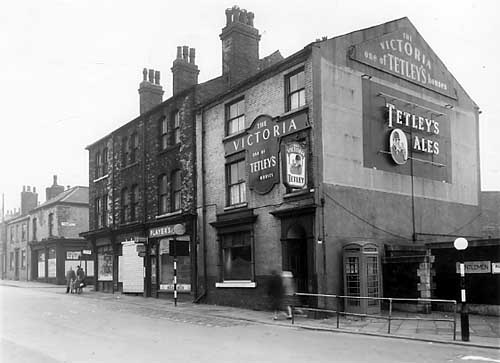
It was strange that the book even appeared. I’d written six Richard Nottingham novels, and my publisher asked for something different. I’d always sworn I’d never set anything in Victorian times. But after that I read about the gas strike and I knew it ought to be celebrated. I received help from a strange source, a woman I’d met before, as I’d written a short story about her (Annabelle Atkinson and Mr. Grimshaw). She sat down next to me and said, ‘I was there, luv. I was the landlady at the Victoria. Why don’t you let me tell you about it?’

And so Gods of Gold came about. The title is from a poem by Tom Maguire, one of Leeds’ great unsung political figures, a man who did so much for the working classes here, only to die in poverty far, far too young. He’s buried at Beckett Street Cemetery.

photo (13)

Joanne Harris, the bestselling author (who has a new book coming called The Strawberry Thief) was generous enough to praise the novel: “A vibrant sense of living history, with strong, well-drawn characters…I loved it.”

gog crop

I made a trailer for the book, and here it is, all dusted off and YouTube shiny.

For the launch, I even had 10 tee shirts made, featuring the cover image. Remarkably, nine of them sold, and I still have the other in a drawer. And there were book marks.

Apart from Tom, the book also featured Detective Sergeant Billy Reed, who’s featured in every book so far, as well as Constable Ash, who’s grown since his introduction in uniform. But there was someone else, that woman who told me all about the strike. Annabelle Atkinson.

She’s Annabelle Harper now, of course, and has been for a long time. But they were still courting in those early days, and I had no idea how important a figure she’d become in the series, it’s emotional linchpin, in fact. As the series progresses, in many ways it’s become the story of the Harper family, how they change and age over the years, as much as they’re crime novels or historical fiction. Or why not all three? I ended up writing a play about Annabelle, called The Empress on the Corner, which was performed a few times. A couple of scenes were filmed, including this, which recounts how she and Tom first met. The Victorian pub is part of Abbey House Museum in Leeds – they were kind enough to let us film.

In those days I didn’t know the books would end up taking on such a life of their own. At the risk of sound pretentious, the series has taken on the feel of my magnum opus. Like any writer, I was fumbling in the dark, not sure where things were heading. I have a much clearer sense of things now. That doesn’t mean the people will do what I expect and hope. After all, they’ve gone their own way in the past six books.

51030754_281546519188662_3542984282714669056_n

2019…It’s Arrived.

Well, here we are, squarely in a new year. That means it’s time to look ahead, especially as I’m putting the final touches to what I hope will become the eighth Tom Harper novel – if the publisher wants to put it out, of course.

New beginnings.

Before any of that, however, the seventh Tom Harper book will be published at the end of March. Called The Leaden Heart, it’s set in 1899 in a Leeds that’s changing and pushing its way towards the 20th century. Here’s a very short extract:

Harper had just finished putting together the duty roster for August when the telephone rang, the line crackling harshly enough to hurt his bad ear.

‘Tom? It’s Billy. Billy Reed.’

Reed had been a good friend once, the sergeant to Harper’s inspector, until they fell out. Then he’d transferred to the fire brigade and been promoted. Two years ago he’d taken a job in Whitby, in charge of police there.

Annabelle and Elizabeth, Reed’s wife, were still close, exchanging regular letters. She ran a tea shop now, close to Whitby Market. Harper and his family had visited the Christmas before last. It had been a pleasant few days, but not the way it had once been. That would never return.

‘How are you?’

‘I’m fine,’ Reed answered quickly. ‘I hate to ask, but I could use a favour.’

‘What’s happened?’

‘My brother died, so I have to come back to Leeds for the funeral. I think you met him once.’

Long ago. Charlie? He thought he vaguely remembered the name. Thin and pale, with mousy hair and a waxed moustache.

‘I’m sorry, Billy.’

‘We were never that close, but…’

Of course. It was family. Harper understood.

‘Do you need somewhere to stay? Is Elizabeth coming with you?’

‘If you don’t mind. He lived in Harehills and the Victoria’s close. It’ll only be for a few days, if that’s all right. Elizabeth is run off her feet at the tea room. Whitby’s full of holidaymakers and the tea room is packed every day. Besides, she never really knew him.’

They had an empty attic room at the pub. It wasn’t much, but the bed was comfortable.

‘Of course. You know you’ll be welcome, as long as you need,’ Harper said. ‘When are you arriving?’

‘This afternoon. The telegram only came an hour ago.’

‘We’ll expect you.’

He lowered the receiver, picked it up again and asked the operator for the Victoria. They’d had a telephone installed at the beginning of the year. Between his rank and Annabelle’s post as Guardian, he hadn’t been able to fight the idea any longer.

She picked up on the third ring, listening as he explained.

‘I’ll air it out for him.’

the leaden heart revised


You can pre-order the book already. The cheapest price seems to be here, with free postage in the UK, although the company seems to have mixed reviews. Here is slightly more expensive, but also has free shipping and is highly-rated.

I also seem to be quite busy with events this year, and maybe more to add to that list. I’m not entirely certain how that’s happened, but they’ll all be fun, especially the two with my good friend Candace Robb and editors from the publisher that issues both our books. It all begins next Friday, January 18, with a talk at Kirkstall Abbey – a place with a very deep history of its own – on the Battle of Holbeck Moor, the incident which kicks off The Dead on Leave. My notes are already prepared…

There will be one more book to come this year, out at the end of September. It’s the sequel to The Hanging Psalm, and it’ll be called The Hocus Girl. Here’s a taste…


The man uncurled his fist to show the pocket watch. Candlelight reflected and shimmered on the gold.

‘Open it up,’ Simon Westow said.

Inside the cover, an inscription: From Martha to Walter, my loving husband.

‘See?’ the man said. ‘The real thing, that is. Proper gold. Keeps good time and-’

The knife at his throat silenced him.

‘And it was stolen three days ago,’ Simon said. He held the blade steady, stretching the man’s skin without breaking it. ‘Where’s the rest?’ With a gentle touch, he lifted the watch out of the man’s palm and slipped it into his pocket. ‘Well?’

‘Don’t know.’ The man gasped the words. His head was pushed back against the wall, neck exposed. ‘I bought it from Robby Barstow.’

‘When?’ A little more pressure, enough to bring a single drop of warm blood.

‘Last night.’

The man’s eyes were wide, pleading, the whites showing. It was the truth. He was too terrified to lie.

‘Then you’d best tell Robby I’m coming for him.’

‘What-’ His eyes were wide, pleading.

‘-about the watch?’

‘Yes.’ He breathed out the word, trying not to move at all.

‘Consider it a bad investment.’

Outside, he blinked in the light. A coach rumbled past on the Head Row, the driver trying to make good time on his way to Skipton.

Simon would hunt for Barstow later. The watch was the important item; Walter Haigh was desperate to have it returned, a gift from his late wife. He’d promised a fine reward.

That was what a thief-taker did. Find what had been stolen and return it for a fee.


2019…maybe it’s going to be a good year for us all.

Thank You and Good Wishes

It’s that time, the year drawing to a close. Celebrations and reflections.

And time for me to thank you, all of you, for reading what I write. You make it worthwhile, the bloggers, reviewers, the people who finish one of my books and hopefully enjoy it. Without that, well, there would be nowhere near as much point in doing it.

It’s been quite a year, with high points and turns into the unexpected. My involvement with The Vote Before The Vote exhibition might have been small, but one of the most important things I’ve done. It celebrated the Victorian women from Leeds who laid the foundation for 1918 and 1928, giving the vote to all women. And as a bonus, having Annabelle Harper as part of it wrote her into the fabric of Leeds history.

A play with live jazz. New Briggate Blues, my chance to celebrate Studio 20. Two sold-out performances, and a success because of the director, Ray Brown, the cast and musicians. Remarkable.

I published three books and i’m immensely proud of them all. But The Tin God will always stand head and shoulders above them in my mind. It’s Annabelle’s book, and it feels like the one I was made to write. Something that does her real justice, and I’m so pleased to have been the conduit for that. Even finished the year with a review of it in an academic journal, the first (and probably the last) time that’s happened.

Tin God Journal review

So thank you, every one of you, and I hope 2019 sees all of us with peace and health.


The Holy City: An Annabelle Harper Story

Leeds, Summer 1898


No rest for the wicked, Annabelle Harper thought as she picked up the post. A card on top with a view of Masham. Jotted on the back: Staying here tonight. There’s a brewery, it smells like when I worked at Brunswick’s! Beautiful weather, we’ll come home brown as berries. Love, Tom. And underneath, in a careful hand: And Mary.
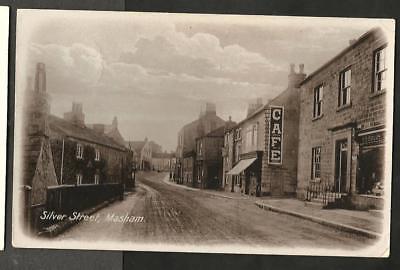
KNA-Early-Postcard-Silver-Street-Masham-North-Riding

She smiled and placed it on the mantlepiece with the other two. One a day, exactly as he’d promised. High summer, 1898, and her husband had taken their daughter on holiday to the Dales. He had a week’s leave, school had finished. But no chance for a Poor Law Guardian to take a little time away.

Three people had needed assistance yesterday, two the day before, five on Monday. That was always the worst day. Wages spent, everything worth even a couple of pennies hauled off to the pawnshop. Some she’d been able to help. Others she’d had to turn away, hurting at the hopelessness on their faces. Things were always bad in Sheepscar. Worse in other parts of Leeds, she knew that. But a year of this work had shown her that not everything was possible. She’d learned to steel her heart; sometimes she had no choice.

But she was the won who’d wanted to run for the position. She’d won the vote, and now she had to do the job. A pile of papers sat on the table needing her attention. Reports from the workhouse, minutes from the last Guardians meeting. And barely a minute to read them. She glanced at the clock, then strode over to the mirror, pinning her hat in place before she wrapped a light shawl around her shoulders.

Downstairs, the bar at the Victoria was quiet. A couple of older men ekeing out the boredom of their days by playing game after game of dominoes and cribbage while they sipped at halves of mild. A quick word with Dan the barman, a pull of the door and she came out into the clatter and din of Roundhay Road. Already warm, the sky hazy, the streets heavy with soot and dust and all the stink of industry.

Annabelle had barely started walking when a man called her name. She turned, seeing Reverend Fletcher hurrying to catch up to her. He looked like a figure of fun, a large man with a red, florid face above the dog collar and a belly that wobbled as he tried to move quickly. But he was a good soul, doing what he could to help the poor in his parish. She couldn’t help but have a soft spot for him.

‘Mrs. Harper. I’m glad I caught you.’ Just ten yards and he was already out of breath, she thought. He lifted his straw hat and panted.

‘Pleased to see you, too, Reverend. If there’s something you need, you’d better walk with me, I’m already late.’ She nodded towards the distance. ‘I’m due at the workhouse in a quarter of an hour.’

‘Of course.’

She kept a brisk pace, nodding at shopkeepers and folk she saw on the way to the junction with Enfield Street. He had to move quickly to keep pace.

‘There’s someone I’d like you to see, if you’d be so good,’ Fletcher said.

‘One of your flock? Is the family having money problems? Out of work?’

He hesitated before answering, just long enough to make her turn her head and stare.

‘No, it’s nothing like that. He’s only been in Leeds for a few weeks now, still has a pound to his name.’

She stopped, hands on her hips.

‘I don’t understand, then. What do you need with a Guardian?’

‘He’s staying at the Vicarage. With his wife and children.’ A shy smile crossed Fletcher’s face. ‘If you could call around later. Just for a minute or two. I’d be very grateful.’

Annabelle narrowed her eyes. ‘You’re being very cagey. What’s it all about?’

Fletched tightened his mouth, then shook his head. ‘I’d rather you made up your own mind. Shall we say this afternoon?’ He raised his hat again, turned and strode away.

Always someone, she thought as the made her way through the back streets and up the hill to the workhouse.

annabellefrom book_3

By the time she walked back out into the air, she was fuming. The same thing as ever: the sheer ignorance of the male Guardians. No clue what women needed when they had their monthlies. Half of them probably didn’t even know such a thing existed; if they ever found out, they’d be terrified.

She breathed deeply, standing until she could feel the pounding in her chest slow down, then crossed the street to Beckett Street Cemetery. The only piece of green around here. A moment or two by Tom Maguire’s headstone, thinking of the man, wondering what he’d make of her now. Then to a bench that nestled in a spot of sunlight.
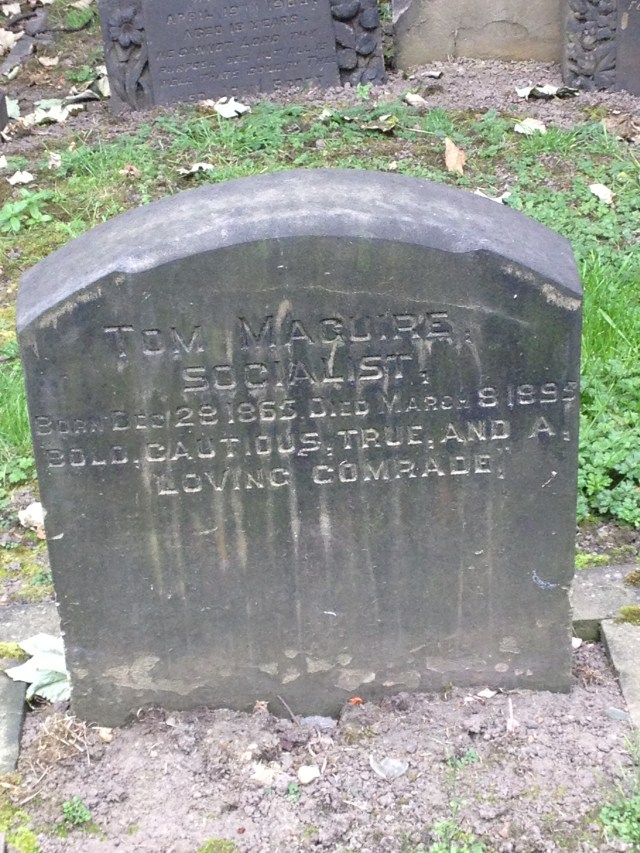
maguire stone

A few minutes and she was composed again, all the anger tamped down for another few days. Until the next time she visited.

Annabelle stood, dusted off her gown and started to walk home. A quick stop at a bakery for a tongue sandwich and a fancy to go with her tea later. It was only as she strolled down Rosebud Walk, brown paper bags in hand, that she remembered she’d agreed to go and see Reverend Fletcher’s visitor. Pushed into it, more like.

Well, that was the afternoon going through the pub accounts up the spout.

annabellefrom book_3

St. Cuthbert’s sat in the sun. The hall had been rebuilt after last year’s bomb. She only had to look at it to remember the noise that filled her head that evening, all the smoke, the stink of gunpowder, and the broken body of Mr. Harkness, the caretaker.
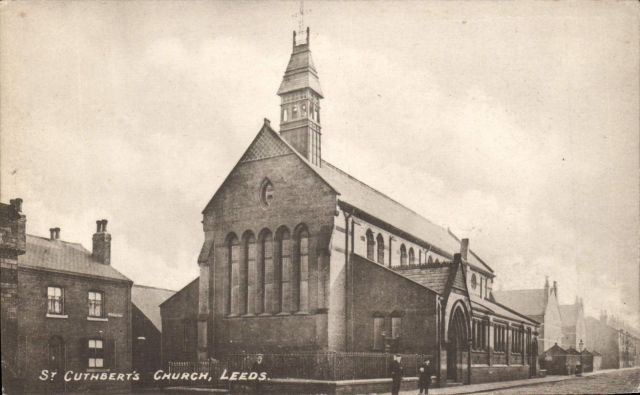
cuthberts

Annabelle straightened her shoulders, trying to put the past to the back of her mind, and brought her hand down on the knocker of the vicarage.

‘Hello, Mrs. Harper, luv,’ the housekeeper said with a warm smile. ‘He said you might be dropping in. Always a pleasure to see you.’

‘He asked me to come and meet your guest.’

‘Yes.’ The woman’s face clouded. ‘Well…’

‘A strange one?’ Annabelle asked.

‘You could say that.’ She frowned as stood aside, wiping her hands on her apron. ‘Come on through, luv. He’s in the back parlour.’

‘What about his wife and children?’

‘Child,’ the woman corrected her. ‘They’re out,’ she said darkly.

annabellefrom book_3

Annabelle blinked in the bright sunlight and started to walk down the street. She stopped, half-turned, then carried on towards home.

Well, she’d certainly never met anyone like that. Even when she was sitting upstairs at the Victoria with a cup of tea, she still didn’t have a clue what to make of him. Who on earth would walk all the way from London because God had told him to bring the light to the people of Leeds? If he’d come alone it would be bad enough, but to drag a wife and two-year-old boy with him…

annabellefrom book_3

His name was Harry Walton. He was small, shifty, not much to him, probably no taller than five feet three, skin and bone from weeks on the tramp. But there was an intensity to his eyes that worried her. In his voice, too. He spoke with the kind of certainty she’d heard before in con men with something to sell. But he didn’t seem to want anything.

‘Leeds is the holy city. The Lord told me that.’ He stared straight at her as her spoke, unblinking behind his spectacles.

‘The holy city?’ Annabelle asked. ‘What’s that supposed to mean? I’ve lived here all my life. Take it from me, there’s nothing holy about it.’

‘The people here will be saved if they rid themselves of evil. God told me. That’s why He sent me here, to reform them.’

Round and round for more than half an hour, until she felt overwhelmed, her head spinning.

‘What about your family?’ she asked finally.

‘They go where I go.’ He spoke the words with absolute finality, as if they’d been ordained. Maybe he believed they had.

Time to see about that, Annabelle thought as she finished the cup of tea and carried it through to the kitchen. See what the woman felt about it all. The pastry sat, barely touched on the plate. Too dry, no flake to the crust. If Mary had been here, she’d have wolfed it down. That girl had an appetite like a gannet.

annabellefrom book_3

This time the reverend answered the door himself. He looked surprised to see her, recovering his manners after a second.

‘Come in, Mrs. Harper. Come in. Forgive me, the housekeeper told me you were here this afternoon.’

‘I was,’ she answered with a soft smile. ‘I’ve come back to see the man’s wife.’

‘Ah,’ Fletcher said. ‘And what did you make of the gentleman?’

‘Honestly?’ she said. ‘Happen he believes everything he says. But holy city and cleansing the place, reforming it? I think he’s got something up his sleeve that we haven’t seen yet. Either that or he’s a bit touched.’

‘Men of God have often been viewed that way.’

‘Is that what you think he is?’ she asked.

Reverent Fletcher spread his hand, palms upwards.

‘I wish there was a way to know. But he’s right that we need to be rid of sin here, isn’t he?’

‘What? Like drinking?’ She had a twinkle in her eye. He knew exactly what she did for money.

He laughed. ‘Wine is there in the Bible, Mrs. Harper. Jesus even changed water into it at a wedding feast.’

‘He’d be welcome at the Victoria to do that any night he wants, although they’d prefer it was beer,’ she said, and suddenly realised she might have gone too far. ‘No offense, Reverend.’

‘None taken. I’ll have the lady attend you here, if that’s fine.’

‘Perfect.’

One minute stretched to two, then five, before the door opened and the woman entered.

Not a woman, Annabelle thought. A girl. She had to be thirty years younger than the man. Probably not a day over seventeen, looking shy and cowed.

‘Come on in and sit yourself down.’

Stick legs under a thin cotton dress. Boots with worn soles and woollen stockings she’d darned too many times. Hands as rough as sandpaper.

‘I’m Mrs. Harper. The Reverend asked me if I’d have a word with you and your husband.’ Not quite the truth, but close enough. ‘What’s your name?’

‘Julia.’

‘That’s a pretty name. I like that. My mother lumbered me with Annabelle. I’ve always thought it sounds like it should be the name for a flower.’

The girl was too timid to respond.

‘How long have you been married?’

‘Two years,’ Julia answered. ‘Just after Samuel was born. He’s my son.’ She had the same rounded London vowels as her husband, so strange and out of place. But there was nothing educated about either of them.

‘The reverend said you had a child. A bonny little lad, I bet.’

‘He is.’ Her face came alive. ‘He takes so much time. And he’s always so hungry.’

Annabelle smiled. ‘It doesn’t get any better. My daughter’s six and she has hollow legs.’ She paused for a second. ‘Do you mind if I ask your age, Julia?’

A small hesitation. ‘I’m nineteen.’

That was a lie, Annabelle thought, but she’d let it pass.

‘How do you like being on the tramp?’

‘I don’t.’ Her mouth turned down at the corners. ‘My feet hurt all the time. This is the best place we’ve been since we left London. But I know we’re going to have to find somewhere else soon.’

‘I came and talked to your husband this afternoon, but you and your lad were out. Taking a look around?’

The girl shook her head. ‘Harry sends us out to beg. He says a woman and child bring in more than a man.’

Well, she though, he might have his eyes set on a holy city, but he kept a thought for bringing in the brass.

‘Do you make much?’

‘No,’ she answered. ‘Most of the time a rozzer will come and move us on. I was arrested once, when we were in Birmingham.’ Her face fell at the memory. ‘Seven days of hard labour and they almost took Samuel away from me.’

‘You must love your husband to do all this.’

‘He says it’s a wife’s duty to obey. A woman has to follow a man’s desires.’ She sounded as if she was repeating words she’d heard far too often.

‘How did you end up marrying him? There’s…’

‘I know. He’s a lot older.’ The deadness came back to her. She looked around, as if someone else might have come in and be hiding in the corner, listening. ‘Harry used to play cards with my pa. They worked together.’ Annabelle felt the first prickle up her spine, the sense that she knew exactly what was coming. ‘My pa had a losing night, so he told Harry he could have a poke of me and they’d all be square.’

‘How old were you?’

‘Fourteen.’

‘What about your mam? Where was she?’

‘She left when I was ten,’ Julia said. Her shoulders slumped. ‘Everything was good when she was still there.’

‘You and Harry…’ Annabelle said.

‘He got me…’ She blushed and lowered her gaze. ‘My pa told him he had to marry me to make it right. And pay a him a…something, I don’t remember what.’

‘A dowry?’

‘Yes. I think that was it.’

Annabelle sat quietly, thinking, then asked: ‘Tell me something, luv. Are you happy with Harry?’

‘Happy?’ Julia said, as if she’d never heard the word before, never considered the idea.

‘Do you love him?’

She shook her head, moving it quickly from side to side like a little girl.

‘Not like I loved my mother.’ She leaned forward and her voice softened to a whisper. ‘He hurts me when we…you know… and he hits me if I do something he doesn’t like.’

So much for any kind of holy man. Had his feet near the devil, like so many of them.

‘What do you want? For you and little Samuel?’

‘Want?’ She frowned, confused. ‘I don’t know. No one’s ever asked me that before.’ A moment passed, then she started to answer, voice like a child wishing for the Christmas presents that would never arrive: ‘A place we didn’t have to leave. Enough to eat. Not to ache from walking all the time. Things to make Sammy smile.’

Hardly reaching for the moon. Things any mother wanted. Yet Annabelle knew half the women she saw every week didn’t have them. They turned up to see her, clutching their sorrows close, hiding the bruises they claimed came from walking into doors and filled with the same of asking for something.

Annabelle knew how she must appear to the girl. A grand lady in an elaborate frock and big hat. A Poor Law Guardian with all sorts of power. But Julia was a stranger here, lost in an unfamiliar place. A stranger in her own life, really. She’d never had a chance to grow up the way a child should.

‘Have you ever worked before? What can do you?’

‘I was in a match factory for two years. But it was making me ill so I had to stop. I kept being sick. My pa belted me for that. He didn’t see the use of me if I couldn’t bring in money.’

‘Anything else?’

She blushed hard and stared down at her feet again.

‘Harry had me on the game for a little while. I had to stop when I started to…’ She curved a hand around her belly.

‘I want to ask you something.’

‘You’ve already been asking me things, missus.’

‘I know, but this is…well,’ Annabelle smiled and softened her voice. ‘It won’t go past these four walls, word of honour. If you had your druthers, would you stay with him?’

The girl looked up, pain showing in her eyes.

‘What else could I do? There isn’t anywhere me and Sammy could go.’

‘If someone could find a place. Somewhere safe. Would you stay with him then?’

Julia didn’t hesitate. ‘No. But I can’t go back to my pa. I won’t do that.’

Of course not; he’d beat her and sell her all over again.

‘I know. Look, I can’t make you any promises, but let me see what I can do.’ She took out her purse and counted out three pennies. ‘You buy your little lad something with that. And don’t let your husband know you have it.’

‘I won’t, missus. I swear.’ She clutched the coins in her fist as if they were the most precious gift she’d ever been given. ‘Thank you.’

‘I’ll come and see you tomorrow.’

annabellefrom book_3

Reverend Fletcher closed the front door behind them, staring across at the church.

‘All this talk about the holy city,’ Annabelle began. ‘It’s a con. He’s no more got religion that I have.’

‘But…he sounds so sincere.’

‘That’s his game. Do you want to know the truth. He won that lass from her father in a card game, he’s had her out on the streets.’ She saw him wince. ‘He’s happy to have her and their lad out begging to support him. Does that sound like a man of God to you?’

‘No,’ Fletcher admitted. ‘I suppose I’m gullible. He must have seen it. But what do you want me to do? Throw them all out on the streets?’

‘Give me a day,’ she said. ‘I’ll see what I can come up with for her and the boy. But I’ll tell you this – I won’t lift a finger to help him. If I were you, once they’re gone, I’d toss him out on his ear. Let him find a proper job.’ Her face turned grim. ‘If he doesn’t, I’ll have one of Tom’s men run him in for vagrancy.’

annabellefrom book_3

An evening of bustling around, feeling like she was shuttling from pillar to post and back again. The books would have to wait for another day.

She didn’t sleep well, thrashing around and throwing the covers off in the summer heat. The bed felt too big without Tom here, and the morning was empty of all the bustle of her husband and Mary. Cooking breakfast just for herself seemed like a chore. It left her lonely. She rushed through it, washed the pots and was out of the door by seven. Another postcard from Middleham waiting on the mat. Home on Sunday written on the back. Not long now, she though as she put it in her reticule.
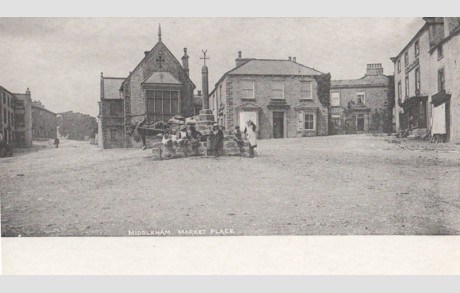
postcard middleham

The problem was finding a place for the girl and her son to live, and someone to look after the boy. There were jobs out there, maybe nothing much, but enough to keep body and soul together.

By dinnertime she’d talked herself hoarse, wheedled, pulled in favours from people she’d helped in the past. Finally she secured the offer of a room for Julia Walton and her son. Just for a month, but the woman in the house was willing to look after Samuel. That would give her the breathing space to find a job and come up with somewhere else to live.

Annabelle paid the month’s lodging. It seemed only fair. She was the one encouraging the girl to leave her husband; this might be enough to help her take that step. All too often she’d seen the way women with no money were too scared to go. God knew she couldn’t help them all, but even one…it was a start. Didn’t matter that she wasn’t from round here. Perhaps it was more important because she was a stranger in Leeds, with no family or friends to turn to. Being alone brought desperation.

One final stop. The tram down to Millgarth police station, a few words and a laugh with Sergeant Tollman on the desk, then through to see Inspector Ash. It seemed strange to see someone else behind her husband’s desk, as if he might never return, instead of due back in a couple of days. He rose, looking confused, as she entered the office.
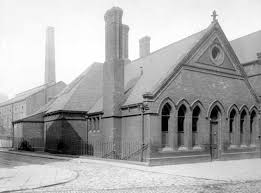
millgarth

‘Has something happened to the Superintendent?’

She ginned. ‘Don’t worry. You’re not likely to be stuck there past this week. I’ve come to ask a favour. Can you check the past of someone I met? He’s come from London…’

Home. She treated herself to a cup of tea and settled in the chair, unbuttoning her boots and wiggling her feet. Absolute. Just having the chance to sit, a few minutes to herself, seemed like luxury after all the rushing about.

Then the knock on the door, and a young bobby who’d hardly started to shave was standing there.

‘Inspector Ash asked me to bring you this and wait for a reply.’

‘Come in,’ Annabelle told him. ‘There’s still some left in the pot.’ He waited, shifting nervously from foot to foot, not daring to pour himself a cup of tea. ‘Don’t worry, I won’t tell anyone.’

She unfolded the note. Ash’s copperplate was a joy to read, so much better than her own scrawl.

Harry Walton has a record as long as your arm. Currently wanted in London for passing altered cheques. They asked if we could arrest him. Do you know where he is?

No wonder he’d wanted to vanish. She sat at the table, a piece of paper in front of her, and dipped her nib in the inkwell.

St. Cuthbert’s. Best if it’s first thing tomorrow morning.  He’d find out just how holy this city could be.

‘Give that to him with my thanks, will you?’

‘Yes, missus,’ the lad said, blushing as he corrected himself. ‘Mrs. Harper.’

annabellefrom book_3

The same room, the woman in the same thin, faded dress. The only difference was the boy sitting on the floor, spinning the reverend’s globe again and again, mesmerised by it.

‘That’s it,’ Annabelle said as she finished. ‘It’s yours if you want it.’

‘I don’t know what to say,’ Julia told her.

‘You don’t have to say a word. Just put your things in a bag and come with me.’

‘Why, though?’ She stared at Annabelle with suspicion. ‘Why me? Us.’

‘Because you need it. I know, there are plenty who do. All I did was talk to a few folk. It wasn’t much.’ She stood and held out her hand. ‘Ready?’

‘What about Harry?’

‘Believe me, you won’t need to worry about him.’

As the vicarage door closed behind them, the light was starting to drift from afternoon into evening.

‘I’m scared,’ Julia said. Samuel marched beside her, clutching tight to her fingers. ‘I’ve never had to look after myself before.’

‘Seems to me you’ve been doing that for most of your life,’ Annabelle told her. She looked down at the boy and stuck out her tongue until he giggled. ‘This time will be better.’


I hope you liked it. This story takes place the summer after the vents in The Tin God, and a year before The Leaden Heart (out next March).

Remember, books make great gifts, and I’ve had three out this year – The Tin God, The Dead on Leave, and The Hanging Psalm.


My City of Immigrants

In the light of all the intolerance and hatred in the world at the moment, it feels important to me to say this.


When I was in my early teens, at the tail end of the 1960s, I used to take the bus into town every Saturday morning for a look around the record and book shops in Leeds. Even clothes, because in those distant days I had an interest in fashion.

It was a trip down Chapeltown Road, through what was a vital, flourishing Afro-Caribbean community, where people from SE Asia were also making their home. Out of the window I’d be intrigued by signs for the Polish Club, the Serbian Club, Ukrainian Club. We’d pass a Sikh Gurdwara that had once been a Congregation Baptist Church, and further down, a synagogue. Going through Sheepscar, I could see all the Irish pubs – the Roscoe, the Victoria, the Pointer, the Regent, and more, all before I reached the city centre and hopped off outside the ABC cinema.

That was one bus ride, in one part of town. It told a story of immigration that wasn’t all recent. It never occurred to me that these people were any less Leeds than me. They were here, they were making their lives, working, raising their children, the same as everyone else.

The first reference to a Jew in Leeds that I’ve seen is from middle of the 18th century. The same for a black, an army drummer boy. By the 1830s there was a small Jewish community here, and by 1840 there was a Jewish cemetery and services were held in a loft on Bridge Street, with a total of 56 Jews identified in the 1841 census.

Certainly by the 1830s there was an Irish community in Leeds, centred on the Bank, the poorest area of town. As was common in England at the time, they were sometimes regarded as less than human, relegated to the very worst part of town. The famines of the 1840s brought more Irish immigrants, many of whom worked at the mills in the area.

                               St Patrick’s Church                                           Victorian court on the Bank

The big Jewish influx came towards the end of the 19th century, fleeing the pogroms in Russia and Eastern Europe. Understandably, the several thousand who arrived in Leeds settled where there was the safety of other Jews and the common language of Yiddish – in the Leylands, just north of the centre.

                                                 The Leylands around 1900

The early 1900s saw a very tiny group of Chinese in Leeds as well as a few Poles settling here. A few Italians had lived here since the 1880s.

Of course, it didn’t all go smoothly; there were tensions between Irish and English, between English and Jews, which culminated in a riot in 1917, when youths charged into the Leylands, believing none of the Jewish community had volunteered to fight in World War 1, which was very much wrong.

An Indian soldier served with the Leeds Pals during that war, and quite possibly the first Indian Sikh settled here in 1930, with the first Muslim in 1943, with more arriving from the Indian subcontinent in the early 1950s.

By then, of course, the Windrush had docked, and West Indian immigrants had begun to arrive, with some making their homes here, followed by others.

West Indian 1980

West Indian Carnival, Chapeltown Road, 1980

But all of those followed those Poles, Ukrainians and Serbs who come during World War II to fight, then married and settled here.

Since then, people have arrived from many other countries – quite possibly most of the nations on Earth.

The point is that immigration is nothing new in Leeds. It’s been happening for centuries. Go back several generations and most of us have our family origins somewhere else. An ancestor of mine arrived here from East Yorkshire in the 1820s. In those days, that made him an outsider, but he was one of thousands drawn here by industry and the promise of money.

All through my books, I’ve had immigrants. There’s Henry, Joe Buck’s black servant in the 1730s, a recurring character in the Richard Nottingham series. Romany travellers in Cold Cruel Winter. The Irish are all through the Tom Harper books, and a focus on the Jews in the Leylands in Two Bronze Pennies. West Indian musicians – working as street cleaners – pop up in Dark Briggate Blues. Perhaps they’re there to make a point, but really, it’s simply a reflection of life as it was.

The fact is that people want a better life for themselves and their children. They want to feel safe. It doesn’t matter where you’re born, it’s a common human impulse. And once they settle here, these people are as much Leeds as the rest of us. They’ve added and contributed to my hometown and made it a better place.

I’m proud that my city is a city of immigrants.

How Do I Rate My Books?

As you hopefully know, I have a new book coming out next week (it called The Hanging Psalm, in case you weren’t aware). Take a big breath time, it’s the start of a new series, and my publisher has just accepted the follow-up, which will be appearing in a year’s time (I know, it’s hard to think that far in advance).

When something like that happens, though, I tend to look at those titles on my bookshelf with my name on them and have a think about them. It’s very rare for me to go back and re-read any. Certainly not for pleasure; I might have forgotten the details of the plots, but not the months of work that went into each one. If you’re a writer, by the time you’ve written something, revised it, gone through the publisher’s edits and then the proofs, you’re pretty much sick of seeing it.

But I have a surprising number of books out there. Quite often it astonishes me, makes me wonder just how that happened. And it makes me wonder what I think of them in retrospect. So, it’s time for an honest assessment.


I started out with the Richard Nottingham books. The Broken Token took several years to see the light of day. It was finished in 2006 and finally appeared four years later. In my memory, it’s curiously poetic, as is most of the series, a style that seemed to fit the character and the times – Leeds in the 1730s, for those who don’t know. Cold Cruel Winter was named one of the Mysteries of the Year by Library Journal, something that floored me. It’s a book that came from a single fact – the trial transcripts of executed men were sometimes bound in their skin. What crime writer wouldn’t relish doing something with that? And it was where I began to explore the grey area between right and wrong. The third book, The Constant Lovers, has its points, but taking Richard out of Leeds, even if it’s just into the surrounding villages, was probably a misstep. It diffused the focus. Leeds, tight and dense, is his milieu, and he’s been back in there ever since. The standout in the series for me, though, will always be At the Dying of the Year. It was the hardest to write, the one that cut deepest into me and left me depressed for a while afterwards. But the emotions are very raw and real on every page. Even thinking about it now, I can still feel them. Returning to Richard after a few years with Free from All Danger felt like a homecoming of sorts. I’d originally intended eight books in the series. That was number seven, but it left him at the end with some share of happiness, and God knows he deserves that.

I do have a soft spot for the pair of novels featuring Lottie Armstrong (Modern Crimes and The Year of the Gun). She’s so vibrant and alive, both as a young woman and in her forties. It’s impossible not to like her. The problem is that I painted myself into a corner; it’s impossible to ever bring her back, although she seems quite happy to leave things as they are. In different ways, I’m hugely proud of them both, and particularly of Lottie. I still feel she might pop in for a cup of tea and a natter.

The Dan Markham books (Dark Briggate Blues and The New Eastgate Swing) book came after re-reading Chandler once again and wondering what a private detective novel set in the North of England would be like. I found my answers. The original is the better book, harder and more real, and it spawned a play, to my astonishment. The second certainly isn’t bad, but it doesn’t quite catch the pizazz of the first.

Then there are the anomalies – a three-book series set in medieval Chesterfield. The first came as a literal flash on inspiration, the others were harder work, and the difference shows. I lived down by there for a few years, I like the town itself and I think that shows. There’s also a pair of books set in Seattle in the 1980s and ‘90s that hardly anyone knows about – they’re only available on ebook and audiobook. But I spent twenty years in that city, a big chunk of my life, and I loved it. I was involved in music as a journalist (still am, to a small degree), and the novels, still crime, are part of that passion. You know what? I still really believe in them. They’re pretty accurate snapshots of a time and place, and the scenes that developed in the town – the way music itself was a village in a booming city.

The Dead on Leave, with Leeds in the 1930s of the Depression, was a book born out of anger at the politics around and how they seem to be a rehash of that period. It’s a one-off, it has to be, but I do like it a lot – more time might change my view, but honestly, I hope not.

And that brings me to Tom and Annabelle Harper. I’m not quite sure why, but I feel that they’re maybe my biggest achievement to date. That’s a surprise to me, given that I swore I’d never write a book set in Victorian times. Yet, in some ways they feel like the most satisfying. More complex, yet even more character-driven. And I think someone like Annabelle is the biggest gift anyone can be given. She’s not the focus of the novels, but she walks right off the page, into life. I didn’t create here – she was there, waiting for me. And what feel like the best books in the series are the ones that involve her more, in an organic way: Skin Like Silver and The Tin God. Not every book works as well as I’d hoped; in Two Bronze Pennies I don’t think I achieved what I set out to do. My ambition was greater than my skill. But maybe I’m getting there. The next book in the series, The Leaden Heart, takes place in 1899, the close of a century, and I feel I’m starting to do all my characters real justice. I’m currently working on one set in 1908, so the 20th century is already here, and I still want to take them to the end of World War I, a natural closing point for the series. I feel that I’m creating not only good crime novels, and I strive to make each one quite different, but also a portrait of a family in changing times – and also a more complete picture of Leeds.

And that’s always been the subtext, although it took me a long time to realise it. Leeds is the constant, the character always in the background, changing its shape and its character a little in each era. And I’m trying to portray that, to take the readers there, on its streets, with their smells and noises. I’m hoping to have a novel set in every decade from 1890s-1950s (maybe even the ‘60s, if inspiration arrives), to show how the place changed.

In a way, the nearest I’ve come to running after the character that is Leeds and its essence is a collection of short stories, Leeds, the Biography, even if I didn’t realise it at the time. It’s based on anecdotes, snippets of history, and folk tales, and runs from 360 CE to 1963. For the most part, they’re light tales. But one has resonance – Little Alice Musgrove. That still stands as a good story (you can probably find it online)

But with The Hanging Psalm, out next week, I’m going back to an unexplored place, Leeds in the 1820s, when the Industrial Revolution was still quite new. The Regency, although there’s very little gentility to it; better to describe it as Regency Noir. The book is still too fresh for me to asses it fairly. But I do know how electric it felt to write. So I’m hopeful it will stand the test of time in my mind…and in the meantime, I hope you’ll buy it (definitely buy it if you can!) or borrow it from the library and enjoy it.

Hanging Psalm revised

So Who Is Annabelle Harper?

Annabelle Harper has really stepped into the limelight with The Tin God. It’s interesting that many reviewers and readers have seen it as her book, rather than a Tom Harper crime novel.

She’s been there all through the series of course. But for those who don’t know about her past, a little piece of fiction to very quickly tell her story…

Leeds, 1898

Annabelle Harper dusted the mantelpiece. By rights it needed doing every day, but she didn’t have the time. Running the Victoria public house downstairs, her work as a Poor Law Guardian and having a six-year-old daughter took up every waking hour. And with her husband being a Detective Superintendent, there was no knowing when he’d be at home.

victoria1

Leeds. It got everywhere. Soot and grit on the windowsills, in the carpets, in the air…it was a losing battle to keep anything clean. Hang out the washing and it was covered in smuts by the time you took it in.

That was the price for prosperity, people said. Maybe they were right. But there was precious little wealth in Sheepscar, just people doing their best to survive, and plenty going under. Yet folk believed the lies, and the ones who told them grew richer.

She picked up the photograph in the silver frame, wiped it carefully, then held it at arm’s length and studied it. How long since she’d really looked at those faces. There she was, carefully posed, back straight as she sat in the chair, wearing the first expensive gown she’d ever owned, her face so young and serious. Standing behind her, one hand resting on her shoulder, Harry Atkinson, her first husband. Much older, the usual twinkle in his eye hidden as he stared seriously at the camera. Thirteen years he’d been gone now. She still thought about him, but only from time to time these days; he seemed like someone from another life. Well, he was, she told herself with a smile, he was. But a good life. Without him, she’d never have had all this. She’d never have met Tom Harper and never have had Mary. You never knew, she thought. You never knew what life was going to do.

Odd flashes of those times ran through her mind. Harry and his wife Elizabeth taking her on as a servant. Elizabeth dying of cancer, vanish right in front of them, inch by inch. The strange courtship she had with Harry, the quick honeymoon in Scarborough, the first time she’d ever seen the sea. The way he taught her how to run a business and how she surprised herself by having a knack for it.

Harry was older, he had a good thirty years older, a man who look at life with his eyes wide open. He’d prepared her for when he’d be gone. And then it happened. Quietly, in his sleep. As soon as Annabelle woke, she knew the life had gone from him. She reached over and stroked his cheek.

‘Oh, you,’ she said as she started to cry. ‘Oh, you.’

The only thing she remembered with absolute clarity preparing for the funeral. The casket was already in the hearse. She just had a few minutes alone up here with his ghost.

Staring at the mirror. The way the light flickered in the gas mantle, reflecting in the jet buttons of her dress. In black, from head to toe. Even the lace and the petticoats and the new leather boots that pinched her feet.

She’d picked the funeral hat off the back of the chair and arranged it on her head, spreading the veil in front of her face. Her hand was raised, ready to pin it all in place, when she tore it off and sent the hat spinning across the room.

She turned to the photograph on the mantelpiece. A shiny silver frame. Herself, sitting with her husband’s hand on her shoulder. Mr. and Mrs. Atkinson.

‘You sod,’ she said quietly. ‘You bloody sod.’

No hand to steady her now.

They’d all be waiting downstairs in the pub. Harry’s sister and her children, Dan the barman, the two servants, and all the neighbours and friends from round Sheepscar. The hearse was outside, the horses with their sober ebony plumes.

She breathed deeply, gathered up the hat and set it in place again, hearing the footsteps on the stairs, then the tentative knock on the door.

‘Annabelle, are you ready, luv?’ Bessie, her sister-in-law. ‘Only it’s time.’

A last glance in the mirror and at the picture.

‘Yes,’ Annabelle Atkinson said. ‘I’m coming.’


A final swipe with the duster and she put the picture back on the mantelpiece, adjusting the angle once, twice, a third time until it seemed just right. She took a deep breath. Then she heard the small footsteps on the stairs and her daughter was shouting at the top of her lungs.

‘Mam, can you give me a hand?’

She shook her head, putting all the past behind her again.

‘Yes,’ Annabelle Harper said. ‘I’m coming.’

annabellefrom book_3

The Tin God is out now in the UK, and on July 1 elsewhere. I hope you’ll buy it – and please, leave a review somewhere. It all helps.

Thank you.

The Tin God Launch – The Film

I know many of you don’t live in Leeds, so there was no chance of you attending the full launch of The Tin God on Saturday. And for some who do live here, well, it was a hot, sunny weekend, a Bank Holiday; there were other commitments.

I asked a young filmmaker who’s won awards for her work to document the event.

She came up with an absolutely wonderful piece of work, and I’m grateful.


There’s also a full report on the event that you can read right here, and it’s an absolute cracker!

The Reality Of Victorian Leeds

I write crime novels set in Leeds. Historical crime.

That’s hardly a revelation, I know.

The crimes are the spine of my books. But I try to put a little more meat on the bones. The relationships between the characters and the changing face of Leeds itself.

It fascinates me, I try to make it a character in itself, and I find it vitally important. Nowhere is that change more apparent than in the late Victorian series with Detective Superintendent Tom Harper and his wife Annabelle

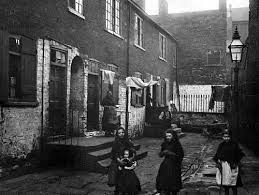
He’s grown up with the changes in Leeds. By 1890, when Gods of Gold is set, the first organised slum clearance was already underway, a number of the yards and courts between Briggate and Lands Lane already demolished to make way for Thornton’s Arcade and Queens Arcade. Before that, things had simply gown in the space, the original plots built over, the poor crammed away, out of sight.

duftons yard

Many of the places where he’d walked a beat when he started out as a constable had vanished by the time he was a Detective Inspector. The city – and it did finally become a city in 1893 – had a better water supply, the laws across England had changed to give children a little more education before they were sent out to work (although families still had to pay for any secondary education, something most could afford). That same year, Leeds was described as “a great hive of workers…whose products have the whole wide world for their market…her nine hundred factories and workshops, monuments of the wealth, industry and mercantile prestige.”

The workers who created those products saw little of that wealth, of course. They worked long hours for very little money. Few benefits, and any semblance of compassion depended on the owners of the factories. Between them textiles and engineering employed around have the workforce in Leeds – men and women.

It was a place with 23 tanneries and 200 cabinet makers. Leeds was changing, but for many, that change was happening slowly. Not many years before, 50 dead animals were pulled out of the river every single day. A Royal Commission heard that “hundred and thousands of tonnes per annum of ashes, slag, cinders, refuse from mines, chemical works, dyeing, scouring and fulling, worsted and woollen stuff, shin cleaning and tanning, slaughter, house garbage and sewerage from towns and houses” ended up in the Aire. Only around 3,000 houses in Leeds had flushing water closets. For everyone else, there was the midden.

cherry tree yard

That was the reality of the Leeds Tom and Annabelle Harper knew as they grew up, even when they were adults. The grand buildings – the Town Hall, the Corn Exchange –  might have been the public face of Victorian prosperity. Peek behind the curtain, though, and the reality, quite literally, stank.

No surprise, perhaps, that contagious diseases were rife. People died of typhus, whooping cough, diptheria, smallpox, diarrhoea – things we barely recognise today. Advances in public health, in sanitation and some of the housing were greatly lowering those figures by 1890, but they still existed.

A new Leeds was beginning to emerge. But it would still take many years to finally arrive.

The average wage for workers was a little over £42 a year by 1900, up from £34 in 1874. That’s an average; many, especially in unskilled jobs would earn much less, and women far, far less. Half the country’s income was taken home by one-ninth of the population, the kind of disparity still prevalent today.

The cost of living for the working-class is perfectly encapsulated in the broadside ballad “How Five-And-Twenty Shillings Are Expended In A Week”. It’s humorous, but it makes its point sharply. So many people lived hand-to-mouth. Every week, every month, every year.

five and twenty

The very poor relied on outdoor relief (benefits) or the workhouse when they couldn’t look after themselves or their children. That’s the world Annabelle sees when she runs to be a Poor Law Guardian in The Tin God, the sixth book in the series. From 1873-1896, there had been a global economic depression, felt hard in Britain, especially in the industrial centres of the North. Poverty was rife, competition for jobs.

This was their Leeds, their reality. I’m still trying to grasp its essence. Maybe one day I’ll succeed.

tingodsmall1