2017, And My Year Ahead

So here we are, tiptoeing into 2017, casting a cautious eye at its possibilities, a little hopeful, a little wary that it might be more brutal than 2016. But the only thing my prognostications and the tea leaves are telling me is about the books I have coming up this year. Sorry I can’t help on lottery numbers or Grand National winners. I’m just not that good.

I write every day. I do it because it’s what I love and I have things to say. I’ve been lucky, so far at least, that publishers have wanted to put them in print and some people enjoy them. You have no idea how grateful I am for that.

I still have things to say, tales to tell. But there’s a strange alchemy that turns life into fiction, an odd transmutation. Late in February the fifth of my Tom Harper novels, On Copper Street,  comes out in the UK. Except that underneath everything, it’s not a Tom Harper book at all; that’s just the cloak it wears. Early last year, in the space of two weeks, I received news that three different friends had all been diagnosed with cancer. By then, 2016 was already whittling away at some of the icons of my generation. My friends, I’m pleased to say, are still here and seem to be doing well. But this book became my way to cope with it all, my way of understanding. Maybe even of accepting, I don’t know. It’s a way to reach down to the truth of it as it hits me, of that balance between life and death.

That, I know, probably doesn’t explain much. But for now, it’ll have to do. Oh, and if you’re especially eager, the best price for it seems to be here.

on-copper-street

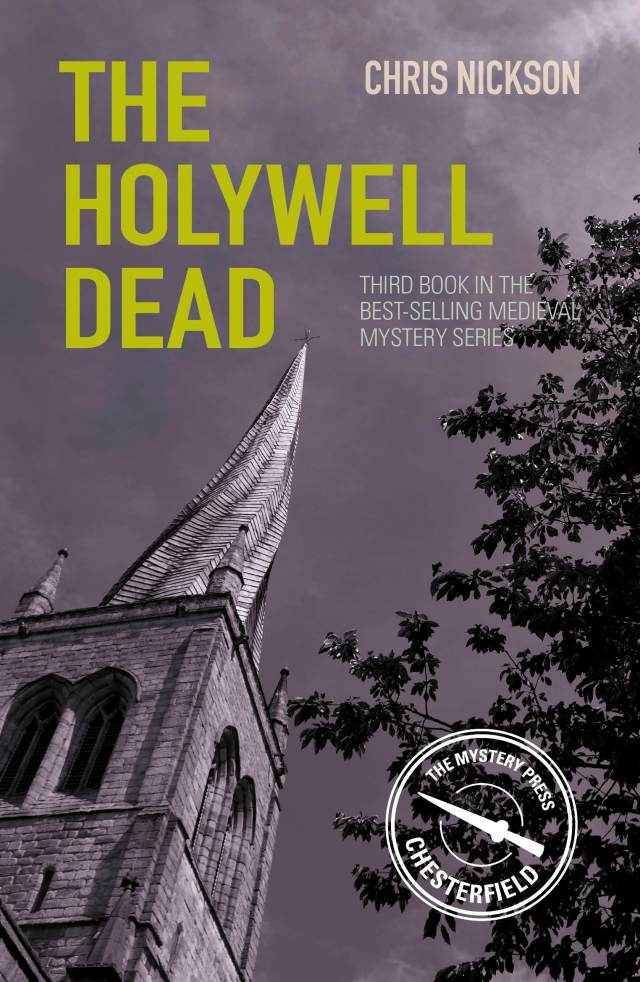
This summer there’s the third, and last, Chesterfield book with John the Carpenter, The Holywell Dead. For a man who came to me in an instant on the A61, driving through Chesterfield, he feels to have been around a while. We still had a little unfinished business, I was aware of that. Not just him, but Walter, Katherine, Martha, even Coroner de Harville. Their stories had further to run. Not that much…maybe just enough. The limits of a small town and a man who’d rather work with wood than find murderers were closing in. And it ends, I hope, in a fairly apocalyptic fashion, bowing out on a high note. I’ve enjoyed my time in the 14th century with him, but we’ve walked as far as the fork in the road and he’s taken one path and I’ve trodden along the other.
9780750979955

Then there’s my second – and again, last – visit with Lottie Armstrong in The Year of the Gun. I didn’t have a choice about it. She insisted. Her presence haunted me after I’d completed Modern Crimes, so that she had to come back. But the woman I visited again was older, in her forties, and experiencing World War II in Leeds. There was a vibrancy about her, so extraordinary by being ordinary. She had this other adventure to tell me about; all I had to do was listen and note it all down. But she wasn’t going to let me be until she’d finished the tale. As I said, the choice was taken out of my hands.
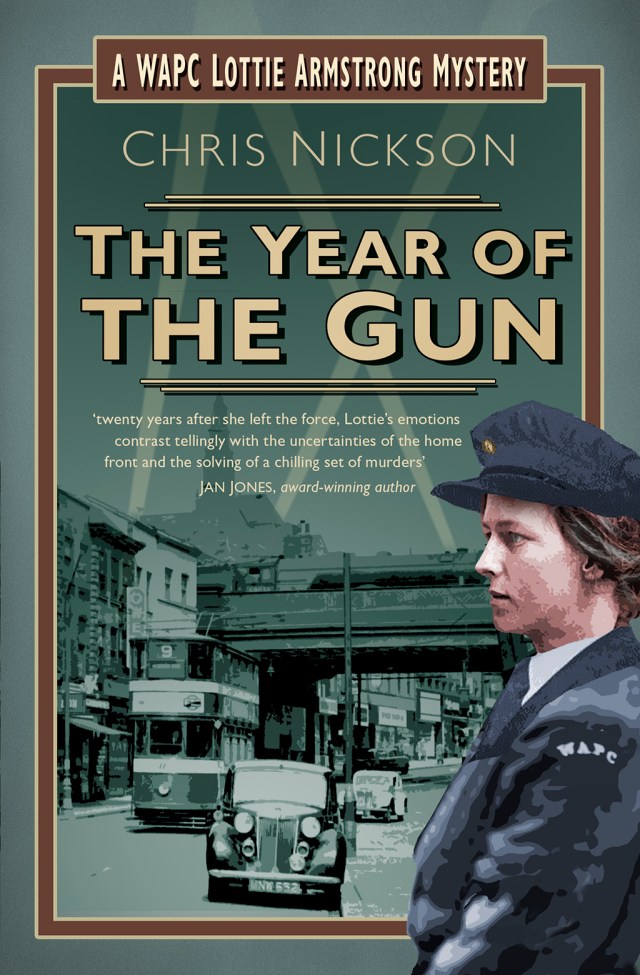
the-year-of-the-gun-new-fcp

And finally, in late November there will be Free from All Danger, the seventh Richard Nottingham book. It’s still unfolding, not quite all written yet. But I’ve known for a long time that Richard had more to say, and I’m glad he has the chance. By the time it appears, it will be four years since the last volume in the series.

I’m not a fan of endless series with the same character. It’s rare to be able to pull that off, although one or two writers do manage it with some depth. But as characters age, some edges get rounded, while others splinter a little and grow jagged and sharp. Some surfaces harden and other become softer. Those are the hallmarks, far more than the lines on the face or the lack of hair.

Richard has been away, but as he comes back it’s a chance to see how Leeds and the world has changed, and what his place in this might be. The old rubbing up against the new and how they can work together.

In many ways, Richard struck me early on as being like the straight-arrow sheriff in a Western, with his strong sense of good and evil. That changed somewhat over the course of the books, and the grey areas lapped so strongly into the black and the white. But coming out of retirement, how will he find everything now? Is he still sharp enough? More than that, where does he fit? And part of that is me, and my own sense of mortality, heavily tempered by the last 12 months, and the knowledge that new generations are shaping the world, while those of us who are older become more and more like bystanders, slightly out of time.

If the series had continued without a break, this wouldn’t have been the book I’d have written. So I hope that gap, that distance, has served us well.

Tom (and Annabelle, naturally), John, Lottie, Richard – they’re all as alive to me as anyone I talk to in a shop or over coffee. They’re friends, confidantes. And sometimes their books refract bits of the present into the past. Sometimes reflections of history, sometimes my own present, my thoughts and emotions. That transmutation that fiction can give.

And that offers a little background to the work of mine that’s appearing in the next 12 months. Of course, I hope they entertain, which is what they should do, and if they don’t manage that, then I’ve failed as a fiction writer. But there’s a backstory to each one, too, and maybe knowing it will offer a little more richness to the books.
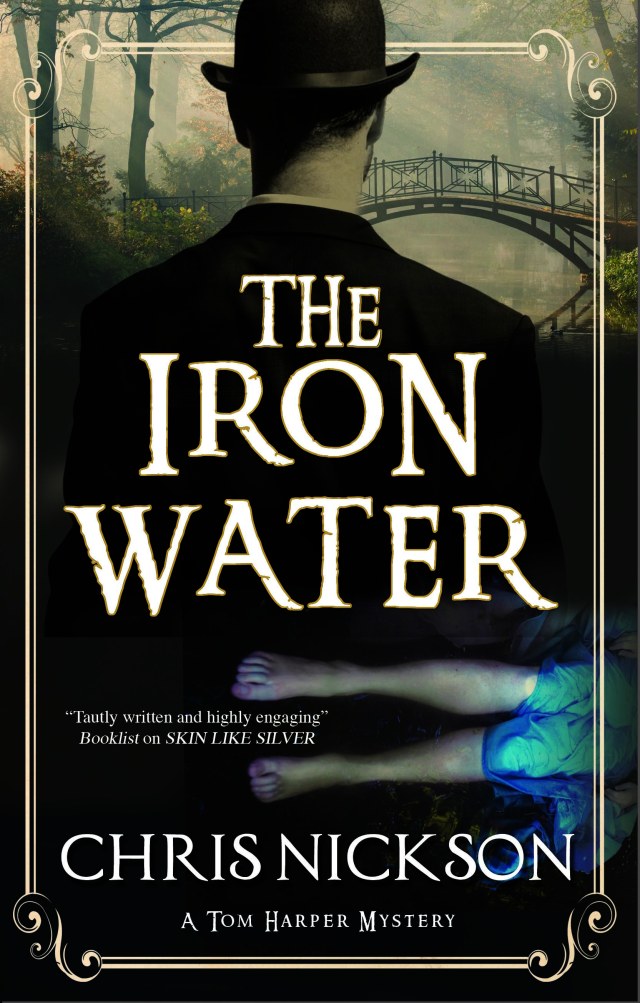
The New Tom Harper Is Coming

The new Tom Harper novel is coming. The Iron Water, out in the UK on July 29.

Have a taste of it. And if you’re a fan of Annabelle…there’s plenty of her, too. You can order a copy here.


Early July, barely dawn as he strode up Roundhay Road in his best suit, the soft grey wool, his present from Annabelle three Christmases before. Already men were starting to emerge from the streets of back-to-back houses, on their way to the early shift. By the time he reached Harehills the air began to smell cleaner, the houses larger and more prosperous. Out beyond that was wealth. Oakwood was nothing more than a hamlet, a few houses by the road and the terminus for the electric tram by the arched entrance to the park. A copper saluted him as he approached.

‘Anyone here yet?’ Harper asked.

‘They brought the ordnance a few minutes ago. Along the Wetherby Road and the Carriage Drive. And a fire engine right behind it. I daresay the toffs will show up in their own good time. No reporters allowed at this one, sir.’

He strolled along Park Avenue, relishing the quiet and the soft early light. Along the hillside, a few large houses stood back from the road, only the servants up and around at this hour.

There was plenty of activity by the lake, men manoeuvring a wagon into place with a welter of shouting and swearing. The brass of the fire engine glittered in the early sunlight, the horses that drew it enjoying their feed bags. And Harper spotted a familiar figure.

‘Hello, Billy.’

Inspector Billy Reed of the Fire Brigade, looking uncomfortable in his best blue uniform. Detective Sergeant Reed once, until he transferred over and earned his promotion.

‘Hello, Tom.’ They shook hands. ‘Here for the spectacle?’

He nodded.

‘Whatever it is. How about you? For show, or just in case there’s a problem?’

‘We’ve been involved from the start.’ He pointed along the length of the lake and explained, ‘They’ll tow the boat out soon. If everything goes to plan, at seven they’ll fire two of those rocket-powered torpedoes and they’ll destroy it.’

‘Sounds simple enough.’

Reed snorted. ‘As long as the damn things work. Half the time they fizzle out. Are you showing the flag for the police?’

‘Something like that. I’m not even sure why they need me.’

‘They just like us all on our toes.’ A small pause. ‘How’s crime? Are they keeping you busy?’

Harper shrugged. ‘It never stops. You know what it’s like.’ He should, they worked together for several years. ‘And then there’s always Mary.’

‘How is she?’ He smiled. Reed’s wife, Elizabeth, was the manageress for Annabelle’s bakeries; the two women were close.

‘Wonderful.’ It felt like a stilted, awkward conversation, like two friends who hadn’t met in years and realizing they had little in common any more. ‘I think I’ll take a walk and see this boat.’

By a quarter to seven the important folk had arrived in their carriages. Sir James Kitson, from the engineering company, top hat gleaming. Charles Parsons, an industry grandee, greeted with proper deference. The Lord Mayor and men in the bright braid of naval uniforms. Harper bowed as he was introduced, then kept his distance.

It all seemed like a waste of his time. The important people were making an early picnic of the event, wicker baskets full of food, popping bottles of champagne. Enough to remind him that he hadn’t eaten yet. And no one was offering him a bite. Of course.

Then the sharp whistle blew and the men were making their final adjustment to the metal torpedoes, checking the angle and the fuses. Finally, exactly on the order, the missiles were launched, vanishing into Waterloo Lake. All that remained was a thin wake through water the colour of iron, bubbles rising to the surface.

And then the explosion.

Three hundred yards and it was still loud enough to make his ears ring. Complete destruction. My God, Harper thought, is that what war at sea was going to be like in future? How would anyone survive? He glanced across at Billy; the man’s face was impassive. Reed had been a soldier, he’d fought with the West Yorkshires in Afghanistan.

‘What do you think of that?’

‘Impressive, I suppose.’ He hesitated for a second. ‘Dreadful, too.’ He turned and walked away towards the fire engine.

Harper was lost in his thoughts for a few seconds. Then he heard shouting in the distance. Somewhere along the bank of the lake. Even with the hearing almost gone in his right ear he could make out one of the words: ‘Police.’

He started to run.

the iron water 4 blue legs

As We Are Now, So Shall You Be

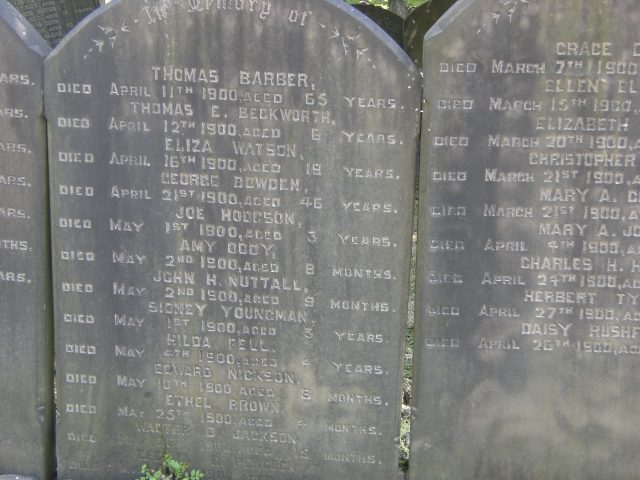
It’s been quite a moving week. Digging deeper into my family tree, I discovered that my great-great grandparents both rest in common graves at Beckett St. Cemetery in Leeds, bundled in there with quite a few others. The man from the Friends of the Cemetery – it’s no longer in use – show me the overgrown places.

But plenty more of my relatives lie there. Several members of the extended family sharing one plot. One of the pleasure of this week has been finding a couple of them, and cleaning off the weeds around one of them.

FullSizeRender (10)

I’m trying to clean the stone on the other, but things I have don’t seem to work well, so I’m open to ideas if anyone has good suggestions.

FullSizeRender (11)

And then the discovery that one relative is buried in a guinea grave. The idea is much as it sounds. You share the grave with a number of others, but for your guinea, your name is on the headstone. You’re remembered, and that’s important. For Edward Nickson, who died in 1900 aged three months, what else could there be from such a short life.

DSCF1804

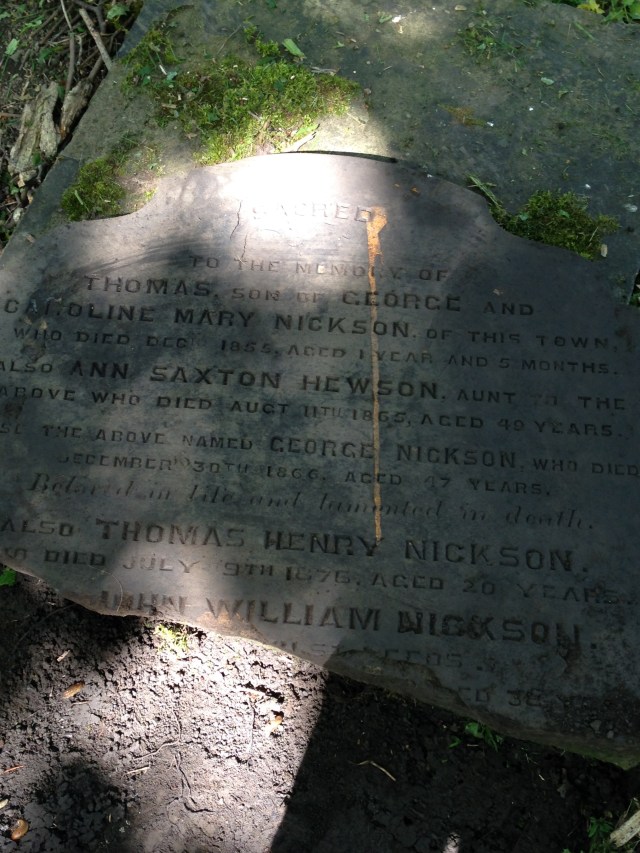
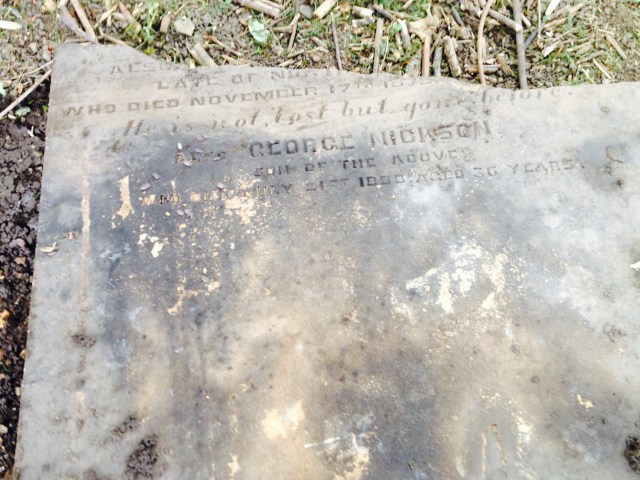
There was one more family grave, but it was shown as not having a headstone. When we reached the plot, though, there was a broken headstone, face down I the ground, looking as if it had been that way for many years.

Yesterday I returned with a spade and was able to turn the top part of the stone. For the first time in decades, the names of my relatives saw the light of day. That meant something to me.

FullSizeRender (13)

I couldn’t shift the bottom part of the stone until I returned today with help. And we put the two of them together.

FullSizeRender (9)

It’s an odd feeling to be in such close contact with family members who’ve died. Especially as I’ve never been a big one for family. But this exploration of the past becomes more important with the great sense of mortality. I feel them saying to me ‘As we are now, so shall you be.’ But we all will, in time.

FullSizeRender (8)

The Empress on the Corner – Some Thoughts

After a long time, it happened.

The Empress on the Corner appeared in public. In part, anyway. As part of Leeds Big Bookend festival, Carolyn Eden became Annabelle Harper. She’d done it briefly, at the launch for Skin Like Silver. But this was longer, more intense, as she recounted some of the scenes from Annabelle’s life.

It wasn’t the entire play, and there were different formats – a couple of scenes performed live, script-in-hand, two recorded on audio, like a radio play, and one on video, filmed in the Victorian pub at Abbey House Museum in Leeds.

A sharing, to explore the possibilities for the future.

Pretty much a full house, about 50 people, more than I could have hoped, really. And we’d had a good build-up. Friday brought this piece in the Yorkshire Post.

scan0001

Then, Saturday morning, we were on BBC Radio Leeds with Nick Ahad. Listen here; it starts about 40 minutes in – plus you’ll hear a fragment of one of the audio scenes.

The play tells the story of Annabelle’s life, as you’ll have gathered. The compressed version from yesterday is very much a work in progress. The festival believed in the idea enough to put it on, and Leeds Libraries believes in it enough to give us a grant, for which we’re very grateful (not a royal we; this has become very much a joint enterprise between myself and Carolyn, who’s also teaching me a lot about theatre. It’s very different from the publishing end of things). And there are plenty of others to thank, too, who’ve helped us – more than I can name here. But I hope you know who you are and that we’re grateful.

From the feedback forms, people enjoyed it. And that, of course, was the whole intention. But with a performance as good as this, that’s understandable.

One of the highlights for many was the performance of the suffragist speech from Skin Like Silver. While we didn’t film the Bookend performance, this was Carolyn’s first outing as Annabelle from the book launch, just as a reminder.

We intend to do more with the play. Quite what directions remain to be seen. But for an author, it’s so wonderful to see someone come to such perfect life. I don’t feel I created Annabelle. She found me. Maybe she found Carolyn, but that would be a silly idea, wouldn’t it? But I feel lucky to have found someone who is Annabelle.

Stay tuned to discover where it all goes.

IMG_0944

When You’re Muck – From Mill To Maid

For working-class girls in Victorian Leeds, there were two options, mills or maids. It wasn’t an easy life, there were no luxuries.

For Annabelle Harper, the mill was purgatory. Maybe becoming a maid might be better. Her experience was that of so many girls. This is a fragment of her story. To know more, come and see The Empress on the Corner.

PhotoFunia-1463832187

When you’re muck, you’re muck. Soon as they see you, everyone knows it and they don’t forget it. Not them upstairs, the ones who pay for it all. I mean down in the servants’ hall. Got a pecking order so strict you’d think Moses had handed it down himself. And right at the bottom was muggins here. Scullery maid. Up before anyone to lay a fire, put the kettle on the range and make tea, and God help you if you’re late. Scrub the pans after every meal. But not the good china, because I can’t be trusted with it. Can’t even eat with the other servants. Dish the food out to them, clear it away when they’re done, then skulk away in a cubbyhole with whatever’s left. Mills or maids? When you’re muck it doesn’t seem to make much difference. I found that out soon enough. Kitchen maid, downstairs maid, it’s like climbing a ladder. You go up rung by rung. But very slowly. The lass who replaced me in the scullery lasted a fortnight. Can’t say I blame her. If I’d an ounce of sense I’d have done exactly the same thing. But I was bloody-minded. I wasn’t going home with me tail between me legs. I wasn’t going to give me da the satisfaction. They could have set me to shovelling the sewers and I wouldn’t have left. Sixteen and I’m finally an upstairs maid. Polish the glass on the windows, look out and there’s the whole world in front of you. Out towards Otley, that big valley just spread there, all green. I used to gaze out at that every minute I could get. Didn’t matter the season. Because that looked like freedom. The little farmhouses with the smoke curling up to the sky. I used to think if I could just live in one of those places I could be happy for the rest of me life. My brain must have been addled. As if a life in the back of beyond with mud and pigs and cows would ever be anything for me. Then the housekeeper would come along, all silent because the rugs were so thick. She’d give me a clout and tell me to get back to work.

I turned seventeen and I was used to the job. I should have been by then, five years there. That house had become my world. Half day off every other week. Walk into Leeds to see me da and me family. An hour sitting in silence, then the walk back.  Maybe visit a lass or two I knew who worked at Black Dog. Didn’t tell them I was still sharing a bed with one of the other maids up in the attic. Or that the second son of the house had started noticing me. Some things you’re better off keeping to yourself. He had hands everywhere. Didn’t think he had to take no for an answer. Wasn’t too bad at first. I threatened to tell his ma and he left me alone for a few weeks. But all I had was empty words. I knew that and he realised it soon enough. After that he didn’t care. Why would he? I couldn’t do anything. Pinched my bum until it was black and blue. His family owned mills. They had the money, they had the power. I was just muck. I knew what was going to happen. Might as well have been written right there on the wall. I knew, but that didn’t mean he was going to get it easy. I’d make damn sure he’d never want to come for me again. I fought him. I made him pay. I bit, scratched, shouted. Went for his eyes. Hurt him. For all the good it did. He was always going to win. His kind always does. Once he started it wasn’t even a minute and he was done. I’ll never forget the sneer on his face as he buttoned himself up. I told him that if he ever came back and tried that again I’d slide a knife across his throat and let him bleed like a pig at slaughter. I spat in his face. I wasn’t going to let the tears start while he was there. I wasn’t going to let him see me weak. He might have got what he wanted but I wasn’t going to give him any bloody satisfaction. Then he was gone and I was lying there, crying my eyes out, pushing my face into the pillow. Did anyone come? Course they didn’t. I hurt right enough. Not just in my body. Here. And here. And when I was cried out I wiped my eyes and I had to make the bed where he’d had me, as if nothing had happened. Had to make it the next day, too, and all the ones after, and pretend nothing had happened there. But I’ll tell you what, he never tried it on with me again. I kept a knife in my pocket, just in case. I’d have hung for him, I’d have done it without thinking. I thought I’d hated people before that, but it didn’t even compare. I wasn’t about to leave, though. That would be running. Instead he was going to have to see me every day, to have his guilt staring him in the face. I was going to be there to remind him of what he’d done. He didn’t come sniffing round me and he didn’t bother any of the other girls. That was something. It wasn’t ever going to be over, of course. As long as I saw him, as long as I had to clean that room, it was like ripping the wound open again every day. But I’d do that, I’d grit me teeth and change the sheets and put on a smile for as long as it took to throw it all back at him. When you’re muck, though, nothing goes right. Six week later and I hadn’t come on yet. I knew what that meant. Up the spout, bun in the oven, whatever you want to call it. Not that I was going to say a word. Soon as the mistress heard she’d be throwing her hands up in horror, telling me how wicked I was. They’d have me out on me ear before you could say Jack Robinson, and not a word of a reference. Problem is, you can only go so long before people can tell. A question or two from the housekeeper and that was that. Didn’t even get the pleasure of telling the mistress it was her precious boy who’d caused it. Not that she’d have believed me or done owt about it. If you had money you were untouchable. I was on my way, wages paid, everything I had wrapped up in a shawl. God, it were like something from one of them penny novelettes. Should have seen my da’s face when I turned up on the doorstep. “Got the sack, have you? Don’t be thinking you can loll around here all day.” Aye, that’s the sort of welcome a daughter needs. He was always on at me. Put money in for me keep. Cook for him. Wash the pots and the clothes. I did me bit. He was down the pub when it happened. Where else would he be of a night? I’d just finished all the jobs and I was going to put me feet up. All of a sudden I had a pain like someone was trying to tear my insides out. Couldn’t hardly stand. I looked down and I saw blood. I didn’t know one body could have that much of it inside and it was all coming out. I knew what was happening but it didn’t matter. All I could think was ‘I’m going to die.’ I must have started screaming blue murder. I don’t know, I don’t remember. The next thing I knew old Mrs. Riley from next door was there. Sixteen stone if she was an ounce and a voice that could strip paint. But she looked after me. Got a pair of women in to help, then bullied a doctor into coming to Leather Street. That might have been a first. Stayed with me until me da rolled back and told him to take care of me or else. I’d lost the babby, of course. For the best, that’s what I reckoned. Didn’t stop me crying like a little lass, though. It kept coming back, that empty feeling like something had been stolen from me. And all the time me da was saying I had to get myself well and find some work. That let me know how welcome I was. And soon as I could, I started looking. Anything that got me away from him. Then I ran into Mary McLaughlin when I went for a quarter of tea to the shop. She told me they were looking for someone to work at the Victoria in Sheepscar.

Every Saturday Night It Was The Old Tunes

When you have nothing, you make your pleasures out of the air and memories…life for the Irish on the Bank in Victorian times. Annabelle Harper knows…

When I was a lass, every Saturday night was the old tunes, the ones Sean Doughty had learned when he was a lad and brought over from Ireland with him. Half of Leather Street would get together. We all went, from tiny babbies to the old women with no teeth who could only sit in their chairs and drool and smile. Folk would bring something, if they had owt. There’d be a bucket or two of beer, maybe summat to eat, then Sean would tighten up his bow, tuck the fiddle under his chin and put it in tune. He didn’t play well and time hadn’t made him any better. But it didn’t matter. Everybody loved it. He had his fast pieces for dancing, and it felt like all the heavy boots and clogs crashing down would go right through the floor. Then he had slower ones for singing. I can still hear the way all the voices used to grow more and more drunk as the night went on.
I must have gone there when I was still in my mam, but the first time I remember was when I was three. Martin O’Leary pulled my braid so hard that I cried. I was so proud of my hair back then, a right little madam. I’d get me ma to brush it every night and watched meself in that little scrap of mirror we had.
He tugged it; I thought it had come off in his hand and I started to scream. The music stopped and everything went quiet as death. “What’s got into you?’ me mam said, but I was crying so hard that I couldn’t tell her. When it all came out, she gave me a clout for interrupting things, and there was a harder one for Martin.
Like it or not, we were dragged there every week. Probably the same on streets all over the Bank. Happen it was just a chance for everyone to forget that none of them had a pair of ha’pennies to rub together. Maybe for one night in the week they deserved a good time. Even us young ‘uns had fun when we weren’t chafing to be somewhere else. The grown-ups used to talk about Ireland. Not that half of them had ever seen it, or ever would. Most of them had grown up over here. But that was how it was. From the moment we were born it was drilled into us: Ireland was paradise itself. It was the promise of heaven. Erin. Green, beautiful fields. Waters. Mountains. All those legends of the past: Finn MacCool and Brian Borru. We took it in with our mammy’s milk. Wise men and great warriors, and Ireland done down and brought low by the English. Me, I didn’t care. Leeds was my home. It was all I knew. All that mattered. Who needed the Rock of Cashel when I had York Road, the Headrow, and Hunslet? This was my world, the only one I was ever likely to know.  As far as I was concerned, I’d be lucky enough if I ever made it off the Bank, never mind some other town or country. I knew exactly where I was headed: Black Dog Mills. Same as every other lass at school. Didn’t even need to be told. Mills or maids – that was how life was. Mills or maids.

It’s Annabelle’s World…

…but she’d like you to come and visit.

A few years ago (Four? Five?) I was looking at one of my favourite paintings, Reflections On The Aire: On Strike, 1879, by Leeds artist Atkinson Grimshaw and a story came to me, fully formed, out of the ether.

That was my introduction to Annabelle. Annabelle Atkinson, she was then, sitting and looking at the picture with me, telling me how it came about that she was in it, looking back a decade to that days she stood on the banks of the river to be sketched.

Aire_1997579i

We met again when I settled down to write Gods of Gold, set during the Leeds Gas Strike of 1890. She was Annabelle Harper then, freshly married, flushed with happiness but with her feet firmly planted on the ground. With a flourish of her silk gown as she sat, she pushed me over on the chair.

‘I was there, luv,’ she told me. ‘I saw it all happen. Come on, I’ll tell you about it.’

Since then, we’ve spent quite a lot of time together. She’s in three of my published novels – Gods of Gold, Two Bronze Pennies, and Skin Like Silver. The fourth, The Iron Water, comes out in July, and I’m working on the fifth. I’ve shared the way Annabelle has blossomed. She’s the emotional centre of the novels in so many ways. She’s become a canny, successful businesswoman and a member of the Leeds Women’s Suffrage Society – and one of its speakers.

It was one of her Suffragist speeches, brought to breathing, passionate life by Carolyn Eden at the launch of Skin Like Silver, that was the catalyst for the play The Empress on the Corner.

CVVRkOpWoAAOj_y

‘That’s her,’ Annabelle told me the day after the launch. ‘She’s the one to be me. Now, you, you’d better start telling my story. Are you listening? I’ll begin.’

I didn’t have a choice – when you have someone like Annabelle, she dictates what will happen. And so I wrote her story. Or perhaps I simply wrote down what she dictated.

The presentation is still a work in progress, and it will be sections of the complete play, not the entire thing. But it’s the story of growing up in a poor Irish family on the Bank in Leeds in the mid 1800s. Of having two choices in life, mills or maids. Of luck, of taking the chance to use her good mind. Of understanding that there’s more, that she can raise her voice for others.

It’s a Leeds story. It’s a political story. It’s a love story. But above everything, it’s Annabelle’s story.

And she reckons you need to come and see it. Believe me, I’ve learnt, you don’t argue with Annabelle, she’ll win in the end.

So you’d better go here to buy your ticket and we’ll see you on June 4, 2.30 pm at Leeds Central Library. It’s part of the wonderful Leeds Big Bookend festival.

Annabelle has her ticket. She’ll be on the side of the front row, with a big grin on her face, pleased as punch. Say hello to her after they play.

Down At The Black Dog

Most of the Irish who made their lives in 19th century Leeds lived on the Bank. It was one of the poorest areas of the town, a hill of land that looked down towards the canal and the river from the north. They lived in the worst quality housing – a report following a cholera outbreak there in the 1830s started the entire idea of public health in Leeds.

It wasn’t a place for ambition. It wasn’t much of a place for hope/ The chance of getting off the Bank was small. It was probably better for girls if they went to become maids. And mills or maids was as far as opportunity extended when they left school aged nine. Mill generally meant Black Dog, located on the Bank, most of whose workers were first or second-generation Irish.


On Monday morning when she comes in/ She hangs her coat on the highest pin/ Turns around for to view her frames/ Shouting, “Damn you, doffers, tie up your ends.”

Nine years old, me first day at the mill and I was shivering like I might die. I swear, I’d never known cold like having me bare feet on that floor. I can still feel it now. Doffing girls, that’s what we were. When a thread on the loom ran out we had to duck under the machine, quick like. No shoes or stockings allowed, to make sure we didn’t slip. Take off the old bobbin and put on a new one. And all the while the mistress is yelling at you to go faster, and you’re nipping in and out of machines that feel like they’re alive. You’re that terrified you can hardly hold the bobbin, let alone do owt with it.

Black dog

Black Dog Mill in the background

The first morning, all the girls from my class were on our way there. Me and Mary McLaughlin from across the road, holding hands as we walked. We were too scared to speak, although we’d always known it was coming.  Mary Dawson, Kathleen Cook, Eileen O’Toole, Jane Clark. They lined us up like they’d always been expecting us and took us inside. Off with the shoes, off the stockings. We knew what would happen. Lasses who’d done it the year before had loved every minute of telling us. But words…it’s never the same as when it’s real, is it? They marched us to where we’d work, a few in this room, a few in that. I was shaking.

But no one had said anything about the noise. It was all around, it seemed to fill you until you felt it in your chest and in your head and you were part of it. The doffing mistress told us what to do, she was tapping a quirt against her leg. One of the older girls showed us the job, darting in and out like it was nothing. Work a child could manage, that’s what they said. Happen that’s why it paid next to nowt. That was how you started. As long as you were small and nimble, and you didn’t get killed or maimed by the machine you could end up running the loom one day.

The mistress would beat us if we were too slow, the overseer would take his belt to us if we didn’t obey. All that for a few coppers a day. That’s how it was. Who were we to think it could be any different? We had to stand there, wait for the word then run. Two weeks on the job and I was looking after ten machines, slipping here and there, like I’d been doing it all me life. Then I’d stand again until my legs were aching and my knees hurt. Never a chance to sit. And in the air were all the little bits of this and that. They caught in your throat and made it dry, they made you cough, but there wasn’t any water for us to drink. No nowt. Why bother? We were muck.

Me mam had been at Black Dog. Her and all the other women around. Started there when she were nine, same as me. But they let her go a few months before I began. All those little things in the air…she’d taken in so many that she could hardly breathe any more, let alone do a day’s work. They couldn’t get their moneysworth out of her anymore, so they sacked her. Like I said, muck. Two a penny. If we became a problem they could throw us away and get another. There were always more.

Never had a doctor out to her. We didn’t have the brass. What could he have done, anyway? Nigh on twenty year of being there six days a week, breathing in all that dust, those little bits… it were too late. Wasn’t like she was the first; too many of them had been taken that way over the years. You saw them on the streets, wheezing as they tried to move. Couldn’t even walk to the shop and back without stopping every ten yards. That was my mam. Look at her and you’d think she was sixty. But she wun’t even forty. That’s what the mill done to her. Six month after they got rid, she was dead, and she’d not had one single day of joy.

It was Sunday morning. Me da was downstairs, just sitting, not saying a word. Me, I was by the bed, holding her hand and watching her drown from everything in her lungs. And I couldn’t do a thing to stop it. I could hear the bells ringing for Communion at Mount St. Mary’s. I had me hand behind her back to help her sit up, so she might last a few minutes longer. But she didn’t couldn’t even find the breath to speak. Just this look in her eyes, like she was pleading. Then she couldn’t breathe at all. The funeral were Tuesday. I had to beg for an afternoon off to go. Beg to go to me own mother’s funeral.

A Leeds Story and a Free Book

It’s that time of year when everyone wants a little distraction from work. So here’s something to amuse you for a few minutes. And if you read through to the end, there’s a chance to win a copy of my long out of print first novel, The Broken Token, the start of the Richard Nottingham series.


The story has its basis in a tale about the hero of the Wild West, Buffalo Bill Cody. He did indeed bring his show to Leeds in 1892, and again in 1903. Legend has it that on his first visit he went into the Three Legs pub, which still stands on the Headrow and ended up the loser in a fight.

Did it really? No one knows. But this is how it might have been…


Buffalo Bill Cody at the Three Legs


The man with the elaborate white moustache and small beard over his chin strode down the Headrow. He was wearing an expensive dark suit, with a formal wing collar, and a tie with a glittering pin. The only thing that marked him out as different was the black Stetson hat on top of his long hair. He looked at the people as he walked along. This time tomorrow many of them would be making their way to wherever it was, Cardigan Fields, to see the show he would put on them. They’d get a taste of the Wild West and his pockets would be lined with silver. Not a bad trade-off. And a lot less dangerous than some of the things he’d done back in America.

The posters were up everywhere, on buildings, on the trams: Buffalo Bill Cody’s Wild West Show, with a picture of him. Not a bad likeness, he had to allow. Crossing over Lands Lane a few people gave him a curious glance, as if they should recognise him, then looked away again.

Most of the troupe was camped down at the fields. All the Indians and the cowboys. They looked after the horses. The stars had hotel rooms, the best ones for himself and Annie, of course. They were the draws, the big attractions. He was the rider and Annie Oakley was the dead shot. He’d left her in her suite with her bottle of whisky while he went out to explore. Never hurt to know a place, to see what your customers might be like.

A door opened and noise blared out. He looked up at the sign – the Three Legs public house. Strange name, he thought. But there were people inside. And liquor. He had an inkling for something to wet his thirst.


The first one went down easily. The bar was busy, men standing back to look at him, not sure what to make of him or his accent.

‘I’ll take another of those,’ Cody said, setting the glass down on the bar, putting some coins down as the man refilled it.

‘Where you from?’ someone asked, and he turned with the showman’s smile on his face.

‘The United States of America,’ he announced. ‘You might have heard of me. I’m William F. Cody – Buffalo Bill.’

Sound seemed to ripple through the bar for a second and then everyone was staring at him. Everyone except one man who stood gazing into his beer.

The questions came quickly. Someone bought him another whisky, another man paid for a fourth. Pleasant place, Cody thought. Friendly; generous, too. They were eager to listen, and he was always happy to talk. The legend went ahead of him, of course. He’d ridden for the Pony Express, been a scout and Indian fighter for the army, a bison hunter. He’d done it all, been a part of the Wild West. And now he was making money showing Europe what it was like. Last year on the Continent, this year Britain, with six months in London and a command performance for the Queen ahead. For a boy born in the Iowa Territory he’d done pretty well for himself.

An hour and they still seemed happy to have him there. More people had arrived until the bar was packed. They were hanging on his words. He leaned back, elbows on the bar, lit a cigar and surveyed the crowd.

‘Surviving out there wasn’t always easy. You’d have your bedroll and your rifle, some jerky to see you through, and you knew where to find water – you hoped. If the Indians came, you could fight or run.’ He blew out smoke. ‘And I was never one for running.’

‘Think you’re tough, then, do you?’

The voice wasn’t loud. It didn’t need to be. It was deep enough to cut through everything. The man who’d spent the evening staring at his beer looked up, then stood. He must have been six and a half feet, all of it thick, solid muscle. His mouth was hidden by a heavy moustache, but his dark eyes seemed to pierce the room.

‘Well, sir, I believe I’ve proved myself a number of times.’ It was the right tone, he thought. Not challenging or too boastful, but not backing down.

‘Anyone can be a hard man with a gun.’ The man took a few paces forwards, and people parted to give him room. There was a sense of violence about him, that it would take very little to start a fight here.

‘I never started anything unless I had no choice.’ Cody stared at him. ‘Can I ask your name, sir?’

‘Paul Hardisty.’ Another pace. Close enough to smell the man’s sour breath.

‘A pleasure to make your acquaintance, Mr. Hardisty. Won’t you join me in a drink?’

He ignored the offer.

‘You talk a lot, cowboy. I daresay you can ride and shoot things. But round here most of us use Shanks’s pony and settle things with our fists.’

That brought some laughter. Cody had no idea what Shanks’s pony might be; all he knew was that it was time to leave.

‘Different country, different customs.’ He drained the whisky from the glass. ‘Now, I should probably get back to my hotel.’

But the press of people made it impossible to go, and Hardisty came even closer. Cody reached down to his side. No gun. He wore it everywhere at home, but not here; it was against the law. But his fingers did touch something – the hilt of a knife.

He’d been presented with it at his last performance. Good Sheffield steel, he’d been told, whatever that meant. Still, he had a weapon, and that gave him an advantage here. He’d done some knife fighting before.

Cody drew the blade and brought it out for everyone to see. People drew back, except Hardisty. He just looked disdainfully at the knife. Before the American knew what was happening, he brought down a big hand, clamped it around his wrist and squeezed.

The pain made him wince. He opened his mouth and sucked in air. The fingers pushed tighter on his flesh until he had no choice. The weapon rattled to the ground and Hardisty let him go.

‘Better,’ he said with satisfaction. ‘If you’re going to fight, you’ll do it like a man. Round here we don’t like folk who are all mouth. I’ve heard you go on and on. Let’s see what you’re about.’

He squared up, fist like a prizefighter, and Cody knew he was going to have to fight his way out of the pub.


“I’m Constable Ash, sir.’ The man in the blue uniform helped Cody to his feet. ‘Are you all right?’

‘Yeah, I’ll survive.’ Blood was still flowing from his nose, he felt like he’d lost a tooth, and his body was going to ache. But he was in one piece.

Hardisty, the other man, was out cold on the floor. Whatever this constable had done, it had saved him from a beating.

‘How did you do that?’ he asked.

‘Trick of the trade, sir.’ He showed the truncheon. ‘Have him up before the magistrate in the morning.’

‘I’m very grateful,’ Cody said.

‘All part of the service.’

‘I’m Bill Cody. My show starts tomorrow. Can I offer you tickets for you and your wife?’

‘That’s very generous, sir, but I’ve already booked. Just mind how you go on the way back to your hotel, eh?’


And now the free book…


My first novel, The Broken Token, has been out of print for several years. But I have found a used copy that’s almost like new. As a little Christmas gift for someone, simply contact me through here and I’ll select a name on Christmas Eve, then send it off after the holidays. The deadline to enter is midnight UK time, December 23.

That Skin Like Silver Launch

It happened. After months of stressing about it, the launch for Skin Like Silver happened. And do you know what? It exceeded all my expectations.

Of course, being in the New Room (which dates from 1880) at the Leeds Library guarantees a wonderful venue, and the staff are always a joy to work with.

Would people even come? On the night there were plenty, filling almost all the chairs in the place. One worry to cross off the list.

And how would the time travel go? I needn’t have worried. Thanks to a marvellous actress, Carolyn Eden, Annabelle Harper truly came alive. You can tell from this clip. The picture quality might be poor, but watch her gestures, listen to her voice. She is completely Annabelle, as if she’d just walked off the page.

Those who attended were in great form, asking good questions and I tried to field them as best I could, to be the ringmaster while the audience (hopefully) had a good time.

And you bought books. My my, you bought books. Thank you. And thank you all who came, as well as those who couldn’t make it. I appreciate every one of you.

Before anyone else turned up, Made in Leeds TV was there, filming Annabelle, talking to myself and Carolyn. Once I have the clip I’ll post that.

Right now there’s still an interview with the Yorkshire Evening Post to go, a book signing in Harrogate tomorrow, and a phone conversation with Radio Leeds. As well as revisions on a new book.

And you thought we spent the days in coffee shops and the nights in bars, didn’t you?